Robotic e-waste disassembly technology is helping engineers recover valuable metals from discarded electronics while reducing environmental damage and recycling costs.
Robotic E-Waste Disassembly Technology for Recycling Systems
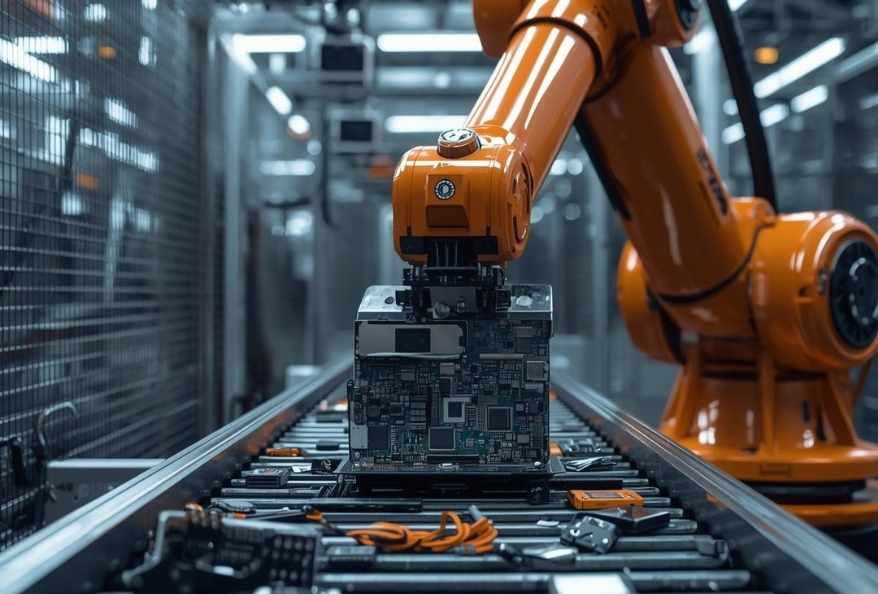
Electronic waste is growing rapidly across the world as millions of devices are discarded every year. However, these gadgets contain valuable metals such as gold, copper, and cobalt. Because of this, engineers are exploring robotic e-waste disassembly technology to automate recycling and recover materials more efficiently.
Traditional recycling methods rely heavily on manual labor. As a result, the process can be slow, expensive, and hazardous. Automated robotic systems offer a safer and faster way to dismantle electronic components.
The Global Problem Driving Robotic E-Waste Disassembly Technology
Electronic waste has become one of the fastest-growing waste streams globally. Smartphones, cables, batteries, and circuit boards are often thrown away after only a few years of use.
At the same time, many recycling facilities struggle to recover valuable materials efficiently. Therefore, robotic electronics recycling technology is being developed to address this growing environmental challenge.
Automated systems can dismantle complex devices and separate recyclable components with greater precision than traditional methods.
Challenges in Robotic E-Waste Disassembly Technology
Flexible Cables and Connectors
One of the biggest obstacles in robotic e-waste disassembly technology is handling flexible cables and connectors. Unlike rigid objects, wires can bend, twist, and move unpredictably.
Because of this, robots must adapt to different shapes and positions when dismantling electronic components.
Thousands of Connector Designs
Another challenge is the variety of connector types used in electronics. Each manufacturer designs connectors differently, making automation more complex.
Consequently, robots must rely on intelligent systems that can recognize and adapt to different designs.
Computer Vision in Robotic E-Waste Disassembly Technology
Computer vision plays a crucial role in modern robotic electronics recycling technology systems. Cameras and sensors allow robots to detect connectors and analyze their structure.
Artificial intelligence then determines the correct point for cutting, unscrewing, or separating components.
Furthermore, machine learning helps robots improve performance over time. With each operation, the system becomes more accurate and efficient.
Precision Tools Supporting Robotic E-Waste Disassembly Technology
Modern electronics contain extremely small parts that require delicate handling. For instance, connectors like USB-C ports contain tiny pins that hold valuable metals.
To address this, engineers design high-precision robotic grippers capable of extracting these components without damage.
Additionally, many tools used in robotic electronics recycling technology are custom-built using advanced manufacturing methods such as 3D printing.
Environmental Benefits of Robotic E-Waste Disassembly Technology
Automated recycling systems can significantly reduce environmental damage. When electronic waste ends up in landfills, toxic substances such as lead and mercury can contaminate soil and water.
However, AI-powered e-waste recycling systems allows recycling facilities to recover materials before they enter the environment.
This approach supports a circular economy, where materials are reused rather than discarded.
Future of Robotic Electronics Recycling Technology
Advancements in robotics and artificial intelligence are making automated recycling increasingly practical. Researchers expect future systems to dismantle entire electronic devices autonomously.
As technology evolves, robotic e-waste disassembly technology could become a standard part of modern recycling infrastructure.
Ultimately, these innovations could help reduce electronic waste while conserving valuable natural resources.
Conclusion on Robotic E-Waste Disassembly Technology
Automated electronic waste processing is emerging as a powerful solution to the growing electronic waste crisis. By using robotics, artificial intelligence, and computer vision, recycling facilities can dismantle complex electronic devices safely and efficiently. As a result, valuable metals such as copper, gold, and cobalt can be recovered instead of being lost in landfills.
At the same time, automated systems reduce the risks associated with manual recycling processes. They also support a circular economy where materials are reused rather than discarded. Although challenges still remain, advances in robotic electronics recycling and automated e-waste dismantling are rapidly improving recycling efficiency.
Additionally, to stay updated with the latest developments in STEM research, visit ENTECH Online.
Reference
- Dall’Olio, M., Ida’, E., & Carricato, M. (2026). Robotic Disassembly of Electrical Cable Connectors: A Critical Review. Robotics, 15(3), 60. https://doi.org/10.3390/robotics15030060
- Author
- Latest Posts

Kottauppari Venkat Raghava
I am a technology-driven IT graduate with a strong passion for science and innovation. I am fascinated by how innovations like artificial intelligence, robotics, and emerging technologies are shaping our world. I specialize in analyzing complex scientific and technological research and presenting it in a clear, accessible way. My goal is to make science and technology understandable and engaging for students, tech enthusiasts, and professionals alike. By breaking down advanced concepts into simple, insightful narratives, I strive to inspire curiosity, learning, and innovation, helping readers stay informed about the breakthroughs that are shaping the future.