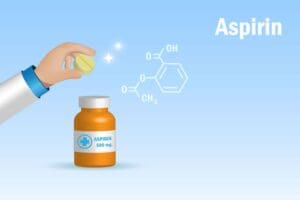
Aspirin is one of the most common medicines in the world.
How Scientists Made Aspirin Work Better — Using Just Grinding!
How Aspirin Work Better
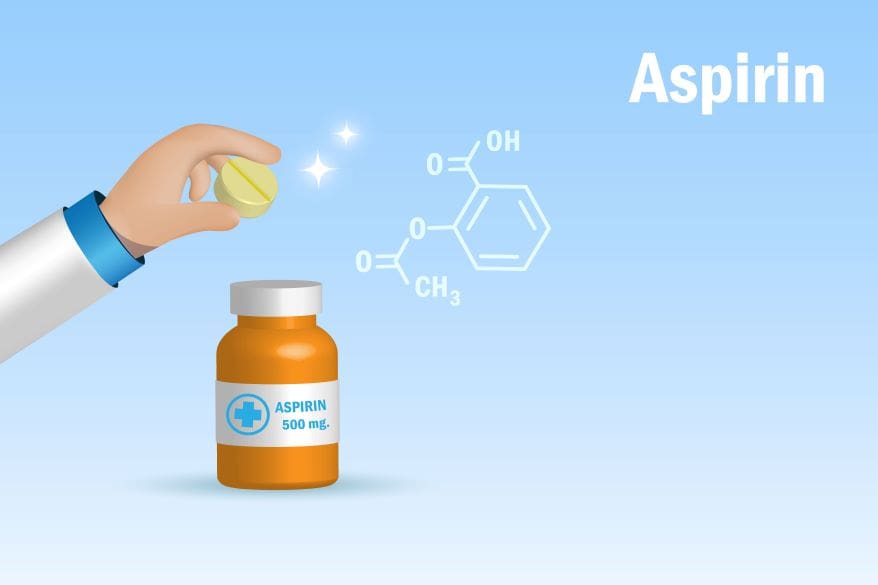
Aspirin is one of the most common medicines in the world. You probably have it at home right now. But did you know that your body only absorbs about 50% of the aspirin you swallow? That means half of it goes to waste. A new study from researchers in Sri Lanka and India has changed that. They used a clever technique called mechanochemical synthesis to make aspirin nanocrystals. These tiny crystals dissolve much faster and work much better.
What Is Mechanochemistry?
At first, the name sounds complicated. But it is actually simple. Mechanochemistry means using mechanical force — like grinding — to cause chemical reactions. Think of it like using a super-powered mortar and pestle. Scientists use a machine called a ball mill. It shakes or rotates at high speed. The balls inside crush the material into super-tiny pieces.
To illustrate, imagine grinding a sugar cube until it becomes fine powder. That powder dissolves in water much faster than the whole cube. The same idea applies here — but at a nanoscale level.
The Science Behind Aspirin Nanocrystals
The researchers at the University of Peradeniya in Sri Lanka worked with a team from Gauhati University in India and the University of Warsaw in Poland. They created aspirin in a very pure form first. After that, they used two types of grinding to make nanocrystals.
Neat grinding (NG) means grinding without any added liquid. Liquid-assisted grinding (LAG) means adding a tiny amount of liquid during grinding. The researchers tested different liquids. They also tested different speeds, temperatures, and grinding times.
To enumerate the key findings:
- Grinding at 30 Hz frequency for 30 minutes gave the best results.
- The best temperature was around 28°C.
- The best liquid-to-solid ratio (called η) was between 0.1 and 0.2.
- Water worked best as the added liquid.
Why Does Water Work Best?
This is a great science question. At this point, you might wonder: why water specifically?
Water forms hydrogen bonds with aspirin molecules. These bonds break up the crystal lattice — the tight arrangement of molecules inside the crystal. At the same time, water has a high surface tension. This improves the transfer of shear stress during grinding. To put it differently, water helps the ball mill break aspirin into even tinier pieces more efficiently.
As a result, the researchers produced nanocrystals of about 150 nanometers in size. To put that in perspective, a human hair is about 80,000 nanometers wide. These crystals are incredibly small.
Faster Drug Release — Big Medical Impact
Analogous to how fine powder dissolves faster than chunks, smaller crystals release medicine faster. Above all, the key result here is remarkable. These aspirin nanocrystals released ~90% of the drug in just 6.5 minutes at a stomach-like pH of 1.2.
In contrast, regular aspirin takes much longer to dissolve. With this in mind, faster dissolution means the medicine gets into your bloodstream quicker. This could be life-saving, especially during a heart attack where aspirin is often given as an emergency treatment.
What’s more, the melting point of these nanocrystals dropped by 25.1°C compared to regular aspirin. In general, a lower melting point signals that the crystal structure has become less rigid. This confirms the transformation was successful.
Crystal Forms: Form I and Form IV
Provided that you find crystal structures interesting, here is a cool detail. Aspirin can exist in different polymorphic forms — basically, different arrangements of the same molecules. The researchers found that their process produced Form IV first.
While it may be true that Form IV is less common, it is quite stable. Under ambient conditions (22–27°C and 45–75% relative humidity), it stayed stable for over 60 days. Using water during grinding converted Form IV into Form I, which is also very stable.
Careers in Pharmaceutical Engineering and Nanoscience
All things considered, this research shows how exciting STEM careers can be. If you like chemistry, engineering, or medicine, this field has a lot to offer. At the present time, there is growing demand for professionals in pharmaceutical engineering, materials science, and nanoscience.
As a matter of fact, you can start learning about this right now. Check out Nanotechnology Applications in Daily Life to see how nanotechnology is already changing the world around you. After that, explore our beginner’s guide at A Beginner’s Guide to Nanochemistry to build your foundational knowledge.
What This Means for the Future
Summing up, this study shows that mechanochemical grinding is a powerful and eco-friendly way to make better medicines. Using simple tools like a ball mill and water, scientists improved aspirin’s bioavailability dramatically.
At length, the researchers concluded that this method could extend beyond aspirin. To that end, similar techniques could improve other poorly soluble drugs as well. In due time, this approach may reshape how pharmaceutical companies manufacture medicines globally.
Reference
Garumanna, G. D. S. K., Thakuria, R., & Adassooriya, N. M. (2026). Mechanochemical synthesis of aspirin nanocrystals for pharmaceutical applications. RSC Mechanochemistry, Advance Article. https://doi.org/10.1039/D5MR00118H
- Author
- Latest Posts

I am an inspirational writer and emerging science blogger with a deep-rooted passion for understanding and sharing the wonders of the world around us. My journey began with a Bachelor of Science in Chemistry from AKI’s Poona College of Arts, Commerce and Science, where I developed not only a strong foundation in scientific principles but also a mindset that values curiosity, observation, and critical thinking. Studying chemistry has taught me to approach problems with logic, to look beyond the obvious, and to see patterns where others might only see complexity. These experiences have shaped the way I perceive life and influence the way I express my thoughts, both scientifically and creatively.
I have always believed that knowledge is only as powerful as the way it is shared. This belief has guided me to create content that bridges the gap between science and everyday life. I aim to simplify complex scientific ideas so they become approachable, relatable, and engaging for everyone—whether someone has a formal background in science or is simply curious about the world. Science, in my view, is not confined to textbooks and laboratories; it is a way of thinking, understanding, and connecting with the world around us. By making science accessible, I hope to inspire curiosity, ignite learning, and encourage people to see the beauty and relevance of scientific discovery in their daily lives.
Alongside my love for science, I am deeply passionate about motivational writing. I believe words carry the power to transform perspectives, encourage self-reflection, and inspire action. By combining analytical thinking with creativity, I create content that is intellectually stimulating yet emotionally resonant. Whether I am breaking down a chemical concept, exploring a scientific phenomenon, or crafting motivational narratives, my goal is to communicate ideas in a way that is clear, meaningful, and impactful.
Through my work, I strive to empower my readers—not just by helping them understand the science around them, but by inspiring them to grow, learn, and realize their full potential. Every article, post, or story I write reflects my commitment to turning knowledge into inspiration. I want to spark curiosity, encourage self-improvement, and show that learning and personal growth are deeply connected. For me, writing is not just a craft; it is a way to touch minds, connect hearts, and make ideas come alive in a way that truly resonates.