Second-life EV batteries give old electric cars a new purpose, storing energy to power homes and support renewable energy.
Second-Life EV Batteries: How Old EV’s Power Homes
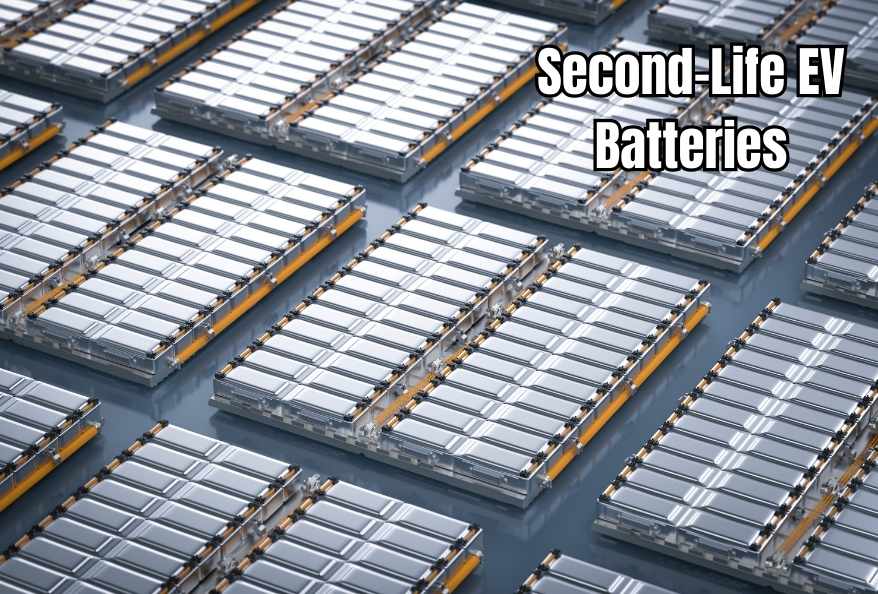
Electric vehicles (EV’s) are rapidly transforming the transportation landscape. Every year, more EV’s hit the roads, reducing emissions and reshaping the automotive industry. But with this growth comes a new question: what happens when these batteries age? Many people assume that once an EV battery is no longer capable of powering a car efficiently, it becomes useless waste. In reality, second-life EV batteries reveal a hidden potential that could revolutionize energy storage, sustainability, and the renewable energy sector. Recent studies show that retired EV batteries can store energy, support grid systems, and even power homes—turning what seems like a problem into a solution for science, engineering, and the environment.
The Second Life of EV Batteries
EV batteries are typically retired when their capacity falls below a threshold that makes them impractical for long trips. While these batteries may no longer drive a car across a city or between towns, they still retain a significant amount of energy. This residual energy makes them ideal candidates for second-life applications. One of the most promising uses is energy storage for homes, businesses, and renewable energy systems.
For example, consider a home equipped with solar panels. During the day, the panels generate electricity, but excess energy is often wasted if it cannot be stored. By integrating second-life EV batteries, homes can capture and store this excess energy, using it at night or during cloudy days. In this way, retired EV batteries extend the utility of renewable energy while reducing reliance on fossil fuels.
The Math Behind Second-Life EV Batteries
Predicting how long a battery can last in its second life requires sophisticated modeling. Researchers use tools like Matlab R2025a to simulate battery performance over time. One key mathematical method employed is the Weibull distribution, which predicts the probability of failure based on observed patterns. This allows engineers to forecast when batteries are likely to fail and estimate the total energy capacity available for reuse.
Typically, EV batteries last between 10 and 14 years, depending on factors such as chemistry, usage patterns, and environmental conditions. With ongoing technological improvements, some newer batteries may surpass this lifespan, creating even more opportunities for second-life applications. By modeling these parameters, scientists and engineers can optimize the integration of retired EV batteries into homes and the power grid, ensuring efficient energy storage and cost savings.
Recycling vs. Reusing: Striking the Balance
Sustainability is at the core of second-life battery applications. While recycling remains essential to recover valuable metals like lithium, cobalt, and nickel, reusing batteries delays the need for recycling and reduces environmental impact. Even when recycling rates are high, a substantial number of retired EV batteries remain suitable for energy storage projects.
By using these batteries in renewable energy systems, we can balance intermittent power generation from sources like solar and wind. For example, when the sun isn’t shining or the wind isn’t blowing, stored energy can provide a steady power supply. This not only reduces electricity costs but also minimizes reliance on nonrenewable energy sources, creating a more resilient and sustainable grid.
Why Second-Life EV Batteries Matter for Energy Storage
Energy storage is a critical component of the renewable energy transition. Second-life EV batteries provide a cost-effective, ready-to-use solution for homes, businesses, and even larger grid systems. Unlike newer storage technologies, which may take years to develop and deploy, retired EV batteries offer an immediate solution. They tackle two pressing issues simultaneously: reducing waste and supporting renewable energy adoption.
Moreover, integrating these batteries into energy systems helps to stabilize electricity prices, minimize blackouts, and improve energy security. With the rapid expansion of EV adoption, the availability of second-life batteries is expected to grow significantly, creating a sustainable loop that benefits both the environment and the economy.
Opportunities for STEM Careers
The rise of second-life EV batteries opens exciting opportunities for students and professionals in STEM fields. Engineers are needed to test, design, and optimize battery storage systems. Data scientists analyze usage patterns and performance metrics to predict battery longevity. Innovators can create new applications for these batteries, from powering smart homes to supporting microgrids in rural areas.
Students interested in coding, environmental science, chemistry, and renewable energy have multiple pathways to contribute to this growing field. Careers in this area not only advance technology but also make a meaningful impact on sustainability. With energy storage becoming increasingly crucial for green energy adoption, those entering STEM fields today are positioned to shape the energy systems of tomorrow.
The Future of Energy Storage with Second-Life EV Batteries
Old EV batteries are far from useless—they offer a valuable opportunity to store renewable energy, power homes, and support sustainable infrastructure. By repurposing second-life EV batteries, we can create jobs, drive innovation, and cut waste, all while advancing the global shift toward clean energy. In the near future, your next electric car may not only transport you—it could also illuminate your home, showcasing the full potential of a circular, sustainable energy economy.
Additionally, to stay updated with the latest developments in STEM research, visit ENTECH Online. Basically, this is our digital magazine for science, technology, engineering, and mathematics. Also, at ENTECH Online, you’ll find a wealth of information.
Reference
Boban, A. C., Tiron-Tudor, A., & Draghiciu, A. I. (2025). Prediction of retired EV batteries’ usable capacity for repurposing in second-life applications. Technologies, 14(2), 124. https://doi.org/10.3390/technologies14020124
- Author
- Latest Posts

Kottauppari Venkat Raghava
I am a technology-driven IT graduate with a strong passion for science and innovation. I am fascinated by how innovations like artificial intelligence, robotics, and emerging technologies are shaping our world. I specialize in analyzing complex scientific and technological research and presenting it in a clear, accessible way. My goal is to make science and technology understandable and engaging for students, tech enthusiasts, and professionals alike. By breaking down advanced concepts into simple, insightful narratives, I strive to inspire curiosity, learning, and innovation, helping readers stay informed about the breakthroughs that are shaping the future.