Statistical Facilitation in Environmental Science is key in the open access study examines professionals working in biological conservation, highlighting how integrating diverse statistical methods enhances understanding, management, and restoration of native populations.
Statistical Facilitation in Environmental Science: Enhancing Ecological Data Interpretation
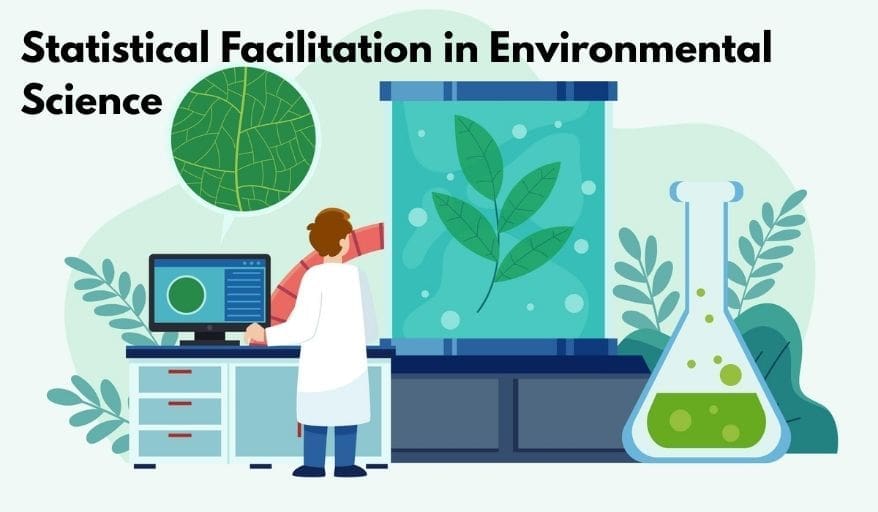
Statistical facilitation in environmental science features a new study on carbon emissions from plastic and its insights focus on the entire life cycle of polymers. It reveals a big problem with plastic waste that scientists recently uncovered even though most people are aware of how plastic pollutes our oceans. The study also highlights how it harms our climate.
The Hidden Cost of Convenience
Statistical facilitation in environmental science analysis shows we use synthetic materials every single day. The study takes the case of beverages in polyethylene bottles. The research reveals that producing these items requires massive amounts of fossil fuels. At first, the process seems simple and cheap. However, the environmental impact is actually quite high.
The study in statistical facilitation in environmental science explains that making plastic releases greenhouse gases. These gases trap heat in our atmosphere which leads to global warming and weather changes. The study also highlights that more plastic means more carbon dioxide in the air. It points out that prior to this, many people ignored the production phase. The study, therefore, urges we must look at the carbon footprint now.
Why STEM Students Should Care
You might want to study Chemical Engineering. This field helps create sustainable materials. To list, you could design biodegradable alternatives. Many engineering careers focus on green technology. To point out, the world needs innovative thinkers. Your skills could reduce industrial waste significantly.
So far, we rely on petrochemicals too much. You can help change that paradigm shift. With this in mind, look at Material Science. It is a great path for curious minds. You can learn more about STEM opportunities online.
From Factories to Landfills
The study in statistical facilitation in environmental science tracks plastic from birth to death. To illustrate, raw materials travel long distances. This transportation adds to the total emissions. After that, factories use heat to mold the resin. This stage consumes a lot of electrical energy. All in all, the process is very energy-intensive
Breaking Down the Data of Statistical facilitation in environmental science
While it may be true that recycling helps. At the present time, recycling rates remain very low. Most plastic ends up in a landfill instead. To put it another way, it stays there forever. To summarize, we need better waste management systems. At length, the study suggests using circular economy models. This means reusing items as long as possible.
Summing up, every choice makes a huge difference. Analogous to a puzzle, every piece matters. Small changes in consumption help the ecosystem. To be sure, we cannot stop using plastic overnight. But we can find eco-friendly ways to live.
Your Future in Environmental Science
Does this topic of statistical facilitation in environmental science interest you at all? You could become an Environmental Scientist. These experts study how pollution affects nature. To that end, they find ways to protect wildlife. As a result, they influence government policy and laws.
All things considered, STEM jobs are very exciting. They allow you to solve real-world problems. At this instant, many companies want green experts. Provided that you study hard, you can succeed. To sum up, the planet needs your creative ideas. What’s more, these careers offer very stable pay.
Final Thoughts on Plastic
In short, the plastic crisis is very real. With attention to detail, we see the carbon link. At any rate, we must act very quickly. We should support renewable energy and bioplastics. Seeing that you are the next generation, it starts with you. To repeat, knowledge is your most powerful tool.
So long as we innovate, there is hope. In reality, the future looks quite bright. By all means, keep asking big scientific questions. At last, we can build a cleaner world together. Together with your peers, you can lead the way.
Additionally, to stay updated with the latest developments in STEM research, visit ENTECH Online. Basically, this is our digital magazine for science, technology, engineering, and mathematics. Also, at ENTECH Online, you’ll find a wealth of information.
Reference
Mather, M., Kuck, S., & Oliver, D. (2026). Statistical Facilitation in Environmental Science: Integrating Results from Complementary Statistical Analyses Can Improve Ecological Interpretations. Environments, 13(2), 82. https://doi.org/10.3390/environments13020082
- Author
- Latest Posts

I completed my Master of Science from the University of Allahabad in 2017 with a strong academic background in life sciences and chemistry. My specialization included Molecular Biology, Microbiology, Genetics, Plant Breeding, Phycology, Paleobotany, and Bioinformatics, along with Organic Chemistry, Inorganic Chemistry, and Physical Chemistry. This multidisciplinary training provided me with a comprehensive understanding of biological systems and analytical scientific approaches.
After completing my postgraduate studies, I gained valuable professional experience in both the education and social development sectors. I worked at A.M. Oxford Public School, where I was actively involved in guiding students toward academic excellence. In this role, I focused on creating an engaging learning environment, encouraging critical thinking, and nurturing students’ curiosity for scientific learning. My experience as an educator strengthened my communication, mentoring, and classroom management skills.
In addition to my teaching experience, I worked with Jeevan Jagriti Foundation, where I contributed to community-based initiatives aimed at improving educational access and awareness among underprivileged sections of society. Through this work, I participated in programs designed to support social development and promote the value of education in marginalized communities.
These professional experiences helped me develop strong interpersonal, leadership, and organizational skills while reinforcing my commitment to education and community service.