Telepharmacy offers several practical usage areas. Patients living in remote or rural areas can receive personalized counseling..
Telepharmacy in hospital: Implementation, and future directions
Telepharmacy in hospital
Telepharmacy is essentially a “digital bridge” that allows pharmacists to provide expert care to patients even if they aren’t in the same room. Instead of needing a pharmacist physically present at every hospital bedside or rural clinic, they can use video calls and secure digital systems to manage medications and teach patients how to take their pills safely. To make this work smoothly and safely, hospitals are now adding Artificial Intelligence to help catch errors and advanced security (Zero Trust) to make sure patient data and drug supplies are never hacked. It turns the hospital pharmacy from a physical room into a high-tech service that can reach anyone, anywhere.
Expanded Clinical Services
Telepharmacy has grown beyond simple phone calls. It now includes Medication Therapy Management (MTM), where pharmacists remotely review a patient’s entire medication list to prevent dangerous interactions. It also allows for real-time monitoring, where digital tools alert a remote pharmacist if a patient’s vitals change after taking a new drug.
The Role of Advanced Technology:
- AI and Machine Learning: These tools act as a second set of eyes, analyzing data patterns to suggest the best treatments and ensuring the drug supply chain remains efficient.
- Zero Trust Architecture (ZTA): In a digital hospital, security is a major challenge. ZTA is a “never trust, always verify” security model that protects sensitive patient records and prevents unauthorized access to high-risk medications.
- Key Challenges for Hospitals:
- Regulatory Barriers: Laws often vary by region regarding how prescriptions can be handled remotely.
- Technological Integration: Many hospitals still use older systems that don’t always “talk” to new telepharmacy software.
- Human Factor: Both staff and patients must be trained to trust and use digital platforms effectively.
Future Direction
The goal is to create a seamless digital health ecosystem. In the future, telepharmacy will likely move toward even more personalized care, using data to tailor treatments to an individual’s specific lifestyle and genetic needs, making hospital stays shorter and safer.
Practical usage areas of Telepharmacy in hospital
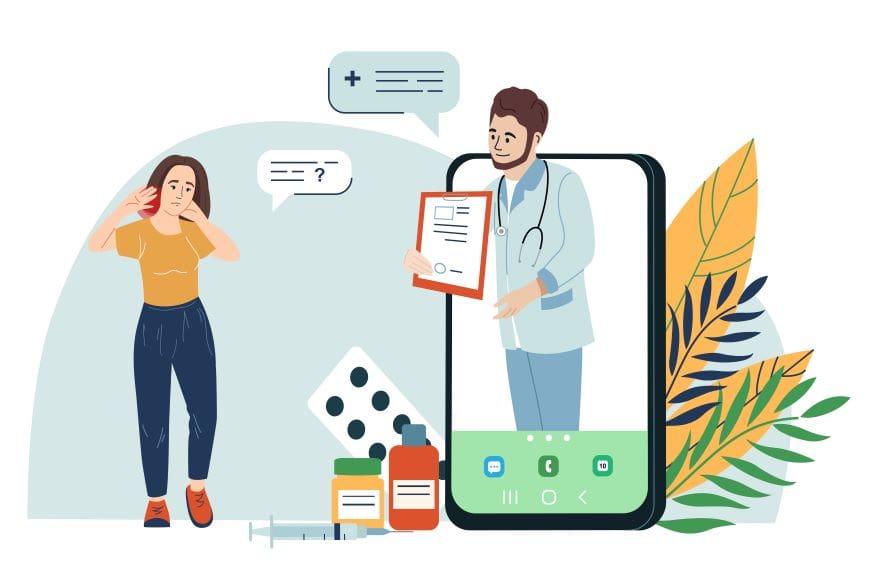
Telepharmacy offers several practical usage areas. Patients living in remote or rural areas can receive personalized counseling from a licensed pharmacist via secure video calls. Eliminating the need for long-distance travel. As a result, workflows are improves by AI-driven chatbots that provide 24/7 support. Answering medication queries and sending automate reminders to improve adherence. Practically, this technology allows for remote prescription verification. Where a central pharmacist reviews orders and electronically releases medications from automated dispensing machines (ADMs) located at local clinics. Additionally, wearable devices can stream a patient’s vital signs and medication behavior directly to their care team in real time. Furthermore, cybersecurity—specifically the implementation of Zero Trust Architecture—is a vital career path to protect sensitive patient data from escalating cyber threats. Other opportunities include human-centric security, digital health literacy, and the development of advanced threat intelligence systems tailored for healthcare.
Also read: Isomerism and its types
Commercialization Prospectus
Similarly, regarding its commercial purpose, telepharmacy is already a permanent and ready feature of global healthcare systems. While early versions were simple telephone advice lines. The system was “set in stone” as a mainstream modality during the COVID-19 pandemic. Finally, it is currently widely utilizes across North America, Europe, Australia, and parts of Asia. Financially, the telemedicine market was predict to exceed 30 billion by 2020. Moreover, this innovation, telepharmacy is expect to generate approximately 9.92 billion by the year 2033. . This innovation is frequently enhancing by Artificial Intelligence (AI), Machine Learning (ML), and Zero Trust Architecture (ZTA) because to ensure operational efficiency. Personalized care, and robust security in the drug supply chain.
Educational Research and Career
However, there are numerous research areas that students can pursue for future careers. One significant field is AI and Machine Learning, where students can develop predictive models to identify patients at risk of non-adherence or predict disease progression. Blockchain and Distributed Ledger Technology is a fertile research area for improving the transparency and traceability of the drug supply chain. considered experimental, it has evolved into a cornerstone of contemporary digital health, encompassing clinical services like medication therapy management. Students interested in technology can explore Edge Computing for real-time analytics or the interoperability of diverse digital health platforms. Furthermore, cybersecurity—specifically the implementation of Zero Trust Architecture—is a vital career path to protect sensitive patient data from escalating cyber threats. Other opportunities include human-centric security, digital health literacy, and the development of advanced threat intelligence systems tailored for healthcare.. This innovation is frequently enhancing by Artificial Intelligence (AI), Machine Learning (ML), and Zero Trust Architecture (ZTA) because to ensure operational efficiency. Personalized care, and robust security in the drug supply chain.
Finally, Telepharmacy serves as a digital bridge, connecting pharmacists and patients over vast distances, much like a virtual highway that ensures life-saving medications and expertise reach even the most isolated destinations without the need for physical travel.
Additionally, to stay updated with the latest developments in STEM research, visit ENTECH Online.
Reference:
Khare, P. S. (2025). Telepharmacy in hospital pharmacy: Implementation, challenges, and future directions. Intelligent Hospital, 1(2), Article 100025. https://doi.org/10.1016/j.inhs.2025
Disclaimer: We do not intend this article/blog post to provide professional, technical, or medical advice. Therefore, please consult a healthcare professional before making any changes to your diet or lifestyle. In fact, we use AI-generated images for illustration and decoration. Their accuracy, quality, and appropriateness can differ. So, users should avoid making decisions or assumptions based only on the text and images.
- Author
- Latest Posts

I am an inspirational writer and emerging science blogger with a deep-rooted passion for understanding and sharing the wonders of the world around us. My journey began with a Bachelor of Science in Chemistry from AKI’s Poona College of Arts, Commerce and Science, where I developed not only a strong foundation in scientific principles but also a mindset that values curiosity, observation, and critical thinking. Studying chemistry has taught me to approach problems with logic, to look beyond the obvious, and to see patterns where others might only see complexity. These experiences have shaped the way I perceive life and influence the way I express my thoughts, both scientifically and creatively.
I have always believed that knowledge is only as powerful as the way it is shared. This belief has guided me to create content that bridges the gap between science and everyday life. I aim to simplify complex scientific ideas so they become approachable, relatable, and engaging for everyone—whether someone has a formal background in science or is simply curious about the world. Science, in my view, is not confined to textbooks and laboratories; it is a way of thinking, understanding, and connecting with the world around us. By making science accessible, I hope to inspire curiosity, ignite learning, and encourage people to see the beauty and relevance of scientific discovery in their daily lives.
Alongside my love for science, I am deeply passionate about motivational writing. I believe words carry the power to transform perspectives, encourage self-reflection, and inspire action. By combining analytical thinking with creativity, I create content that is intellectually stimulating yet emotionally resonant. Whether I am breaking down a chemical concept, exploring a scientific phenomenon, or crafting motivational narratives, my goal is to communicate ideas in a way that is clear, meaningful, and impactful.
Through my work, I strive to empower my readers—not just by helping them understand the science around them, but by inspiring them to grow, learn, and realize their full potential. Every article, post, or story I write reflects my commitment to turning knowledge into inspiration. I want to spark curiosity, encourage self-improvement, and show that learning and personal growth are deeply connected. For me, writing is not just a craft; it is a way to touch minds, connect hearts, and make ideas come alive in a way that truly resonates.