The secret lies in a fascinating chemical reaction called the Maillard reaction.
The Maillard Reaction: Why Toast Tastes Good
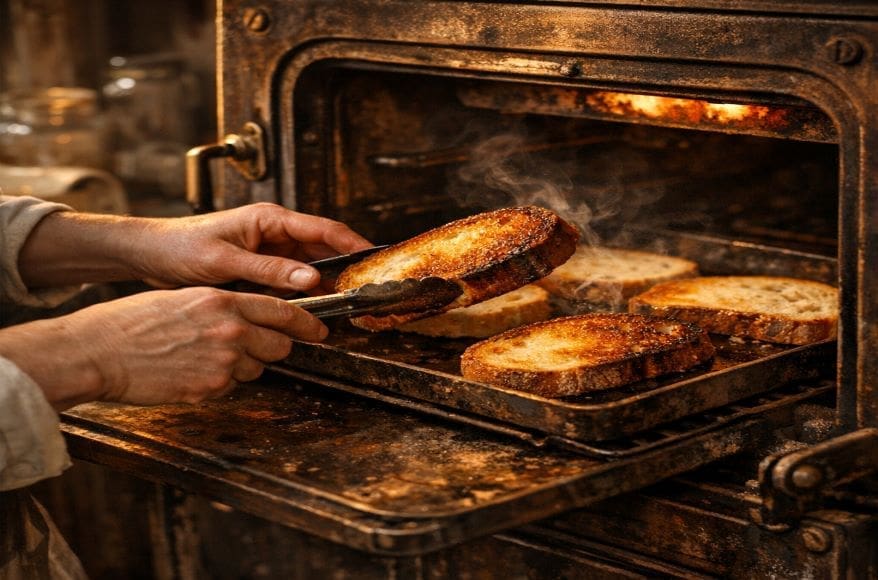
Have you ever wondered why toasted bread smells so much better than plain white bread? Or why a seared steak tastes completely different from boiled meat? The secret lies in a fascinating chemical reaction called the Maillard reaction. This process transforms bland food into delicious, golden-brown masterpieces that make your mouth water.
What Exactly Is the Maillard Reaction?
The Maillard reaction is a chemical process that occurs when amino acids (the building blocks of proteins) meet reducing sugars under heat. Essentially, these molecules react with each other and create entirely new compounds that weren’t there before. Consequently, these new compounds give food its distinctive brown color, complex aroma, and rich flavor.
The Key Players: Amino Acids and Sugars
For the Maillard reaction to happen, you need two essential ingredients working together. First, you need amino acids, which come from proteins in foods like meat, eggs, and grains. Second, you need reducing sugars such as glucose or fructose, which are found in vegetables, bread, and many other foods.
When heat brings these molecules together, they start dancing and rearranging themselves. Furthermore, this molecular transformation creates completely new substances. These substances include melanoidins (brown pigments), aromatic compounds, and hundreds of flavor molecules. Therefore, the combination of heat, amino acids, and sugars is what makes magic happen in your kitchen.
Temperature Matters: Maillard reaction
The Maillard reaction doesn’t just happen at any temperature. In fact, it typically begins around 280°F to 330°F (140°C to 165°C). This is why boiling food (which happens at 212°F or 100°C) doesn’t create those delicious brown crusts. On the other hand, roasting, grilling, frying, and toasting all reach temperatures high enough to trigger this reaction.
Additionally, the reaction speeds up as temperature increases. That’s why a steak seared on high heat develops a flavorful crust in just minutes, while slow-cooked meat might never brown at all.
Real-World Examples: From Your Kitchen to Your Plate
Now that you understand the basics, let’s look at some everyday examples of the Maillard reaction in action. These examples show just how much this reaction impacts what we eat.
Toast: The Classic Example
When you put bread in a toaster, the starches in the bread break down into simple sugars. Subsequently, these sugars react with the amino acids from the wheat proteins. As a result, the bread transforms from soft and white to crispy and golden-brown. Moreover, it develops that incredible toasty aroma that fills your kitchen in the morning.
Plain bread tastes fairly neutral and mild. However, toasted bread has nutty, complex flavors that make it perfect for breakfast. This dramatic difference comes entirely from the Maillard reaction creating new flavor compounds.
Caramelized Onions: Sweet and Savory
Raw onions taste sharp and pungent. Nevertheless, when you cook them slowly in a pan, something remarkable happens. The natural sugars in the onions combine with their amino acids, creating deep brown caramelization and sweet, savory flavors.
The Perfect Steak: Searing for Flavor
A boiled steak might be cooked through, but it’s pale, gray, and frankly unappealing. Conversely, a seared steak has a beautiful brown crust packed with flavor. This crust forms when the surface proteins and sugars undergo the Maillard reaction at high temperatures.
Professional chefs know this secret well. Therefore, they always pat steaks dry before cooking and use very hot pans. The dry surface and high heat maximize the Maillard reaction, creating that delicious crust while keeping the inside tender and juicy. This technique demonstrates how understanding chemistry can make you a better cook.
Why Does It Matter? The Science of Flavor
Understanding the Maillard reaction isn’t just interesting—it’s actually practical knowledge that can improve your cooking and help you appreciate food science.
Hundreds of Flavor Compounds
The Maillard reaction doesn’t create just one or two flavors. Instead, it produces hundreds of different volatile compounds that contribute to taste and smell. These compounds include pyrazines (which give roasted, nutty flavors), furans (which add caramel-like sweetness), and thiazoles (which contribute meaty, savory notes).
Beyond Taste: Nutrition and Health
While the Maillard reaction makes food delicious, scientists are also studying its effects on nutrition. Some Maillard reaction products may have antioxidant properties, which could be beneficial for health. However, excessive browning can also create compounds that aren’t as healthy.
Applications Beyond Cooking
Interestingly, the Maillard reaction isn’t limited to your kitchen. Food manufacturers use this knowledge to develop better products, from breakfast cereals to snack foods. Additionally, scientists study these reactions to improve food preservation, flavor development, and even create synthetic meat alternatives.
Furthermore, understanding the Maillard reaction helps researchers develop better space food for astronauts, improve infant formula, and create more appealing plant-based proteins. The applications extend far beyond simply making toast taste good.
Additionally, to stay updated with the latest developments in STEM research, visit ENTECH Online. Basically, this is our digital magazine for science, technology, engineering, and mathematics. Further, at ENTECH Online, you’ll find a wealth of information.
References:
- Tamanna, N., & Mahmood, N. (2015). Food processing and Maillard reaction products: Effect on human health and nutrition. International Journal of Food Science, 2015, Article 526762. https://doi.org/10.1155/2015/526762
- Author
- Latest Posts

I am an inspirational writer and emerging science blogger with a deep-rooted passion for understanding and sharing the wonders of the world around us. My journey began with a Bachelor of Science in Chemistry from AKI’s Poona College of Arts, Commerce and Science, where I developed not only a strong foundation in scientific principles but also a mindset that values curiosity, observation, and critical thinking. Studying chemistry has taught me to approach problems with logic, to look beyond the obvious, and to see patterns where others might only see complexity. These experiences have shaped the way I perceive life and influence the way I express my thoughts, both scientifically and creatively.
I have always believed that knowledge is only as powerful as the way it is shared. This belief has guided me to create content that bridges the gap between science and everyday life. I aim to simplify complex scientific ideas so they become approachable, relatable, and engaging for everyone—whether someone has a formal background in science or is simply curious about the world. Science, in my view, is not confined to textbooks and laboratories; it is a way of thinking, understanding, and connecting with the world around us. By making science accessible, I hope to inspire curiosity, ignite learning, and encourage people to see the beauty and relevance of scientific discovery in their daily lives.
Alongside my love for science, I am deeply passionate about motivational writing. I believe words carry the power to transform perspectives, encourage self-reflection, and inspire action. By combining analytical thinking with creativity, I create content that is intellectually stimulating yet emotionally resonant. Whether I am breaking down a chemical concept, exploring a scientific phenomenon, or crafting motivational narratives, my goal is to communicate ideas in a way that is clear, meaningful, and impactful.
Through my work, I strive to empower my readers—not just by helping them understand the science around them, but by inspiring them to grow, learn, and realize their full potential. Every article, post, or story I write reflects my commitment to turning knowledge into inspiration. I want to spark curiosity, encourage self-improvement, and show that learning and personal growth are deeply connected. For me, writing is not just a craft; it is a way to touch minds, connect hearts, and make ideas come alive in a way that truly resonates.