Learn what insert molding is and how it combines metal and plastic into a single component. Explore the process, its benefits, and real-world applications.
What Is Insert Molding? Process, Types, and Applications
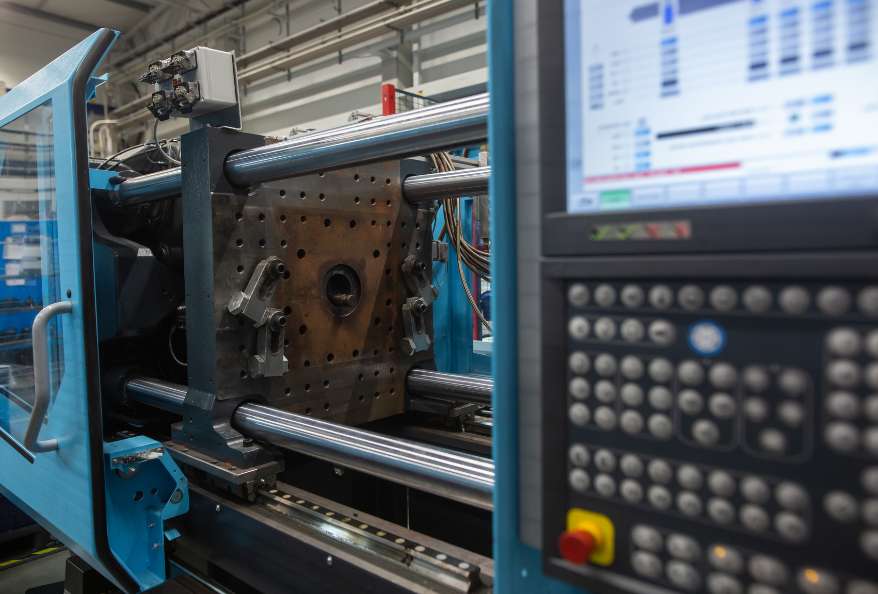
Modern products keep getting smaller, lighter, and more complex, yet they are also expected to be stronger, cleaner, and easier to assemble. That pressure has pushed manufacturers toward processes that reduce part count while improving reliability. Insert molding fits that need well because it combines different materials into one finished component instead of relying on secondary assembly after molding.
To ground this article in a real manufacturing context, we have gathered insights from Beyonics Precision Engineering, a company known for advanced manufacturing capabilities in demanding sectors. In practical terms, an insert molding service helps manufacturers build parts that combine metal and plastic, strengthen critical connection points, and simplify production by integrating multiple functions into a single molded component.
What Is Insert Molding
Insert molding is a manufacturing process in which a preformed component, often metal but sometimes ceramic or another material, is placed into a mold before plastic is injected around it. Once the plastic cools and solidifies, the insert becomes permanently integrated into the finished part. The result is one combined component rather than several separate pieces that need to be assembled later.
This process is widely used when a part must combine the strength, conductivity, or durability of an insert with the flexibility, insulation, or shape freedom of plastic. A threaded brass insert inside a plastic housing is a common example. So is a metal terminal embedded in a connector body. In both cases, the insert provides a critical function that plastic alone cannot deliver as well.
What makes insert molding especially useful is that it changes the design logic of a product. Instead of producing multiple pieces and joining them afterward with adhesives, fasteners, or labor-intensive assembly, engineers can often create a more integrated design from the start. That can improve consistency, reduce handling, and lower the risk of alignment or assembly errors.
How the Insert Molding Process Works
The process starts with mold design and insert preparation. Engineers first determine the geometry of the part, the type of insert, the plastic material, and the way the insert will be positioned inside the mold. The insert may be manually loaded by an operator or automatically placed by robotic systems in higher-volume production settings. Positioning matters because even a small shift can affect part quality or function.
Once the insert is placed in the mold cavity, the mold closes and molten plastic is injected around or over the insert. The material fills the defined cavity, surrounds the insert in the intended areas, and bonds mechanically as it cools. In some designs, the bond is mainly based on physical locking created by grooves, holes, or knurled surfaces on the insert. In others, surface treatment and material behavior help improve adhesion and retention.
After cooling, the finished component is ejected and checked for accuracy, flash, insert position, and functional integrity. Depending on the application, this may be followed by visual inspection, dimensional measurement, torque testing, pull-out testing, or electrical testing. In high-performance industries, process control is just as important as molding itself, because the part has to perform reliably in real operating conditions.
Why Manufacturers Use Insert Molding
One of the biggest advantages of insert molding is part consolidation. A component that might otherwise require several individual pieces can often be made as one integrated unit. That reduces assembly steps, lowers labor requirements, and can improve repeatability. Fewer separate pieces also mean fewer opportunities for misalignment, loose fittings, or incomplete assembly.
Insert molding also helps improve strength and function in targeted areas. Plastic is useful for shaping lightweight parts, but it may not provide enough thread durability, conductivity, or structural reinforcement on its own. A metal insert can solve those issues without requiring the entire part to be made from metal. This creates a more efficient balance between performance and cost.
Another major benefit is production efficiency over time. While tooling and development for insert molding require careful planning, the resulting process can significantly simplify downstream operations. In many cases, manufacturers reduce secondary fastening, post-molding assembly, and manual handling. That can improve throughput and reduce total manufacturing complexity, especially for higher-volume production.
Common Types of Insert Molding
There is more than one way to approach insert molding, and the right method depends on the part design and production environment. One common type uses metal inserts such as bushings, threaded inserts, contact pins, blades, or clips. These are often embedded in thermoplastic bodies for electrical, automotive, industrial, or consumer components.
Another type involves structural reinforcement inserts. In these cases, the insert may not serve as a fastening or conductive feature, but rather as a hidden strengthening element inside the molded part. This can be useful for products that must resist stress, torque, or repeated mechanical loads while remaining lightweight and compact.
Insert molding can also vary by production method. Some operations rely on manual loading, which works well for lower-volume or more specialized production. Others use automated systems with robotic pick-and-place functions, vision checks, and precisely timed molding cycles. Automation is especially useful when insert orientation and repeatability are critical, or when the production volume is high enough to justify the investment.
Material Choices and Design Considerations
Material selection plays a central role in the success of insert molding. The plastic resin must match the application requirements for strength, flexibility, heat resistance, chemical resistance, and dimensional stability. Common choices include nylon, polycarbonate, PBT, ABS, and other engineering-grade thermoplastics. The insert material, often brass, stainless steel, aluminum, or copper alloys, must also suit the part’s mechanical or electrical purpose.
Design for insert molding requires more thought than simply adding metal into a plastic part. The insert must be retained securely, positioned accurately, and protected from movement during injection. Engineers often add knurls, holes, undercuts, or anchor features to improve mechanical locking. Wall thickness, gate location, shrinkage behavior, and cooling patterns also need attention because they affect both part quality and insert stability.
Tolerance planning is equally important. Insert molding combines two different materials that may expand, contract, and respond to stress differently. If the design ignores that interaction, the finished part may warp, crack, or fail under load. A good insert-molded design depends on understanding how geometry, material behavior, tooling, and process conditions all work together.
Where Insert Molding Is Used
Insert molding is used in many industries because it enables the production of compact, durable, and function-rich components. In electronics, it is commonly used for connectors, terminals, switches, sensor housings, and cable assemblies. These parts often require conductive metal features and insulating plastic in a single, tightly controlled package.
In medical and healthcare manufacturing, insert molding is used in devices that require secure component integration, clean surfaces, and repeatable geometry. It can help create precise instrument handles, diagnostic parts, wearable device components, and assemblies where metal features must be embedded safely within a molded body. In these settings, consistency and cleanliness are especially important.
Automotive and industrial sectors also rely heavily on insert molding. Fastening points, clips, housings, switches, overmolded brackets, and electrical modules often benefit from the process. It allows manufacturers to reduce assembly steps while improving mechanical integrity and packaging efficiency. As products continue to move toward lighter, smaller, and more integrated designs, insert molding continues to gain importance across engineering-driven industries.
What Makes a Strong Insert Molding Partner
A strong insert molding supplier does more than run parts through a press. The real value comes from tooling knowledge, material expertise, process control, and the ability to identify risks before production begins. Good partners help engineers refine the design, choose suitable materials, and decide whether insert molding is truly the right process for the part.
Manufacturing capability also matters. Precision insert placement, stable molding conditions, quality inspection, and repeatable cycle control all influence the final result. A supplier with experience in regulated or high-performance industries is often better equipped to manage tight tolerances, traceability requirements, and functional validation.
For companies developing complex products, the right insert molding partner can help reduce not only production cost, but also engineering risk. When the process is designed and controlled well, insert molding becomes more than a molding technique. It becomes a practical way to build stronger, smarter, and more manufacturable products.
Additionally, to stay updated with the latest developments in STEM research, visit ENTECH Online. Basically, this is our digital magazine for science, technology, engineering, and mathematics. Further, at ENTECH Online, you’ll find a wealth of information.
- Author
- Latest Posts

Charudatta Pathak was a student at St. Aloysius High School in Bhusawal, established in 1874, making it one of India’s oldest convent institutions. He earned his bachelor’s degree in mechanical engineering from SSVPS College of Engineering, Dhule in 1995, demonstrating exceptional academic achievement. Thereafter, he launched his career as a CNC programmer in a toolroom. He has utilized FANUC, Deckel, Maho, and Mikron controllers to operate 2-axis and 3-axis machines for the fabrication of jigs, fixtures, dies, and molds. He commenced his career as an academic in 1996, when he assumed the role of lecturer at SSVPS College of Engineering, Dhule. Additionally, he earned his post-graduate degree in CAD/CAM from L. D. College of Engineering, Ahmedabad, in 2000, and then acquired a Ph.D. from COEP in 2011 while concurrently engaged in teaching. Until 2023, he occupied many academic roles, including lecturer, assistant professor, professor, dean, principal, director, and vice chancellor at both public and private universities throughout India. From 2008 to 2010, he served as the project lead in the CAE department of a European multinational firm. During his 28-year professional tenure, he identified a need for dependable books targeted at students in grades 8 to 12, particularly for nascent career planning. He founded ENTECH Digital Magazine, a free monthly publication available on entechonline.com and magzter.com. Teens with a strong interest in Science, Technology, Engineering, and Mathematics (STEM) who aspire to pursue careers in these fields may find ENTECH Digital Magazine beneficial.