They pollute our air. They warm our planet. Sooner or later, we need a better plan.
Microbes to the Rescue: How Tiny Organisms Are Powering the Future
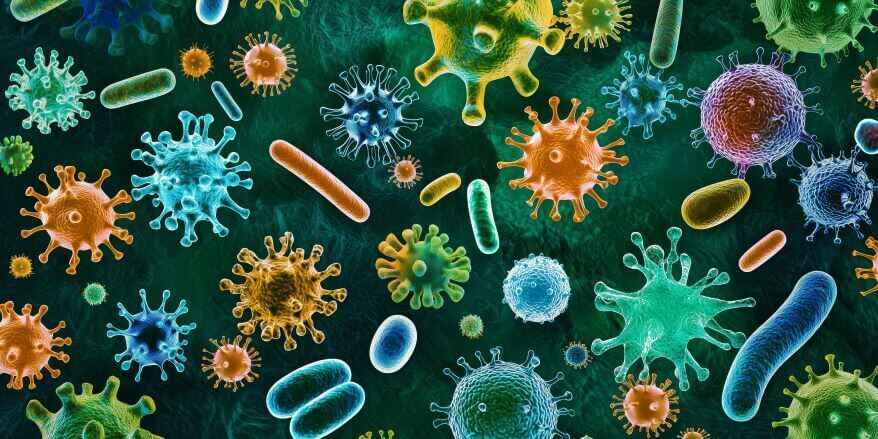
Why Microbes Are Essential for Human Life
The world needs clean energy — badly. At the present time, fossil fuels still power most of our lives. They pollute our air. They warm our planet. Sooner or later, we need a better plan. As a matter of fact, scientists may already have one. It involves some of the smallest living things on Earth — microbes.
A landmark review published in Current Research in Biotechnology explores exactly this idea (Diwan et al., 2024). The paper covers how microorganisms such as algae, fungi, and bacteria can power an entirely new kind of factory. Scientists call this a microbial biorefinery. It is a sustainable, low-waste system. It turns biological waste into useful products like biofuels, bioplastics, enzymes, and medicines.
What Exactly Is a Biorefinery?
Think of a biorefinery as a factory — but a green one. To put it differently, it works like an oil refinery. But instead of crude oil, it uses biomass (organic material from plants, algae, or waste). It converts this biomass into a range of valuable products. Above all, it aims to produce zero waste. Every part of the biomass gets used.
The International Energy Agency (IEA) defines a biorefinery as a facility for converting biomass into fuels, materials, and energy in an environmentally sustainable manner (IEA Bioenergy Task 42, as cited in Diwan et al., 2024). To enumerate the outputs: biofuels, chemicals, biopolymers, food ingredients, and pharmaceuticals.
How Do Microbes Fit In?
This is where it gets exciting. Microbes are nature’s own chemical engineers. Provided that you give them the right feedstock, they produce remarkable things.
Microalgae, for example, grow incredibly fast. They use sunlight and CO₂ to make energy. At the same time, they produce fatty acids and biofuels as by-products. Seeing that they can grow in wastewater or even seawater, they do not compete with food crops (Diwan et al., 2024).
Fungi are equally impressive. To illustrate, filamentous fungi produce powerful enzymes that break down tough plant material called lignocellulose. What’s more, fungi also manufacture pharmaceutically important compounds. Seeing that fungi are natural decomposers, they are very efficient at breaking down biological waste.
Bacteria take a different route. Analogous to miniature factories, bacteria convert simple organic molecules into high-value chemicals. Researchers engineer bacteria to become what the paper calls “turbo cells” — super-efficient producers of target bio-products (Diwan et al., 2024). At this point, bacterial biorefineries are among the most promising platforms in green biotechnology.
Why Does This Research Matter?
1. Climate change — Biofuels made from microbial biorefineries produce far fewer greenhouse gas emissions than fossil fuels (Mishra et al., 2024).
2. Plastic pollution — Bacteria can produce bioplastics such as polyhydroxyalkanoates (PHA). These plastics are biodegradable. With this in mind, they could replace petroleum-based plastics in packaging and medicine.
3. Energy security — Countries can reduce their dependence on imported oil. So that nations become more self-reliant, local biomass feedstocks get used instead.
What Are the Challenges?
All things considered, microbial biorefineries are not yet perfect. At length, the review discusses several hurdles. Prior to full commercial deployment, engineers must solve problems like contamination control, feedstock availability, and high operating costs.
After that, there is the challenge of regulations. Genetically engineered bacteria, for example, face strict safety evaluations before use. Such as the European Union’s regulatory process for novel microorganisms (EFSA, 2024). So far, only a limited number of microbial biorefineries operate at industrial scale globally.
Career Opportunities for You in This Field
So, why should a Grade 11 or 12 student care about this? To point out the obvious — the biorefinery industry is growing fast.
While this may be true that STEM careers can seem complex, the entry points are many. To list some exciting career paths this research opens up:
- Microbial Biotechnologist — designs microbes for industrial production
- Bioprocess Engineer — builds and manages fermentation systems
- Environmental Scientist — studies the impact of bio-based industries
- Biochemist — analyzes the molecules that microbes produce
- Biofuel Technician — operates and monitors biofuel production plants (Biotech Careers, n.d.)
With this purpose in mind, students interested in biology, chemistry, and engineering should explore degrees in biotechnology, chemical engineering, environmental science, or microbiology. To read more about exciting career paths in biotechnology, check out Introduction to Biotechnology and Its Impact on ENTECH Online. You can also explore broader options in Career Options After 12th Science to plan your path forward.
Additionally, to stay updated with the latest developments in STEM research, visit ENTECH Online. Basically, this is our digital magazine for science, technology, engineering, and mathematics. Also, at ENTECH Online, you’ll find a wealth of information.
Reference:
- Zuhra Bibi, Dilara Abbas Bukhari, Muhammad Qadeer Sarwar, Arifullah, Samina Younas, Tayyab Manzoor, Abdul Rehman Gut health improvement by locally isolated probiotics and histomorphometric analysis in Wistar rats, Current Research in Biotechnology https://doi.org/10.1016/j.crbiot.2024.100271
- Author
- Latest Posts

I am an inspirational writer and emerging science blogger with a deep-rooted passion for understanding and sharing the wonders of the world around us. My journey began with a Bachelor of Science in Chemistry from AKI’s Poona College of Arts, Commerce and Science, where I developed not only a strong foundation in scientific principles but also a mindset that values curiosity, observation, and critical thinking. Studying chemistry has taught me to approach problems with logic, to look beyond the obvious, and to see patterns where others might only see complexity. These experiences have shaped the way I perceive life and influence the way I express my thoughts, both scientifically and creatively.
I have always believed that knowledge is only as powerful as the way it is shared. This belief has guided me to create content that bridges the gap between science and everyday life. I aim to simplify complex scientific ideas so they become approachable, relatable, and engaging for everyone—whether someone has a formal background in science or is simply curious about the world. Science, in my view, is not confined to textbooks and laboratories; it is a way of thinking, understanding, and connecting with the world around us. By making science accessible, I hope to inspire curiosity, ignite learning, and encourage people to see the beauty and relevance of scientific discovery in their daily lives.
Alongside my love for science, I am deeply passionate about motivational writing. I believe words carry the power to transform perspectives, encourage self-reflection, and inspire action. By combining analytical thinking with creativity, I create content that is intellectually stimulating yet emotionally resonant. Whether I am breaking down a chemical concept, exploring a scientific phenomenon, or crafting motivational narratives, my goal is to communicate ideas in a way that is clear, meaningful, and impactful.
Through my work, I strive to empower my readers—not just by helping them understand the science around them, but by inspiring them to grow, learn, and realize their full potential. Every article, post, or story I write reflects my commitment to turning knowledge into inspiration. I want to spark curiosity, encourage self-improvement, and show that learning and personal growth are deeply connected. For me, writing is not just a craft; it is a way to touch minds, connect hearts, and make ideas come alive in a way that truly resonates.