Introduction to Biotechnology an rapidly evolving field that encompasses the utilization of living organisms
Biotechnology: The Evolution and Its Impact on Various Industries
Estimated reading time: 22 minutes
Science moves fast today. New medicines save millions of lives. At the same time, farmers grow more food on less land. Factories make less waste than before. How is all of this possible? The answer is biotechnology. It uses living things to solve big problems. In other words, it has become one of the fastest-growing fields in the world. The introduction to biotechnology can shape your whole future. At any rate, it is one of the most exciting careers you can choose.
Key Takeaways
Before we go further, here is what you will learn in Introduction to biotechnology:
- Biotechnology uses living things to make products and solve problems.
- The field is thousands of years old. But modern biotech is brand new.
- There are main 7 color-coded branches of biotech and even more.
- Each color leads to a different and exciting career.
- Tools like CRISPR and PCR power modern biotech today.
- Jobs exist in medicine, farming, food, the ocean, tech, and more.
- The global biotech market is worth over $1.3 trillion today.
What Is Biotechnology? A Simple Start
To start with, let us break the word down. Bio means life. Technology means using tools to solve problems. So, when you combine them together. You get biotechnology. In short, biotech means using living things to make useful products. It also means using biology to fix real problems.
For example, think about the yogurt in your fridge. Microbes made it through fermentation. Similarly, insulin for diabetes patients. Bacteria with human genes now make it. In the same vein, consider crops that do not die in floods. Scientists designed those using biotech tools. As a matter of fact, biotech surrounds you every day.
The introduction to biotechnology as a proper science began in the 20th century. In 1953, Watson and Crick found the structure of DNA. Indeed, that one discovery changed all of science. After that, scientists could study, copy, and even change genes. By the 1970s, the first gene-changed organisms appeared. Provided that science kept moving, biotech grew fast. It has not stopped growing since.
Accordingly, the UN Convention on Biological Diversity defines it clearly. Biotech is any use of living systems to make or change products. In simple terms: if it uses life, it is biotech.
A Short History of Biotechnology
To explain the history of biotech, we go back thousands of years. Interestingly, old human civilizations brewed beer and made wine. They baked bread using yeast and bred animals to get better traits. They did all of this without knowing the science behind it. That was the very first form of biotech. So far, experts divide the story into four clear eras.

Era 1: Traditional Biotech (Before 1900s)
People used living things long before labs existed. To enumerate, here are the key practices from this early era:
- Fermenting grapes into wine and barley into beer
- Baking bread using natural yeast in dough
- Making cheese using microbial fermentation
- Breeding cattle, dogs, and wheat for better traits
- Growing disease-resistant crops through careful selection
In like fashion, all these acts used living things as tools. No lab was needed. They used the natural power of life. Indeed, this shows that humans have been biotechnologists for thousands of years. In short, it is the history of humans working with nature to survive.
Era 2: The Science Era (1900s–1950s)
In this era, scientists began to understand why things worked. These were the years of big discoveries:
- Scientists found chromosomes and genes in the early 1900s.
- In 1928, Alexander Fleming found penicillin — the first antibiotic.
- In 1944, scientists proved DNA carries all genetic data.
- In 1953, Watson and Crick showed the world DNA’s double helix shape.
These finds built the base for all modern biotech. After all, you cannot use a tool well unless you understand it first.
Era 3: The Gene Revolution (1960s–1990s)
This era saw a burst of key breakthroughs. In addition, each one moved biotech closer to an industry:
- Scientists cracked the full genetic code in the 1960s.
- In 1972, Paul Berg made the first combined DNA molecule.
- In 1978, bacteria with a human gene made human insulin for the first time.
- In 1983, Kary Mullis invented the PCR lab technique.
- The Human Genome Project started in 1990 to map all human genes.
- In 1996, Dolly the sheep became the first cloned mammal in history.
Era 4: Modern Biotech (2000s–Now)
At the present time, biotech moves faster than ever. To illustrate, here are the top milestones of this era:
- Scientists finished the Human Genome Project in 2003.
- In 2012, CRISPR-Cas9 gene editing was introduced to the world.
- mRNA vaccines for COVID-19 were built in record time in 2020.
- In 2022, AI tool AlphaFold mapped over 200 million proteins.
- Scientists now edit human genes to treat serious diseases.
- AI and biotech are merging right now into a new science frontier.
All in all, the history of the Introduction to biotechnology shows how far science has come. Each era built on the last. Each win opened new career paths for young scientists (National Human Genome Research Institute, 2023).
Core Areas of Biotechnology
The introduction to biotechnology covers several key fields. Each field uses living things in a different way. Here is a simple breakdown:

Molecular Biotech
This area works with DNA and RNA. Scientists study genes at the smallest level. They also change living things using gene tools. As a result, we now have precise drugs, fast vaccines, and smart diagnostic tests.
Agricultural Biotech
On the other hand, this branch improves crops and farm animals. Scientists make GM crops that resist pests and survive dry spells. In addition, they develop animals with better farm traits. Similarly, this helps feed a growing world in a changing climate.
Medical Biotech
Perhaps the most visible field, this is the best-known area of biotech. In addition, they develop new drugs, vaccines, and treatments. Gene therapy, cancer drugs, and insulin all fall here. After all, human health is always the top goal.
Environmental Biotech
Meanwhile, this area uses microbes to clean up pollution. Scientists develop biofuels as clean energy sources. With this in mind, this field plays a big role in fighting climate change today.
Industrial Biotech
This branch uses living things in factories. Moreover, it makes plastics that break down naturally. It also makes eco-friendly chemicals. Sooner or later, most industries will use some form of biotech in their work.
Bio-Data Science (Bioinformatics)
Finally, this area mixes biology and computer science. Scientists use computers to study large sets of biological data. As a result, it helps decode genomes, design drugs, and predict diseases early. In short, this makes the introduction to biotechnology one of the widest fields in modern science.
Key Tools in Modern Biotechnology
To understand the introduction to biotechnology fully, know the key tools. These are the devices and methods that make everything work. Here are the most important ones for every student to learn:
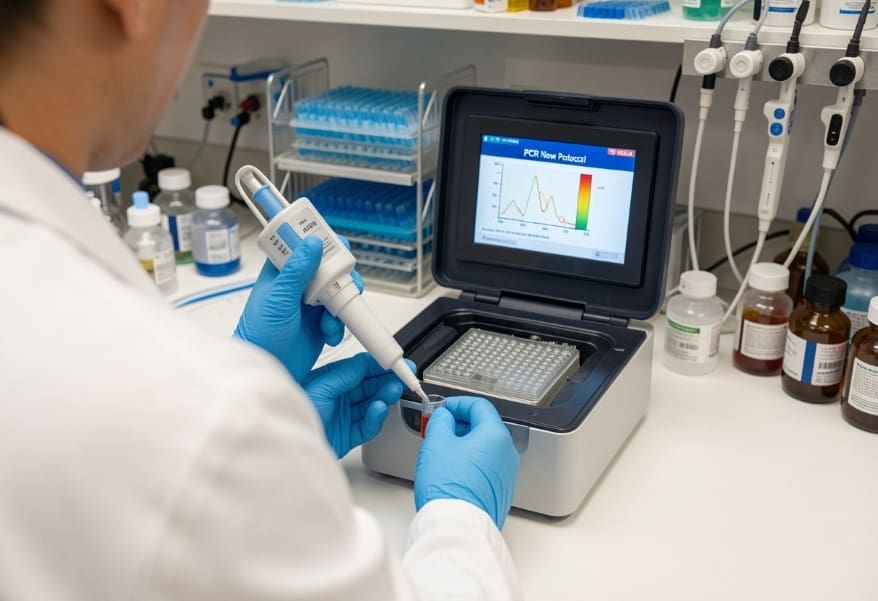
PCR: The DNA Copier
PCR stands for Polymerase Chain Reaction. It copies a tiny DNA piece millions of times. Scientists use it to find diseases early. They also use it to identify people in crime cases. During COVID-19, PCR tests became famous globally. To illustrate, one small DNA sample gives billions of copies in just hours.
How PCR works in four steps:
- Firstly, heat the DNA to split its two strands apart.
- Secondly, short DNA primers attach to the target area.
- Thirdly, an enzyme copies the target DNA sequence.
- Lastly, repeat 30 to 40 times to get millions of copies.
CRISPR: The Gene Editor
CRISPR is a tool that cuts and edits DNA. Think of it as molecular scissors. Scientists use it to fix broken genes. Specifically, it can treat cancer and inherited diseases. What’s more, it is faster and far cheaper than old gene editing tools.
In fact, CRISPR won the Nobel Prize in Chemistry in 2020. Its inventors were Jennifer Doudna and Emmanuelle Charpentier. At this point, it is the single most powerful gene tool in the world.
Combined DNA Technology
This method joins DNA from two different living things. Scientists take a gene from one organism. They put it inside another. As a result, the second organism makes a new and useful protein. For example, bacteria with a human gene now make insulin for diabetics. This method changed medicine forever.
Cell Culture
Cell culture grows living cells in a lab dish. To clarify, scientists use it to study diseases up close. They also test new drugs safely on grown cells. Furthermore, cell culture helps produce vaccines and biological drugs in large amounts.
Gel Electrophoresis
This method sorts biological molecules by size. Specifically, scientists push DNA through a gel using electric current. As a result, small pieces move faster and travel farther. To put it differently, it is a race track for molecules. Scientists use it to spot genetic disorders and compare DNA samples.
DNA Sequencing
This method reads the exact order of bases in a DNA strand. At the same time, modern machines read millions of bases in a single day. Genome sequencing has changed medicine, farming, and crime science completely.
Bioreactors
A bioreactor is a large, controlled vessel. Scientists grow bacteria, yeast, or animal cells inside it. Specifically, they control temperature, oxygen, and nutrients precisely. Therefore, this is how vaccines and antibiotics are made at commercial scale. Together, these tools form the backbone of the introduction to biotechnology in the modern era.
The Colors of Biotechnology: Your Career Guide
This is the most exciting part of the introduction to biotechnology. At this instant, picture biotech as a rainbow. Each color is a different field. Each color also leads to a unique career path. In total, scientists use seven major colors to map the whole field. Let us look at each one now.

Red Biotechnology: The Medicine Maker
The first one in Introduction to Biotechnology is: Red biotech which is all about medicine and health. It is the most well-known color in the field. This branch makes drugs, vaccines, tests, and therapies. To put it another way, if it heals sick people, it is most likely red biotech.
What Red Biotech Does:
- Makes vaccines, including mRNA shots like the COVID-19 jab.
- Produces insulin for diabetics using gene-modified bacteria.
- Develops targeted cancer drugs called biologics.
- Uses gene therapy to fix inherited diseases for life.
- Makes monoclonal antibodies to treat cancer and immune disorders.
- Advances stem cell research for growing new tissues.
- Creates fast diagnostic tests for HIV, hepatitis B, and TB.
Careers in Red Biotech:
- Drug scientist
- Clinical researcher
- Genetic counselor
- Biomedical engineer
- Immune system specialist
- Drug safety and approval expert
As an illustration, the COVID-19 mRNA vaccine is a landmark of red biotech. Scientists designed it within 48 hours of reading the viral DNA. As a result, over 13 billion doses reached people worldwide by 2023. This shows the sheer power of this field.
At the present time, the global biologics market is on track to exceed $500 billion by 2030. So, provided that you love medicine and saving lives, red biotech is your natural path.
Green Biotechnology: The Food Farmer
Green biotech focuses on farming and plants. It uses biotech tools to grow more food. As a result, farmers get better crops. Furthermore, they use less water, less land, and fewer chemicals. This matters a lot for feeding a world growing toward 10 billion people.
What Green Biotech Does:
- Makes GM crops that fight pests and diseases on their own.
- Grows drought-safe and flood-resistant food crops.
- Produces crops with added nutrients, like Golden Rice for Vitamin A.
- Develops biological pest agents to replace chemical sprays.
- Uses plant tissue culture to copy rare and useful plant strains fast.
- Creates bio-fertilizers that are safe for soil and water.
- Breeds new crop types through fast molecular methods.
Careers in Green Biotech:
- Agricultural scientist
- Plant geneticist
- Food scientist
- Crop biotech researcher
- Seed technology expert
- GM crop safety regulator
To illustrate, Golden Rice is one of the most famous green biotech products. Scientists changed rice to make beta-carotene, which the body turns into Vitamin A. This helps children who lack Vitamin A in their diet. As a matter of fact, Vitamin A deficiency blinds around 500,000 children every year. Consequently, green biotech offers a life-saving solution to global hunger.
While it may be true that GM crops face some public debate, science clearly supports their safety. Green biotech is, all things considered, vital for global food security now and in the future.
Blue Biotechnology: The Ocean Explorer
Blue biotech focuses on the ocean and water life. The sea covers over 70% of Earth’s surface. Moreover, it holds millions of life forms we have not yet studied. Blue biotech taps into this vast living resource.
What Blue Biotech Does:
- Finds new enzymes from deep-sea microbes in extreme environments.
- Develops new drugs and antibiotics from marine life.
- Makes biofuels from algae as clean and green energy.
- Uses marine compounds in skincare and cosmetic products.
- Improves fish and shellfish farming using genetic tools.
- Makes bio-plastics from seaweed to replace petroleum plastics.
- Builds smart sensors using ideas from marine organisms.
Careers in Blue Biotech:
- Marine biologist
- Aquaculture scientist
- Ocean researcher
- Marine drug developer
- Algae biotech engineer
- Marine environment scientist
As an illustration, some of the strongest antibiotics on earth come from sea sponges. Marine life makes complex chemicals to survive extreme ocean conditions. Accordingly, scientists now study these chemicals for new medicines to fight drug-resistant infections. What’s more, algae like Spirulina are already in health supplements and test biofuels.
Blue biotech is still very young. So far, scientists have studied less than 5% of marine life. This makes it one of the most wide-open fields for young scientists who love the sea and science together.

White Biotechnology: The Eco-Industry Hero
White biotech, also called industrial biotech, focuses on making things in factories. It swaps harsh chemical steps with biological ones. As a result, factories create less pollution and less waste. In similar fashion, it is sometimes called grey biotech in some science books.
What White Biotech Does:
- Makes biofuels like ethanol and biodiesel from crops and food waste.
- Produces plastics that break down in soil using microbes.
- Makes enzymes for soaps, fabrics, paper, and leather at large scale.
- Creates bio-based chemicals to replace oil-derived ones.
- Treats factory waste water using living microbes.
- Uses fermentation to make vitamins and food additives in bulk.
- Dyes fabrics using natural enzymes instead of toxic dyes.
Careers in White Biotech:
- Industrial biochemist
- Biofuel engineer
- Enzyme product developer
- Bioprocess engineer
- Green chemistry expert
- Factory sustainability manager
To put it differently, white biotech helps the world move away from fossil fuels. To enumerate, industries already using biological enzymes include food processing, paper, textiles, leather, and detergent-making. At the present time, the global industrial biotech market is worth over $300 billion and growing fast.
All things considered, white biotech is one of the most important tools for a cleaner world. It lowers carbon output, removes toxic steps and uses renewable raw materials in smart ways.
Yellow Biotechnology: The Food Scientist’s Lab
Yellow biotech focuses on food and insects. Some experts use it only for food science. On the other hand, others extend it to include insects as a resource for food and fuel. Either way, yellow biotech shapes what we eat and how we make it.
What Yellow Biotech Does:
- Uses fermentation to make cheese, beer, wine, and vinegar.
- Tests food safety using fast molecular tools.
- Grows insect-based protein as food and animal feed.
- Develops probiotics and health foods for better gut function.
- Creates edible vaccines inside food plants like tomatoes.
- Produces biofuel from insect fats and oils.
- Makes food packing from natural, biodegradable plant materials.
Careers in Yellow Biotech:
- Food scientist
- Fermentation expert
- Food safety analyst
- Health food developer
- Insect protein engineer
- Functional food researcher
As can be seen, yellow biotech touches your daily life directly. The yogurt you eat for breakfast is a product of fermentation. The gut health drinks in shops use yellow biotech too. What’s more, insect-based foods are growing fast worldwide as a smart protein source. In fact, insects hold more protein per gram than beef. With this in mind, yellow biotech is actively shaping the future of food.
Gold Biotechnology: The Digital Biologist
Gold biotech, also called bioinformatics, mixes biology with computers and big data. It is one of the newest colors in biotech. At this point, it is also the fastest-growing career area in all of science. Almost all modern biotech now depends on gold biotech tools to make sense of data.
What Gold Biotech Does:
- Reads and maps whole genomes from living things.
- Uses computers to find and design new drug candidates.
- Predicts protein shapes using AI tools like AlphaFold.
- Analyses huge sets of health and biology data at speed.
- Builds AI models that detect diseases early and accurately.
- Designs custom treatments based on a patient’s own DNA.
- Studies how genes and proteins work together as a system.
Careers in Gold Biotech:
- Bioinformatics scientist
- Computational biologist
- Health data scientist
- Genome analyst
- AI in healthcare specialist
- Clinical data scientist
- Drug design researcher
To explain, bioinformatics is what lets scientists make sense of genome data. The Human Genome Project made 3 billion base pairs of data. In other words, without computers, that data would be useless. Seeing that the field now merges with AI, demand for gold biotech experts is exploding.
As noted, AlphaFold predicted the 3D shape of over 200 million proteins in 2022. That is a bigger leap in biology than anything in the past 50 years. Gold biotech is, all in all, the future of data-driven science.
Violet Biotechnology: The Ethics Guardian
Violet biotech covers law, ethics, and safety in biotechnology. It is not a lab science. But it is just as vital as any other color. As biotech grows more powerful, society needs people to guide its safe and fair use.
What Violet Biotech Does:
- Writes safety rules for GM organisms across countries.
- Builds ethical guides for gene editing in human embryos.
- Shapes science policy and rules for new biotech products.
- Handles patent law and ownership rights in biotech firms.
- Designs lab safety plans for high-risk biological work.
- Talks to the public about real biotech risks and benefits.
- Reviews ethics of clinical trials using biotech products.
Careers in Violet Biotech:
- Bioethicist
- Lab safety officer
- Science policy advisor
- Drug approval and safety manager
- Patent lawyer for biotech
- Science writer or journalist
- International health policy officer
While this may be true that violet biotech is less visible, it is the moral core of the whole field. After all, science without ethics can do great harm. Seeing that CRISPR can now edit human embryos, ethical guides matter more than ever. Violet biotech experts protect both science and society. They work in governments, universities, global bodies, and NGOs worldwide. Furthermore, they ensure that scientific progress does not outpace our shared human values.

Biotechnology in the Real World
So far, we have covered all seven colors and their career paths. Now, let us see the introduction to biotechnology at work in the real world. Here are some clear and powerful examples:
Medicine
- Insulin: Before 1982, insulin came from pig organs. Today, bacteria carry the human insulin gene. To Illustrate, they make human insulin in large tanks. As a result, millions of diabetics use this product every single day.
- CAR-T Cell Therapy: Scientists take a patient’s own immune cells. They modify the cells to hunt and kill cancer. This therapy has saved thousands of lives so far.
- COVID-19 Vaccines: Scientists built the mRNA vaccine design in just 48 hours. Indeed, this is the fastest vaccine ever made in human history.
Farming
- Bt Cotton: GM cotton holds a gene from a common soil bacterium. That gene makes a protein toxic to key insects. As a result, farmers cut pesticide use by a large amount.
- Golden Rice: Scientists changed rice genes so it makes Vitamin A. For this reason, this helps children in poor regions who lack this vital nutrient.
- Flood-Safe Rice: Scientists added the SUB1A gene to rice. Thus, the crop now survives being under water for up to two weeks.
Environment
- Bioremediation: Scientists use microbes to clean up oil spills. In other words, the bacteria break down oil into safe compounds. As a result, this method has cleaned many polluted sites.
- Biofuels: Ethanol from sugarcane now runs millions of cars in Brazil. Similarly, algae-based fuels are in active development globally.
- Plastic-Eating Bacteria: Scientists found a bacterium called Ideonella sakaiensis. It breaks down PET plastic into safe parts. As a result, this could help fight the global plastic waste crisis.
Food and Industry
- Cheese: Most cheese today uses an enzyme called chymosin. Gene-modified yeast makes it. As a result, this fully replaced animal-based rennet many decades ago.
- Laundry Enzymes: The cleaning enzymes in your detergent come from industrial biotech. They clean clothes at lower water temperatures than before.
- Yogurt and Beer: Modern fermentation of common foods is steadily improved using biotech tools and selected microbial strains.
Career Prospects in Biotechnology
The introduction to biotechnology opens a wide range of career options. To list the top sectors where biotech jobs exist today:
Sectors That Hire Biotechnologists:
- Drug and biopharmaceutical companies.
- Farm biotech and seed companies.
- Moreover, government research labs and national institutes.
- University research departments.
- Environment consulting and clean energy firms.
- Food, drink, and health supplement companies.
- Bio-data science and health tech companies.
- Medical device and diagnostic test companies.
- Clinical research and contract research firms.
- Global bodies like WHO, FAO, UNEP, and UNESCO.
Top Jobs Across All Seven Colors:
| Color | Top Job | Other Roles |
|---|---|---|
| 🔴 Red | Drug Scientist | Clinical Researcher, Immunologist |
| 🟢 Green | Farm Biotechnologist | Plant Geneticist, Food Scientist |
| 🔵 Blue | Marine Biologist | Aquaculture Scientist, Drug Finder |
| ⚪ White | Bioprocess Engineer | Enzyme Expert, Sustainability Lead |
| 🟡 Yellow | Food Scientist | Fermentation Expert, Food Safety Analyst |
| 🥇 Gold | Bioinformatics Scientist | Data Scientist, Genome Analyst |
| 🟣 Violet | Bioethicist | Policy Advisor, Safety Officer |
Pay and Growth Outlook
Biotech is one of the best-paying science careers in the world. The global market is worth over $1.3 trillion today. Moreover, it grows at about 14% per year. In other words, jobs in this field grow fast and pay well. For Instance, entry-level scientists earn strong starting salaries. Senior experts and team leads earn much more. At this point, AI and data roles in biotech pay some of the highest starting salaries in all of science.
Key Subjects:
| Subject | Why It Matters in Biotech |
|---|---|
| Biology | The core base for Introduction of biotechnology |
| Chemistry | Needed to understand how cells work |
| Mathematics | Required for data analysis and bio-computing |
| Physics | Useful for medical devices and imaging |
| Computer Science | Critical for bioinformatics and AI in biology |
All things considered, you do not have to master it all at once. Start with Introduction to biotechnology and biology. Build your curiosity. Ask loud questions. Try things. As I have said, the best biotech scientists are people who never stopped asking “why.”
The Future of Biotechnology
At the present time, biotech is changing every field it enters. To clarify, here is what is coming next in this fast-moving science:
Emerging Trends in Biotechnology:
- Synthetic Biology — Scientists now design living things with custom functions. In short, they write DNA code like writing software. Consequently, companies like Ginkgo Bioworks lead this space today.
- Personal Medicine — Future drugs will match your own genome. In other words, there will be no more one-drug-fits-all. Your DNA will guide your doctor’s choices.
- CRISPR 2.0 — Newer gene editing tools are far more precise. Specifically, they make smaller changes with fewer errors. They are already in clinical trials.
- Gene Therapy — Single-gene diseases can now be fixed for life. For instance, sickle cell disease and muscular dystrophy are already in active trials worldwide.
- Organ-on-a-Chip — Scientists grow tiny human organs on chips. Subsequently, they test drugs on these chips safely. This reduces the need for animal testing.
- Agri-Biotech 2.0 — Future crops will absorb more carbon from the air. Furthermore, they will grow in deserts with very little water.
- The Blue Economy — Marine biotech will make new drugs, smart materials, and ocean-based fuels in the next two decades. As a result, over the next two decades, this field will likely become a major pillar of the global economy.
- AI-Driven Drug Design — AI will test thousands of new drug options in hours. Because of this, this will cut drug development from 15 years to just a few.
All things considered, the future belongs to those who can think across fields. Above all, the best biotech scientists of tomorrow will mix biology, data, engineering, and ethics in their daily work. With this in mind, the introduction to biotechnology you start today builds the base for a career that changes lives.
Frequently Asked Questions (FAQs) about Introduction to Biotechnology
What is biotechnology?
Biotechnology is the use of living organisms, cells, or biological systems to create useful products. Therefore, it includes areas like medicine, agriculture, and environmental solutions .In short, it is the science of using life to solve human problems.
Is biotechnology only genetic engineering?
No. In fact, genetic engineering is just one part. Biotechnology also includes fermentation, bioinformatics, food science, and more—even traditional processes like bread-making. In fact, it even covers traditional processes like bread-making and brewing that have existed for centuries.
What subjects are needed for biotechnology?
Biology and chemistry are essential. In addition, mathematics is often required, and computer science is important for fields like bioinformatics. Furthermore, computer science is becoming increasingly important for high-growth fields like bioinformatics and AI drug design.
Biotechnology vs biomedical engineering?
Biotechnology focuses on biological systems and products like drugs and crops. Biomedical engineering applies engineering to medical devices like prosthetics and imaging tools. Accordingly, while they both help patients, their methods are quite different.
What are the colors of biotechnology?
Biotech is grouped by application areas. To enumerate, these include
Red (medicine), Green (agriculture), Blue (marine), White (industry), Yellow (food), Gold (data science), Violet (ethics).
Is biotechnology a good career?
Yes. It’s a fast-growing field with opportunities in healthcare, agriculture, environment, and technology. Moreover, because the global market is expanding rapidly, there is a strong and steady demand for new scientists worldwide.
What is CRISPR?
CRISPR is a gene-editing tool that allows precise DNA changes. As a result, it is now widely used in research, medicine, and agriculture.
References
- Rotter A, et. al (2021) The Essentials of Marine Biotechnology. Front. Mar. Sci. 8:629629. https://doi.org/10.3389/fmars.2021.629629
- Adli, M. (2018). The CRISPR tool kit for genome editing and beyond. Nature Communications, 9(1), 1911. https://doi.org/10.1038/s41467-018-04252-2
- Pellegrino, E., Bedini, S., Nuti, M. et al. Impact of genetically engineered maize on agronomic, environmental and toxicological traits: a meta-analysis of 21 years of field data. Sci Rep 8, 3113 (2018) https://doi.org/10.1038/s41598-018-21284-2
- Author
- Latest Posts

Ayushi Shukla is a biotechnologist and science communicator specializing in the intersection of genomic data and public health. Previously, she served as a Core Member and R&D Lead at the HealthTech venture Eat Wisely Bro, where she spearheaded research initiatives and translated emerging medical data into product strategy. She holds an M.Sc. in Biotechnology from the TERI School of Advanced Studies, where her research at The Energy and Resources Institute (TERI), New Delhi, focused on Environmental Biotechnology and Bioremediation.
As a Research Scholar at TERI, Ayushi developed a plant growth-promoting bacterial consortium for high-salinity agricultural conditions, managing daily laboratory procedures and molecular workflows. Her technical portfolio on GitHub demonstrates her dry lab expertise, featuring end-to-end bioinfomatics pipelines for RNA-Seq analysis, Phylogenetic modeling, and a functional prototype for Mycobacterium tuberculosis Genomic Surveillance & Dashboard.
Her clinical foundation includes advanced training in Somatic NGS and Precision Oncology from the Cancer Research Centre at Tata Memorial Centre, and a professional certification in Good Clinical Practice (GLP) from the NIDA Clinical Trials Network. Ayushi bridges the gap between raw genomic data and student-friendly narratives to help the next generation of scientist understand the transformative power of modern biology.




Very goods apps
Thanks for your comment! ENTECH Online is more than just a magazine; it’s a gateway to a world of possibilities for teenagers passionate about Science, Technology, Engineering, and Mathematics (STEM).
Keep visiting entechonline.com to read the latest news and articles on Science, Technology, Engineering and Mathematics STEM.
Biotechnology is the best field for career.
Thanks for your comment, keep visiting entechonline.com for more articles related to your interests.
Great content
Thanks for your comment, keep visiting entechonline.com for more articles related to your interests.
💯💯
Thanks for your comment, keep visiting entechonline.com for more articles related to your interests.