Discovery of Lycoris × xiui highlights the importance of continued scientific exploration and conservation of natural habitats.
Nothospecies (Natural Hybrids) Discovered in China
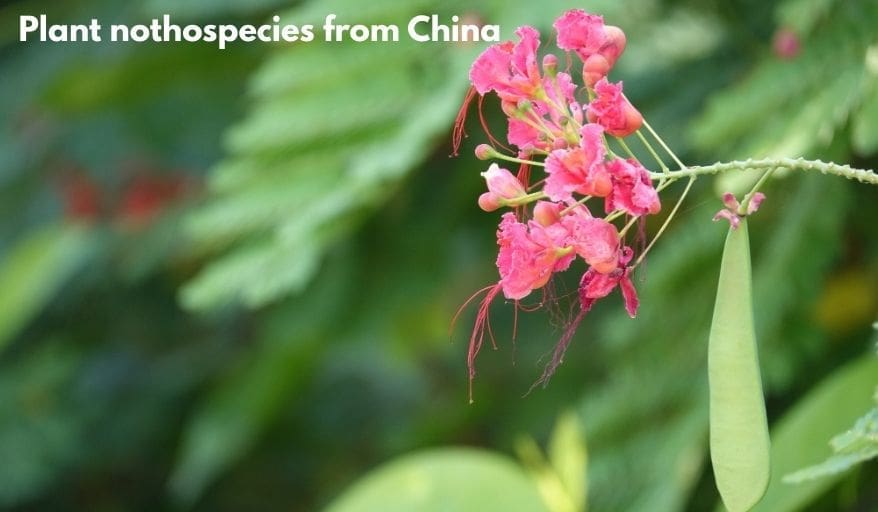
Scientists recently found a stunning new plant nothospecies from China, surprising botanists around the world. The flower was discovered on Langya Mountain, a region known for its rich biodiversity and unique ecosystems. This remarkable plant is a natural hybrid, meaning it formed when two different species mixed on their own without human involvement. Researchers named it Lycoris × xiui. The discovery helps scientists better understand plant evolution, natural hybridization, and adaptation. Above all, it reminds us that the natural world is still full of hidden wonders.
Nothospecies from China: A Perfect Mix of Two Parents
This new nothospecies comes from two parent plants. One parent is Lycoris longituba. The other is Lycoris sprengeri. These two species usually live in different spots. Prior to this find, scientists rarely saw them together. In reality, this hybrid has features from both parents. Its flowers are usually pink or pale pink. Sometimes, the petals have blue tips.
The perigone tube length is also unique in this Plant Nothospecies from China. It measures between 1.5 and 3.5 centimeters—right between the lengths of its parents. What’s more, the plant looks like a beautiful mix of the two species. At first, researchers were very surprised. They did not expect to see these two species mating. After all, nature often keeps species separate. As a result, this find is a big deal for botany.
How Did They Know It Was New?
To confirm the hybrid status of the Plant Nothospecies from China, the team used three main tests. First, they examined the morphology—the physical shape and structure of the plant. At the same time, they analyzed the DNA, focusing on the chloroplast genome, which typically comes from the mother plant.
Second, the team examined the chromosomes of the Plant Nothospecies from China, finding a karyotype of 19 chromosomes—a specific count that proves its hybrid origin, as no other species in the area matches this. All in all, the data confirms this is a new nothospecies. Provided that the habitat stays safe, it will keep growing. At any rate, this research shows why fieldwork is vital.
Why Study Rare Plants?
Learning about botany—and groundbreaking discoveries like the rare Plant Nothospecies from China—is more than just looking at flowers; it’s about biological classification and saving nature. To illustrate, knowing how hybrids form truly helps conservation efforts, showing how plants adapt to new places amid climate shifts. Seeing that the world is changing rapidly, this is very important. To put it differently, botanists are like nature detectives, finding clues naturally.
Careers in Plant Science
Do you love being outdoors? A career in STEM might be for you. You could become a botanist or a taxonomist. To enumerate, these experts find and name new species. Prior to getting a job, you need a degree. Most scientists start with a biology major. After that, many get a Master’s or PhD. At length, you could lead your own expeditions.
In similar fashion, you could work in biotechnology. Geneticists study DNA to help crops grow better. With this in mind, STEM offers many high-paying paths. So as long as you are curious, you can succeed. To be sure, the world needs more scientists. All things considered, discovering a new plant is a huge achievement. It puts your name in the history books forever. At last, your work could help protect the planet.
Summing up, Lycoris × xiui is a beautiful natural wonder. It reminds us that science is always moving forward. In conclusion, the next big discovery could be yours!
Conclusion: Nothospecies
In conclusion, the discovery of Lycoris × xiui highlights the importance of continued scientific exploration and conservation of natural habitats. It shows how nature can create new life through its own processes and deepens our understanding of plant evolution.
Additionally, to stay updated with the latest developments in STEM research, visit ENTECH Online. Basically, this is our digital magazine for science, technology, engineering, and mathematics. Also, at ENTECH Online, you’ll find a wealth of information.
Reference:
- Zhang, S. Y., Hu, Y. F., Xu, Z. Z., Si, X. Y., Shao, J. W., & Tang, J. (2026). Lycoris × xiui, a new wild nothospecies from Anhui, China, a hybrid between L. longituba and L. sprengeri (Amaryllidaceae). PhytoKeys, 269, 1–15. https://doi.org/10.3897/phytokeys.269.175227
- Author
- Latest Posts

I completed my Master of Science from the University of Allahabad in 2017 with a strong academic background in life sciences and chemistry. My specialization included Molecular Biology, Microbiology, Genetics, Plant Breeding, Phycology, Paleobotany, and Bioinformatics, along with Organic Chemistry, Inorganic Chemistry, and Physical Chemistry. This multidisciplinary training provided me with a comprehensive understanding of biological systems and analytical scientific approaches.
After completing my postgraduate studies, I gained valuable professional experience in both the education and social development sectors. I worked at A.M. Oxford Public School, where I was actively involved in guiding students toward academic excellence. In this role, I focused on creating an engaging learning environment, encouraging critical thinking, and nurturing students’ curiosity for scientific learning. My experience as an educator strengthened my communication, mentoring, and classroom management skills.
In addition to my teaching experience, I worked with Jeevan Jagriti Foundation, where I contributed to community-based initiatives aimed at improving educational access and awareness among underprivileged sections of society. Through this work, I participated in programs designed to support social development and promote the value of education in marginalized communities.
These professional experiences helped me develop strong interpersonal, leadership, and organizational skills while reinforcing my commitment to education and community service.