Experts expect coordinated drone systems to grow rapidly. In fact, industries already invest heavily.
Drone Swarm Robotics Shapes the Future of Flying Machines
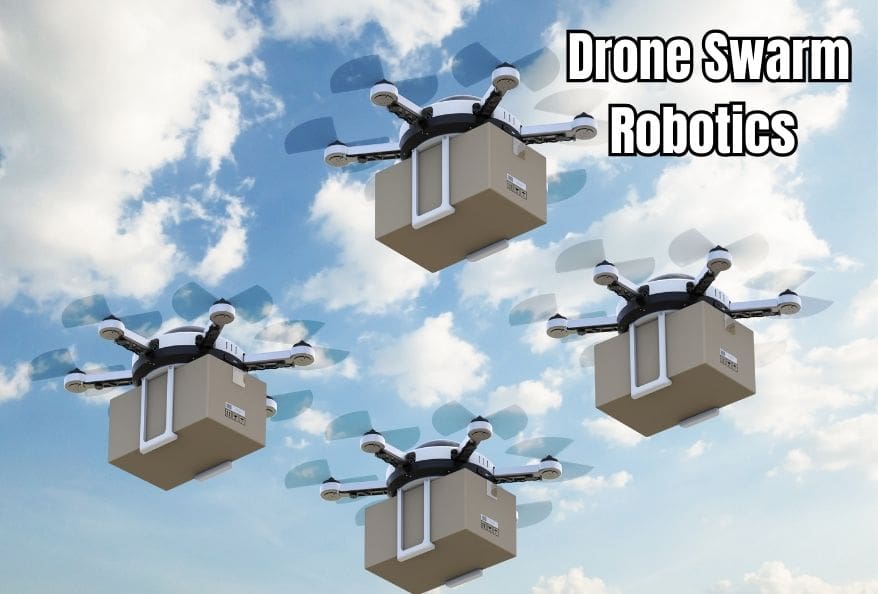
At the present time, flying robots are changing modern engineering. Above all, scientists now study drone swarm robotics rather than single machines. A recent study explains how UAV technology, cooperative robots, and teamwork-based automation work together. The research appears in the journal Robotics. It focuses on real engineering problems.
At first, drones were simple remote-controlled tools. After that, engineers added sensors, cameras, and onboard computers. As a result, flying machines became smarter and more independent. At this point, researchers explore how groups of drones cooperate as teams.
Understanding UAV Systems for Drone Swarms
UAVs, or Unmanned Aerial Vehicles, are aircraft without human pilots onboard. In general, these machines rely on sensors, software, and control systems. To explain, UAVs can fly, land, and avoid obstacles autonomously.
The study highlights advanced UAV designs used in modern aerial robotics. These include tail-sitter drones, which take off vertically. Then they shift into horizontal flight. This design saves space and energy. However, controlling these aircraft becomes more complex.
Engineers tested these systems through simulations and experiments. With attention to stability, they improved flight control. As can be seen, real testing improves safety and reliability.
How Swarm Robotics Enables Drone Teamwork
Swarm robotics involves many robots working together. In like manner, ants and bees inspire these systems. Each robot follows simple rules. Together, they perform complex tasks.
To put it differently, cooperative drone teams act as one intelligent group. They share information and adjust behavior. In effect, this makes drone swarm robotics flexible and resilient.
The study explains how visual coordination supports these teams. Each drone uses cameras to track nearby units. As a result, formations remain stable without central control.
Why Team-Based Drones Matter
One drone can fail easily. In contrast, a coordinated group continues working if one unit fails. This improves mission success. Above all, drone swarm robotics saves time and resources.
To list key advantages, these systems offer faster area coverage, better fault tolerance, and improved adaptability. In short, coordinated drone teams outperform single-drone systems.
Real-World Applications of Drone Swarm Robotics
Environmental Monitoring with UAV Swarm Systems
Groups of drones can monitor forests and oceans. To illustrate, they track pollution or wildlife movement. This data supports environmental protection.
Disaster Response Using Coordinated Drone Teams
After all, emergencies need speed. Coordinated drones search disaster zones quickly. They locate survivors faster than humans alone.
Smart Cities Powered by Autonomous Drone Swarms
Cities need constant inspection. Drone teams inspect bridges and buildings. In this case, aerial robots reduce risk to workers.
Engineering Challenges Still Exist
Although this may be true, challenges remain. Communication between drones can fail. In spite of this, researchers design smarter coordination algorithms.
Security is another concern. Hackers may disrupt signals. With this purpose in mind, engineers build safer networks.
Energy limits flight time. So long as batteries improve, drone swarm robotics systems will last longer. In due time, technology will solve these issues.
What Teens Can Learn from Drone Swarm Robotics
At this time, students can learn robotics early. Drone swarm robotics combines coding, physics, and teamwork. It suits curious minds.
By comparison, swarm-based robotics offers broader learning than single robots. It teaches collaboration and systems thinking.
The Future of Drone Swarm Robotics and Multi-Drone Systems
Experts expect coordinated drone systems to grow rapidly. In fact, industries already invest heavily. Seeing that demand increases, drone swarm robotics careers will follow.
All things considered, this technology represents the future of aviation. Teens entering engineering today will shape that future.
Additionally, to stay updated with the latest developments in STEM research, visit ENTECH Online. Basically, this is our digital magazine for science, technology, engineering, and mathematics. Further, at ENTECH Online, you’ll find a wealth of information.
Reference:
- Flores, G., Becerra, H. M., Ramírez-Paredes, J. P., and Brandão, A. S. (2026). UAV systems and swarm robotics. Robotics, 15(1), 26. https://doi.org/10.3390/robotics15010026
- Author
- Latest Posts

Kottauppari Venkat Raghava
I am an Information Technology graduate (B.Tech) and a technology writer specialising in artificial intelligence, robotics, automation, and space technologies. I analyse complex scientific research and convert it into clear, practical insights for students, tech enthusiasts, and professionals. My work bridges the gap between academic research and real-world understanding by simplifying findings from peer-reviewed journals into engaging, easy-to-follow content. Alongside my writing, I have hands-on experience developing real-world projects, showcased on my GitHub, including an Expense Tracker web application for managing and visualising spending, and a Simple Video Summariser that generates concise insights from video content using automation techniques. I also produce research-driven articles on topics such as AI-powered corrosion detection, deep learning in engineering, and advanced automation systems. I follow a research-driven approach, ensuring every article is grounded in verified sources, industry knowledge, and practical applications. My goal is to make advanced technology accessible and meaningful, helping readers stay informed about innovations shaping the future.