Refuse-Derived Fuel Gasification for energy production: a systematic and science mapping review of technologies.
Refuse-Derived Fuel Gasification as a Waste-to-Energy Strategy
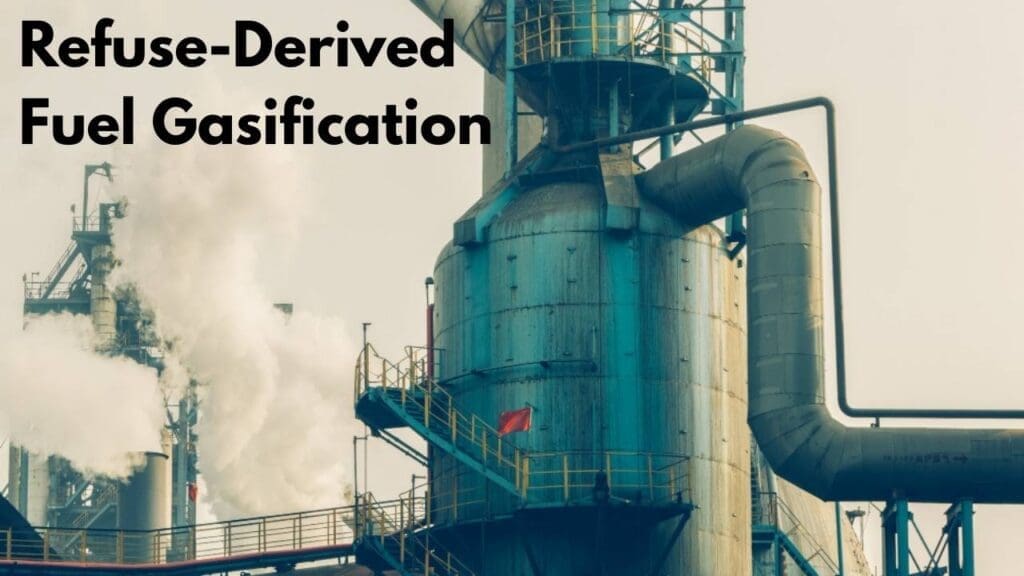
Refuse-Derived Fuel Gasification offers an innovative solution to the growing global waste problem. Instead of allowing garbage to accumulate in landfills, this approach transforms municipal solid waste into a valuable energy resource. The process begins by converting waste into Refuse-Derived Fuel (RDF), which is processed into compact, energy-dense pellets. These pellets are then subjected to high-temperature gasification, breaking them down into a combustible synthesis gas (syngas). This gas can be used to generate electricity, heat, or other forms of energy. By converting waste into power, this technology supports the development of a circular economy, reduces environmental pollution, and promotes more sustainable resource management.
Refuse-Derived Fuel Gasification Process: From Waste Sorting to Syngas Production
At first, engineers must sort the municipal solid waste. They remove recyclables like metal and glass from the pile. Prior to the next step, they shred the remaining plastics and paper. These materials become RDF pellets that are easy to transport. To explain, the gasification process does not just burn the trash. It heats the fuel in a low-oxygen environment instead. As a result, the fuel turns into a synthetic gas called syngas. This syngas can create electricity or even hydrogen for cars.
Why This Matters for Your Career
While this may be true, you might ask about your future. STEM careers in environmental engineering are growing very fast. Students can study renewable energy to help the earth. Prior to starting a job, you need a strong science background. To list, you should focus on chemistry, physics, and math now. To point out, many universities offer degrees in sustainability and green technology. You can learn more about STEM education to start your own journey. Another key point is the need for innovation in waste management. This field needs young thinkers who want to solve climate change.
The Global Impact of RDF
At the present time, many countries use this tech already. It supports the United Nations Sustainable Development Goals effectively. Summing up, it provides affordable energy while cleaning up our cities. To be sure, we still face some technical challenges today. For the most part, scientists need to make the process cheaper. What’s more, they must ensure the syngas is very pure. Seeing that the world needs green power, this research is vital.
Exploring the Research Trends
Prior to this study, few people mapped this science field. The researchers used science mapping to track thousands of papers. They found that hydrogen production is a very hot topic. At any rate, the data shows a huge jump in interest. To put it another way, RDF gasification is the future of power. All things considered, we are moving toward a zero-waste world.
Moving Toward a Greener Future
In conclusion, your trash is actually a valuable resource. We can stop using fossil fuels by using RDF instead. To sum up, this technology protects our environment and creates jobs. At this time, you can prepare for a career in this field. You might be the one to invent a better gasifier. After all, the planet depends on the next generation of engineers. So as to succeed, start exploring STEM opportunities right now.
Conclusion
The study on Refuse-derived fuel (RDF) gasification highlights a major shift in waste management. At the present time, engineers view trash as a key to renewable energy. The research proves that turning junk into syngas is both economically viable and environmentally beneficial. As a result, this technology helps cities reach zero-waste goals. Prior to this, many people saw municipal solid waste only as a problem. To explain, gasification offers a cleaner path than just burning waste. While this may be true, commercial success depends on a steady feedstock supply. All things considered, innovation in this field supports several United Nations Sustainable Development Goals.
To point out, the study identified hydrogen production as a top research trend. To sum up, RDF gasification creates a circular economy that protects our planet. With this in mind, the field offers many STEM career paths for students. You can help build a sustainable future through science and engineering. After all, your innovation can turn today’s pollution into tomorrow’s power. By and large, this research provides a strong foundation for green energy growth. In conclusion, the future of energy is hidden right in our garbage bins.
Additionally, to stay updated with the latest developments in STEM research, visit ENTECH Online
Reference
Mensah, I., Narra, S., Ahiekpor, J. C., & Asiedu, N. Y. (2026). Refuse-derived fuel gasification for energy production: a science mapping analysis and systematic literature review. Frontiers in Environmental Science, 14. https://doi.org/10.3389/fenvs.2026.1757418
- Author
- Latest Posts

I completed my Master of Science from the University of Allahabad in 2017 with a strong academic background in life sciences and chemistry. My specialization included Molecular Biology, Microbiology, Genetics, Plant Breeding, Phycology, Paleobotany, and Bioinformatics, along with Organic Chemistry, Inorganic Chemistry, and Physical Chemistry. This multidisciplinary training provided me with a comprehensive understanding of biological systems and analytical scientific approaches.
After completing my postgraduate studies, I gained valuable professional experience in both the education and social development sectors. I worked at A.M. Oxford Public School, where I was actively involved in guiding students toward academic excellence. In this role, I focused on creating an engaging learning environment, encouraging critical thinking, and nurturing students’ curiosity for scientific learning. My experience as an educator strengthened my communication, mentoring, and classroom management skills.
In addition to my teaching experience, I worked with Jeevan Jagriti Foundation, where I contributed to community-based initiatives aimed at improving educational access and awareness among underprivileged sections of society. Through this work, I participated in programs designed to support social development and promote the value of education in marginalized communities.
These professional experiences helped me develop strong interpersonal, leadership, and organizational skills while reinforcing my commitment to education and community service.