Pollution Control Unit Ratings: Match Every Treatment Stage to the Same Duty
Learn how to match pollution control unit ratings for airflow, pressure, electrical supply, efficiency, and compatibility across treatment stages.
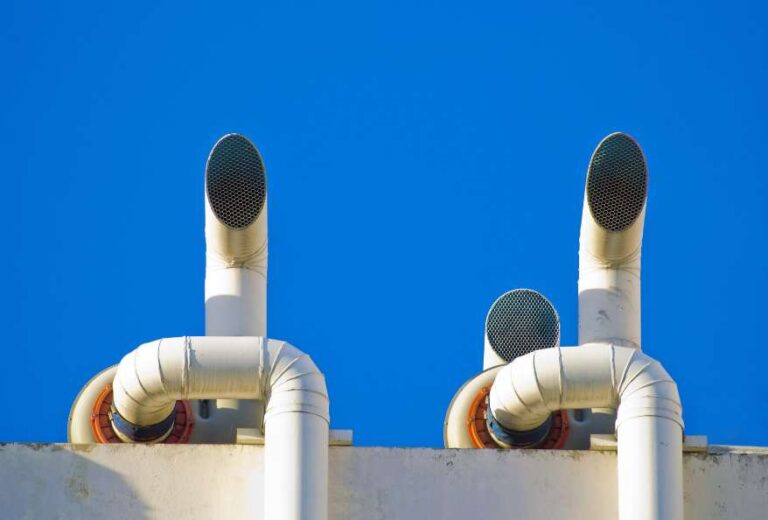
Pollution Control Unit Ratings: Match Every Treatment Stage to the Same Duty

Assessment of Air Pollution with Airborne Pollen Concentrations

Aquaculture Wastewater Treatment: Why Your Next STEM Project Should Be About Fish Poop

Generating Clean Power from Salty Water

Microbes and Low-pH Cement: Enhancing Nuclear Waste Disposal Safety

ECL Device Detects Toxic Chemicals in Water Using Flowing Energy

Recycling Plastic: Transforming Waste into Useful Products

Reflect Orbital: Selling Sunlight even at Night
Tata Steel’s Nuclear Ambitions: Driving Sustainable Steel Production

Tesla’s Giga Train: Revolutionizing Eco-Friendly Commuting
Environmental engineering is a branch of engineering that applies scientific knowledge and engineering principles to protect the environment and improve public health. It focuses on developing practical solutions to challenges such as air and water pollution, waste disposal, water scarcity and environmental contamination.
Environmental engineers design systems and technologies that help communities use natural resources responsibly. They work on water treatment facilities, pollution control systems, waste management infrastructure and sustainable industrial processes. Their work also supports efforts to reduce environmental damage and improve the way cities and industries manage resources.
As environmental challenges become increasingly complex, this field connects engineering with environmental science, chemistry, biology and technology. At ENTECH STEM Magazine, explore the concepts, applications and innovations that make environmental engineering an important part of building a healthier and more sustainable future.
Environmental engineering includes several specialised areas. Each focuses on understanding an environmental challenge and developing an effective engineering solution.
Clean water is essential for human health, agriculture and industry. However, water from natural sources and human activities may contain pollutants, harmful microorganisms and unwanted chemicals.
Environmental engineers design water treatment systems that remove contaminants and make water suitable for its intended use. They also develop wastewater treatment processes that help remove pollutants before treated water is released or reused.
These systems use physical, chemical and biological processes. Filtration, sedimentation, disinfection and biological treatment are some common examples.
Air pollution can result from industrial emissions, vehicles, power generation and other human activities. Environmental engineers develop systems to monitor and control pollutants released into the atmosphere.
Technologies such as industrial filters, scrubbers and emission-control equipment help reduce the release of harmful substances. Engineers also study air quality data to understand pollution patterns and evaluate control measures.
Homes, businesses and industries generate different types of waste. Managing this waste requires systems for collection, segregation, processing, recycling and disposal.
Environmental engineers work on improving waste management infrastructure and developing methods to recover useful materials. They also study technologies that can reduce the amount of waste sent to landfills.
Engineering and infrastructure projects can affect air, water, land, ecosystems and nearby communities. Environmental impact assessments help identify these possible effects before a project moves forward.
Environmental engineers contribute technical studies, environmental monitoring plans and recommendations to reduce negative impacts. These assessments help decision-makers consider environmental factors during project planning.
Industrial activities, improper waste disposal and accidental contamination can affect soil and groundwater quality.
Environmental engineers develop remediation approaches to manage contaminated sites. Depending on the type of contamination, these approaches may involve removing pollutants, treating affected soil or groundwater, or using biological processes to reduce contamination.
Environmental engineering has applications across cities, industries, agriculture and infrastructure. Its solutions help protect natural resources while supporting human activities.
Water resources must be managed carefully to meet the needs of households, agriculture and industries. Environmental engineers help develop systems for water conservation, treatment, recycling and reuse.
Rainwater harvesting, wastewater recycling and efficient water distribution are examples of approaches that can reduce pressure on freshwater resources.
Manufacturing and industrial processes may produce wastewater, air emissions and solid waste. Environmental engineers work with industries to identify pollution sources and improve production processes.
They help develop treatment systems, monitor environmental performance and support responsible waste management. Preventing pollution at its source can also reduce resource consumption and operating costs.
Growing cities need reliable systems for clean water, sanitation, drainage and waste management. Environmental engineers contribute to the design and improvement of this infrastructure.
They may work on sewage treatment facilities, stormwater management systems, landfill planning and urban pollution monitoring. These systems help cities manage resources and protect public health.
Environmental monitoring involves collecting and analysing information about air, water, soil and other environmental conditions.
Engineers use sensors, laboratory testing, geographic information systems and data analysis tools to assess environmental quality. The results help identify problems, evaluate treatment systems and support better planning.
New technologies are creating better ways to monitor environmental conditions, treat pollutants and manage natural resources.
Membrane filtration, advanced oxidation and other treatment methods can help remove contaminants that conventional treatment processes may not address effectively.
Researchers continue to improve these technologies to make water treatment more efficient and suitable for different applications.
Artificial intelligence can help analyse large amounts of environmental data. For example, machine learning models can support air quality forecasting, water quality monitoring and the identification of unusual pollution patterns.
When combined with sensors and monitoring networks, these tools can help engineers understand environmental conditions and plan timely responses.
Some waste materials can be processed to recover energy. Technologies such as anaerobic digestion and controlled waste-to-energy processes can convert suitable organic or residual waste into useful energy products.
Environmental engineers study how these systems can be designed and operated while managing emissions and other environmental impacts.
Nature-based solutions use natural processes to address environmental challenges. Examples include constructed wetlands for wastewater treatment, green infrastructure for stormwater management and vegetation-based approaches to improve urban environments.
These solutions can complement conventional engineering systems while supporting biodiversity and ecosystem health.
The circular economy aims to keep materials and resources in use for longer rather than treating them as disposable. Environmental engineers contribute by developing better recycling, material recovery and resource-efficient treatment systems.
This approach encourages industries and communities to reduce waste and make more effective use of available resources.
Environmental engineering may interest students who enjoy science, mathematics, problem-solving and understanding how human activities affect the natural world.
School-level knowledge of chemistry, biology, physics and mathematics provides a useful foundation. Undergraduate environmental engineering programmes commonly include subjects such as environmental chemistry, fluid mechanics, hydrology, water and wastewater treatment, air pollution control, waste management and environmental monitoring.
Practical projects and laboratory work help students understand how environmental systems operate and how engineers evaluate possible solutions.
Graduates can explore career opportunities in areas such as:
Environmental engineers may work with government agencies, consulting organisations, research institutions, infrastructure companies and industrial organisations.
Environmental engineering shows how scientific knowledge can be translated into practical solutions for real-world environmental challenges. From providing cleaner water to managing industrial waste, this field helps communities and industries reduce environmental impacts.
Whether you are exploring engineering branches, learning about pollution control or considering a future career in sustainability, understanding environmental engineering can help you discover how technology contributes to environmental protection.
ENTECH STEM Magazine brings together educational articles, expert insights and technology-related content to help students explore science, technology, engineering and mathematics. Explore our environmental engineering resources to discover the ideas, systems and innovations helping shape a more sustainable world.