Microbes and Low-pH Cement enhances Nuclear Waste Disposal Safety
Microbes and Low-pH Cement: Enhancing Nuclear Waste Disposal Safety
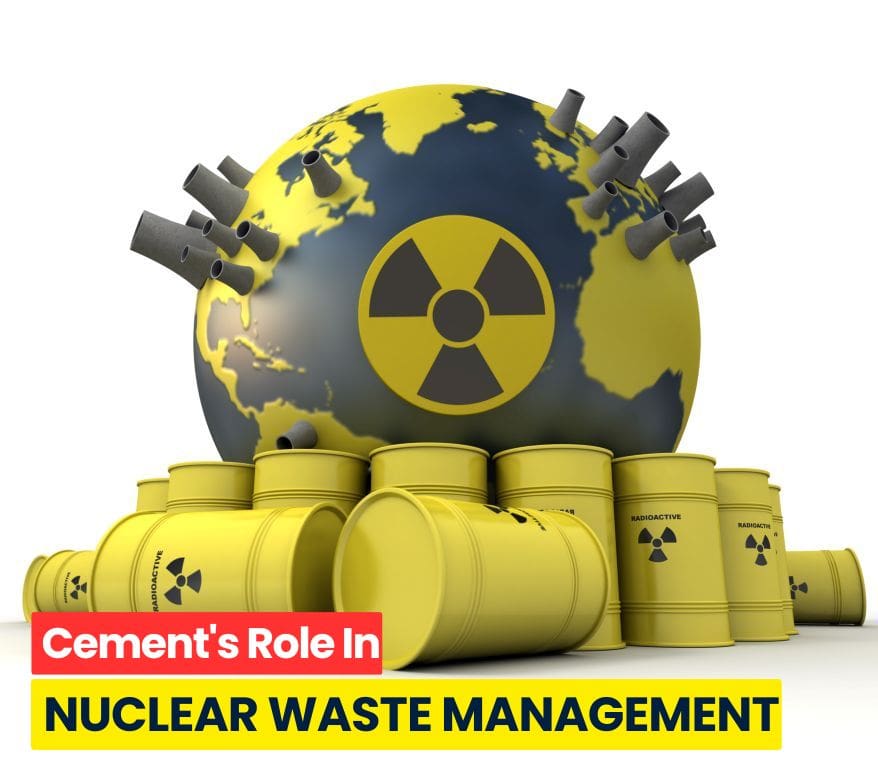
Understanding cement’s role in nuclear waste is crucial as safe disposal faces global challenges. Most waste (97%) is low- and intermediate-level, from fuel, medical, and military sources. The UK currently uses temporary ponds, but rising waste volumes demand permanent solutions soon.
The Role of Low-pH Cement in Safe Nuclear Waste Disposal
Safe disposal of nuclear waste is a significant challenge worldwide. Understanding cement’s role in nuclear waste is vital, especially since most nuclear waste, about 97%, falls into low-level (LLW) and intermediate-level waste (ILW). These wastes mainly come from nuclear fuel operations, medical research, and military sources. Currently, the UK stores this waste in monitored ponds, but this method is temporary. Scientists predict a sharp increase in nuclear waste volume by the next century, making permanent solutions crucial.
Understanding Cement’s Role in Nuclear Waste Management
Understanding cement’s role in nuclear waste is crucial, as cement is vital for constructing disposal facilities for radioactive waste. It serves as structural support for tunnels and vaults and acts as a barrier to prevent harmful substances from escaping. Specifically, Ordinary Portland Cement (OPC) offers low permeability and high strength. These traits stop water intrusion and collapse risks during storage.
However, OPC’s high pH (>12) creates challenges. The highly alkaline environment may corrode metals like aluminum and magnesium. This corrosion produces hydrogen gas, which poses safety risks. Also, this hyper-alkaline leachate can harm bentonite clay barriers used in repositories because it lowers their swelling and ion-exchange capabilities.
Innovations with Low-pH Cement Formulations
Understanding cement’s role in nuclear waste includes advances like developing low-pH cements. These cements target a pH below 11 to reduce chemical disturbances while keeping structural benefits intact. Such cements replace some OPC with materials like fly ash or blast furnace slag. This substitution creates a more stable cement matrix with lower alkalinity.
A notable example is the CEBAMA formulation, designed in Finland under European projects. CEBAMA balances low pH with strong structural performance and chemical compatibility inside geological disposal facilities (GDFs). It also adds superplasticizers to improve workability by slowing down the setting time.
The Importance of Microbial Interactions
Understanding cement’s role in nuclear waste includes recognizing that while biotic factors might seem harmful due to possible biocorrosion, some microbes may help improve cement durability within GDFs. Under anaerobic conditions expected in repositories, certain microbes can induce carbonate precipitation. This process strengthens concrete by filling tiny cracks and pores.
Microbial interactions could either degrade or reinforce the cement barriers over time. Such effects depend on groundwater chemistry and available organic carbon inside repositories where microbes thrive on breakdown products from wastes like cellulose.
Evaluating Microbial Impact Under Repository Conditions
This topic demands thorough study as microbial activity under relevant conditions remains mostly unknown for low-pH cements like CEBAMA.
Researchers conducted experiments simulating anoxic GDF environments while varying organic carbon levels to measure microbial-induced carbonate precipitation (MICP). The study examined whether MICP can seal microcracks without degrading cement integrity over time.
This knowledge is crucial because groundwater infiltration after repository closure could trigger microbial growth that influences long-term safety mechanisms.
Thus, scientists aim to classify microbial metabolism effects as either beneficial or detrimental for radioactive waste containment efficiency.
The Future of Nuclear Waste Disposal Materials
The ongoing quest focuses on safer cementitious materials tailored for specific disposal requirements. Low-pH cements offer promise by reducing adverse chemical impacts on geological barriers while maintaining necessary mechanical strength.
Moreover, considering microbiological factors could enhance repository designs optimized to extend containment durability. By advancing scientific insights into material science combined with microbiology within GDF conditions, the nuclear industry moves closer to sustainable solutions addressing environmental concerns over centuries.
Additionally, to stay updated with the latest developments in STEM research, visit ENTECH Online. Basically, this is our digital magazine for science, technology, engineering, and mathematics. Also, at ENTECH Online, you’ll find a wealth of information.
Reference
- “Singh, A., Byrd, N., Engelberg, D., Boothman, C., Shaw, S., Morris, K., Lloyd, J. R., Singh, A., Byrd, N., Engelberg, D., Boothman, C., Shaw, S., Morris, K., & Lloyd, J. R. (2025). Microbially-Induced carbonate precipitation in low pH cement; potential for Self-Healing in radioactive waste geodisposal systems. ACS Omega. https://doi.org/10.1021/acsomega.5c04312
- Author
- Latest Posts

Ashwini Kshirsagar holds a graduate degree in Chemistry and a postgraduate degree in Environmental Science from Shivaji University, Kolhapur. With a strong foundation in scientific principles and a creative flair, she blends her expertise in environmental science with skills in technical writing, graphic design, and video editing. Proficient in Adobe software, Ashwini excels at transforming complex scientific concepts into clear, engaging, and visually compelling content. Her unique ability to merge science and storytelling allows her to create impactful communication materials that are both informative and accessible to a wide audience.