WiFi slows down due to congestion in the 2.4 GHz band. A dual-polarized antenna reduces interference and delivers faster, more reliable connections.
Dual-Polarization Antenna That Changes Wireless Forever
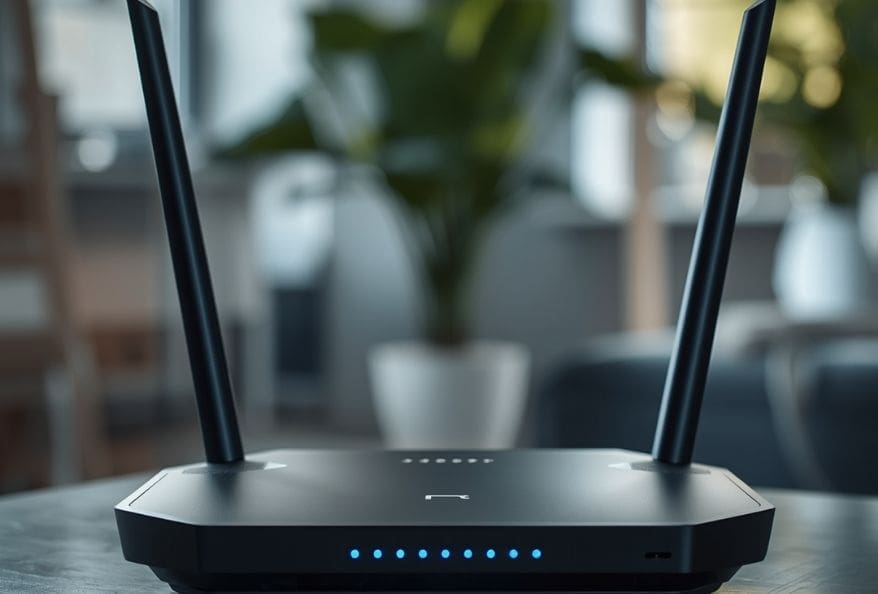
I often notice that my internet speed drops exactly when I need it most, and that is usually because our 2.4 GHz frequency is completely saturated. Since so many gadgets use the same airwaves, they end up fighting for space, which causes a lot of signal congestion. To solve this mess, I found that a dual-polarization antenna is a fantastic tool for keeping signals separate and clear.
By using multiple paths to send data, a dual-polarized antenna helps your devices communicate without constantly bumping into each other. This results in enhanced reliability and much smoother performance for your entire home network. I love how it optimizes the way our gadgets talk to the router so that we don’t lose speed during peak hours.
Here are the four key findings from this breakthrough research:
- The device operates perfectly in the 2.3 GHz to 2.5 GHz range used by most household electronics.
- It successfully blocks out interference from 2.6 GHz all the way to 10 GHz, protecting newer networks like 5G.
- The antenna can shift its signal beam to 0° and ±30° to follow where users move.
- It maintains over 20 dB of isolation between ports, meaning signals stay crystal clear without leaking into each other.
This crowd causes a lot of extra noise that can even mess with newer 5G or Wi-Fi 7 networks. This new research proposes a “filtering” method to clear up that signal noise before it even leaves the device. By doing this, the antenna ensures that only the cleanest signals reach your phone or laptop.
How Dual-Polarization Antenna Improves Wireless Performance
I was impressed to learn how the researchers achieved this high level of performance. The design uses two special paths for signals that don’t cross paths, which keeps the two ports separate and clear. This isolation is key because it prevents the two signals from leaking into each other and causing errors.
Furthermore, these researchers used several copper layers and microstrip resonators that act like a security gate for frequencies. This gate only lets the 2.4 GHz signals through while blocking the “echo” signals that usually cause interference. It is a clever way to keep the antenna small while still making it very powerful.
Technology Behind Dual-Polarization Antenna
Here is how this antenna actually “aims” its signal and why it is such a huge win for your home setup:
- The antenna can point its beam in different directions by using tiny electronic switches called PIN diodes.
- This beam steering technology means the signal can actually follow you around a room to give you the best connection possible.
- The research team successfully combined dual-polarization, beam steering, and filtering into one single, compact patch for the first time.
- This comprehensive package allows for wide area coverage without losing any quality in the signal.
- The team even built a physical version for lab testing, proving it works great for our daily gadgets.
- It performs perfectly between 2.3 GHz and 2.5 GHz while blocking out almost all unwanted noise from other frequencies.
Career Paths in This Exciting Field
If you find this technology as cool as I do, you might be wondering how to get involved in this growing industry. The research comes from experts in physics and electronic engineering, showing there are many ways to build a career around these innovations. Based on the professional roles mentioned in the sources, here are some paths you could take:
- RF Design Engineer: You could design the physical copper layers and microstrip resonators that make a dual-polarization antenna work.
- Wireless Systems Researcher: Many experts work on “Feature Papers” to discover the next big thing in beam steering technology.
- Academic Editor or Reviewer: Scientific journals need specialists to check research for publication ethics and technical accuracy.
- Telecommunications Specialist: Companies need people who understand how to integrate these antennas into smart cities and 5G networks.
The Role of Beam Steering in Modern Antenna Systems
Looking at the results, the antenna can steer its beam at angles of 0 and 30 degrees. This gives it a lot of extra flexibility for indoor spaces like offices or homes. Because it covers six different states, it can adapt to almost any situation we might face.
I believe this is a massive step forward for the future of wireless technology. It simplifies the design of our routers and phones by making them smaller and more efficient at the same time. Plus, it makes our wireless world a lot less cluttered for everyone to enjoy.
Overall, this research provides a clear path toward better communication for us all. It’s not just about getting more speed; it’s about making sure our connections stay strong, clean, and reliable no matter where we are in the room.
Additionally, to stay updated with the latest developments in STEM research, visit ENTECH Online.
Reference
- Huang, T.-G., Gan, Z., Xiang, K.-R., Zeng, W.-F., & Chen, F.-C. (2026). Dual-Polarized Beam-Steerable Filtering Patch Antenna. Technologies, 14(4), 201. https://doi.org/10.3390/technologies14040201
- Author
- Latest Posts

Kottauppari Venkat Raghava
I am a technology-driven IT graduate with a strong passion for science and innovation. I am fascinated by how innovations like artificial intelligence, robotics, and emerging technologies are shaping our world. I specialize in analyzing complex scientific and technological research and presenting it in a clear, accessible way. My goal is to make science and technology understandable and engaging for students, tech enthusiasts, and professionals alike. By breaking down advanced concepts into simple, insightful narratives, I strive to inspire curiosity, learning, and innovation, helping readers stay informed about the breakthroughs that are shaping the future.