Learn about 5G Network Technology and its potential to reshape our internet experience for work, education, and more.
All About 5G Network Technology: What You Need to Know?

Estimated reading time: 13 minutes
The world of wireless technology changes at a rapid pace. Today, we stand at the edge of a major digital shift. We rely on the internet for work, education, and entertainment. Because of this demand, our older networks face massive strain. And here comes 5G Network Technology. This new generation of connectivity promises to reshape our digital lives. It is much more than a simple upgrade for your smartphone. In fact, it is a complete overhaul of global cellular infrastructure.
This comprehensive guide will explore the fundamentals of 5G network technology. At the same time, we will look at its mechanisms, benefits, and future opportunities. If you are a beginner looking to understand this domain, you are in the right place.
What is 5G Network Technology?
To put it simply, 5G represents the fifth generation of mobile networks. It is the latest global wireless standard after 4G networks. This tech creates a new kind of network. To explain, it connects virtually everyone and everything together. This includes machines, objects, and also devices. As an illustration, 5G networks can deliver speeds exceeding 1 Gigabit per second in many scenarios.
Evolution of Mobile Network Generations
Evolution of Wireless Tech:
1G (Voice) -> 2G (SMS) -> 3G (Web) -> 4G (Video) -> 5G (IoT & High Speed)
Before 5G networks, we have used four other mobile network generations. At first, 1G delivered analog voice in the 1980s. After that, 2G introduced digital voice and basic text messaging. 3G brought mobile internet access to our devices.
In due time, 4G LTE arrived to provide true mobile broadband. While it may be true that 4G changed how use internet, it has hit its limits. 5G network technology solves these limits by using higher radio frequencies.
Core Architecture of 5G
The new 5G standard relies on a highly flexible architecture. To list its parts, it includes a new radio access network as well as a cloud-native core. At the present time, telecom companies deploy 5G in three distinct spectrum bands.
- Low-band 5G: This travels great distances but offers lower speeds.
- Mid-band 5G: This provides a great balance of speed and coverage.
- High-band 5G: This uses millimeter waves for ultra-fast speeds over short distances.
Also Read: 5G and Human Skin Cells: No Harmful Effects Found
How is 5G Different From Older Networks?

While older networks focused mainly on connecting phones, 5G network technology connects everything around us. It shifts the focus from personal devices to massive machine-to-machine ecosystems.
A New Way to Transmit Data
Older networks use large cell towers to broadcast signals over miles. On one hand, this covers a lot of ground. On the other hand, high-frequency 5G signals cannot travel through walls/obstacles easily.
To solve this, 5G uses thousands of small cells. These small boxes sit on light poles and buildings. With this intention, providers create a dense grid that keeps your connection strong and stable.
Moving Beyond Hardware Dependency
Prior to 5G, updating a network required swapping out heavy hardware. But 5G relies heavily on network functions virtualization. This means software controls the network traffic instead of rigid physical machines. As a result, operators can upgrade the system with simple software patches.
Direct Comparison: 4G vis-a-vis 5G
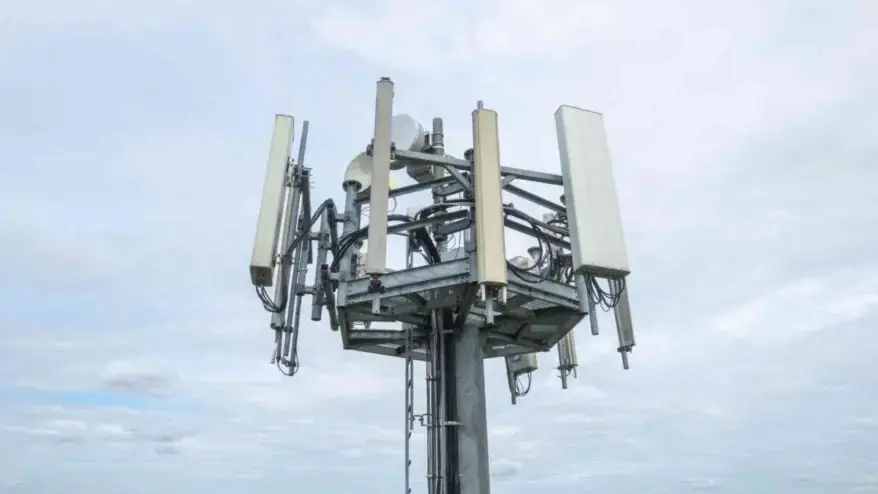
To illustrate the leap in performance, we must compare 4G and 5G directly. The differences are not small tweaks. They represent a massive jump in overall capacity.
| Feature | 4G LTE Network | 5G Network Technology |
| Peak Data Speed | Up to 1 Gbps | Up to 20 Gbps |
| Average Latency | Around 50 milliseconds | Under 5 milliseconds |
| Device Capacity | ~10,000 devices per $km^2$ | Up to 1 million devices per $km^2$ |
| Frequency Range | Below 6 GHz | Up to 100 GHz (mmWave) |
All things considered, 5G outclasses 4G in every performance metric. While 4G is fine for mobile web browsing, 5G enables entirely new applications or even industries. It handles massive data loads without breaking a sweat.
Exploring the Advanced Wireless Capabilities of 5G
The raw power of 5G network technology comes from unique engineering methods. These features allow the network to handle millions of tasks at the same instant.
The Power of Massive MIMO
To explain a key feature, 5G uses Massive MIMO. This stands for Multiple Input Multiple Output. 4G towers use a few antennas to send data. In similar fashion, 5G towers use dozens of antennas on a single array. This boosts network capacity by a huge margin. MIMO allows 5G network to handle more users simultaneously without any congestions or disruptions.
Traditional 4G systems used smaller antenna arrays. In contrast, massive MIMO systems use 64, 128, or even 256 antennas. As a result, directional transmission becomes highly efficient.
Precision Data with Beamforming
Older towers blast signals in all directions at once. This wastes energy and causes interference. In contrast, 5G uses beamforming to target devices.
“Beamforming acts like a laser beam of data, tracking individual users to deliver a clean, direct signal.”
This technique reduces interference for nearby users.
Traditional Tower: [Broad Signal] —-> (Sends waves everywhere)
5G Beamforming: [Tower] ============> (Direct beam to your phone)
Millimeter Wave Technology
5G employs millimeter wave technology for ultra-high-speed connections. These waves operate at frequencies between 24 GHz and 100 GHz. In other words, they carry vastly more data than previous frequency bands. At the same time, they face limitations in range and obstacle penetration.
Network providers deploy millimeter wave technology in dense urban areas. In such locations, achieving peak performance becomes feasible. As an illustration, stadiums receive ultra-fast connectivity, and users can enjoy seamless 8K video streaming.
Full Duplex Communication
Traditional networks alternate between sending and receiving data. In essence, this half-duplex approach limits efficiency. 5G network technology enables full-duplex communication, allowing simultaneous two-way transmission. At length, this advancement eliminates waiting periods between exchanges. Interactions on such networks feel more natural and smooth.
Also Read: 5G Signal Loss: How Weather and AI Impact Your Connection
Real-World Applications of 5G
The impact of this wireless technology extends far past your phone screen. It changes how vital industries operate on a daily basis.
Healthcare Revolution
5G transforms medical practice by enabling remote surgeries. The network latency is so short that surgeons can operate robots even thousands of miles away. Though it seems like science fiction, there are trials showing potential for this. This means specialist care, previously unavailable in remote areas, can now be accessible.
Another example is of telemedicine. High definition video transmission greatly enhances telemedicine. Health data is sent out instantly by patient monitoring devices. Similarly, AI can examine medical data in real time. As a result, disease detection occurs earlier. Treatment becomes more personalized as well as effective.
Smart Cities and Autonomous Transport
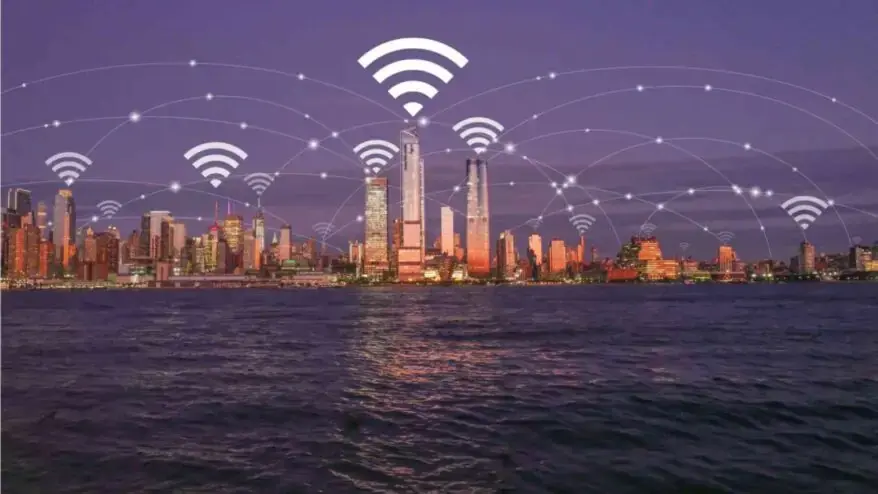
In light of urban growth, cities need better management tools. 5Gnetworks link traffic lights, utility grids, and cameras together. At the same time, autonomous vehicles use 5G to sync with each other.
Industrial Applications
Manufacturing facilities implement Industry 4.0 through 5G network connectivity. Robots coordinate production without delays. Supply chains achieve real-time visibility. To illustrate the impact, predictive maintenance can cut down downtime significantly. Similarly, automated visual inspection offers faster quality control.
Workers in dangerous environments can work remotely with augmented reality (AR) interfaces. Operations feel smooth and natural, thanks to the ultra low latency of 5G.
How Does 5G Ensure Ultra-Low Latency?

Latency is the time data takes to travel from your device to a server. High latency causes annoying lags. 5G network technology aims to drop this delay down to just one millisecond.
Network Slicing Technology
5G networks use a technique called network slicing . Network slicing creates virtual networks on top of the actual physical network. Dedicated network resources are assigned to each application. In consequence, critical communications never experience congestion. While handling this slicing, emergency services are prioritized, performance of healthcare apps is ensured; and then other apps use remaining capacity.
To put it differently, networks become customizable for specific requirements. As a matter of fact, this flexibility represents a fundamental architectural innovation. Provided that proper slicing occurs, latency becomes predictable and controllable.
Bringing Servers Closer with Edge Computing
To achieve this, 5G works together with edge computing. Traditional data travels to central servers thousands of miles away. In this case, 5G brings the computer power much closer to the user. Data processes at local small cells instead of distant hubs. Data does not traverse long distances through networks. Instead, results return to users almost instantaneously.
Optimized Transmission Protocols
5G network uses lightweight communication protocols that do no have excessive overhead. The data is compressed intelligently before it is transmitted. Also, routing algorithms select optimal paths. These technologies work smartly so that transmission delays can be minimized.
5G and Always-On Connectivity Promise
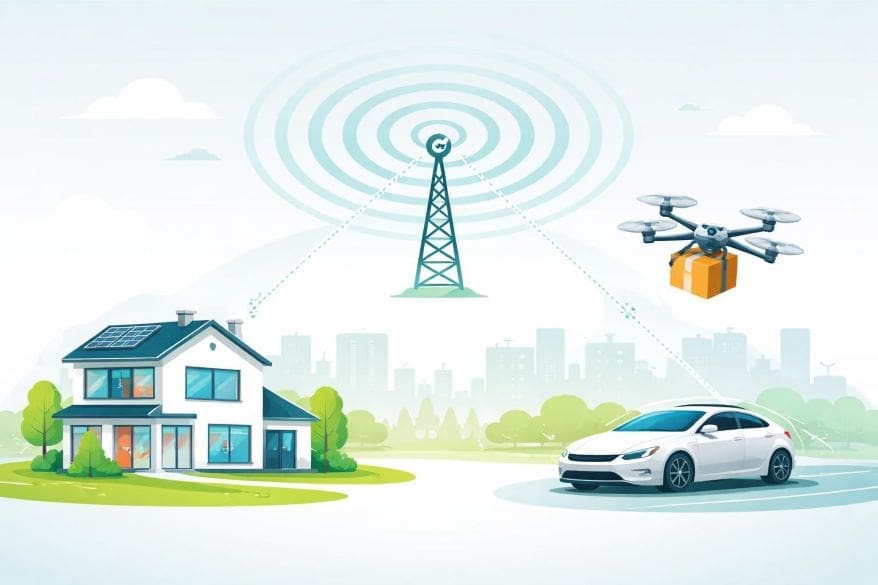
We live in a world packed with smart gadgets. Our homes feature smart fridges, watches, and security systems. This ecosystem is known as the Internet of Things (IoT).
Supporting Millions of Devices
4G networks choke when too many devices log on in one place. You might notice this slowdown at crowded sports stadiums. 5G network technology can support up to one million devices per square kilometer. So long as you are on a 5G network, your devices stay connected without dropping.
True Network Reliability
With this intention, 5G offers an always-on experience. The network monitors itself to prevent outages. If one cell path fails, data moves to another route automatically. Your smart home stays online even during peak usage hours.
Reliability Standards
5G networks achieve 99.99% uptime in critical applications. This means maximum downtime of mere seconds annually. Traditional networks cannot match this reliability. Being that latency also remains consistent, service quality becomes predictable.
Seamless Transitions
Devices seamlessly transition between 5G and 4G networks. Users experience no interruption during this transition. In essence, connectivity remains continuous throughout. As a result, motion through different coverage areas proves unnoticed.
Future Scope of 5G Network Technology
We are only scratching the surface of what this tech can do. The future scope of 5G involves creating entirely new digital experiences.
Rise of Immersive Tech
To point out a major trend, 5G will accelerate the growth of augmented reality (AR) and virtual reality (VR). These tools require massive bandwidth to look realistic. With 5G, students can explore virtual historical sites without any screen stutter.
Industrial Automation
In due time, factories will run almost entirely on wireless systems. Heavy drones will monitor logistics lines. Workers will control warehouse machines from the comfort of their homes. This shifts the global economy toward safer, automated workflows.
Integration with Artificial Intelligence
5G and artificial intelligence form a powerful combination. AI systems analyze network data, optimizing performance continuously. Being that machine learning algorithms predict demand patterns, resource allocation becomes optimal. In effect, networks become self-healing and intelligent.
Expanded IoT Ecosystem
The Internet of Things will expand dramatically with 5G network deployment. Billions of devices will connect simultaneously. To enumerate some examples: agricultural sensors optimize crop yields, industrial devices predict maintenance needs, environmental sensors track climate change impacts, and consumer devices anticipate user preferences.
6G Development and Beyond
Researchers are already onto sixth-generation networks. These systems will operate at even higher frequencies. Speeds may reach 100 Gigabits per second. At first, 6G seems distant, but development continues actively. Holographic communication represents a potential 6G application. By and large, experts anticipate commercial 6G deployment around 2030.
Overcoming the Major Challenges of 5G
Although this tech is powerful, the path to global adoption has obstacles. We must look at the hurdles that engineers face today.
High Infrastructure Costs
To build a 5G network, companies must install millions of new small cells. This requires billions of dollars in funding. For the most part, rural areas must wait longer for updates because installation is expensive.
Signal Obstruction and Range
While this may be true that high-frequency waves carry more data, they have short ranges. Rain, trees, and even glass windows can block 5G signals. Network teams must spend a lot of time planning exactly where to place antennas.
Health and Environmental Questions
Some communities raise health concerns about 5G radiation. Scientific research indicates safety within established limits. However, continued monitoring proves necessary. In reality, more studies continue examining long-term effects.
Environmental concerns involve manufacturing impacts and e-waste. Producing billions of devices carries environmental costs. Responsible recycling becomes essential. At this point, the telecommunications industry addresses sustainability seriously.
Exciting Opportunities in 5G Technology
Despite challenges, 5G network technology creates tremendous opportunities. As has been noted, entirely new industries will emerge.
In-Demand Roles
To list the top paths, companies are looking for:
- 5G Network Engineers: They design and optimize radio networks.
- IoT Solutions Architects: They connect smart hardware systems together.
- Telecom Cybersecurity Experts: They protect the massive flow of data from hackers.
Conclusion: Embracing the Connected Tomorrow
All things considered, 5G network technology is a true turning point for our digital world. It offers incredible speed and reliable connectivity. It lays the groundwork for smart cities, advanced medicine, and great career paths.
While it is true that challenges like infrastructure costs remain, the benefits are clear. This domain offers a thrilling space for learning and innovation. As the network expands, it will change how we interact with our world. Stay curious and keep exploring this fast-moving tech field!
5G Network Technology: FAQs
1. What are the use cases of 5G technology?
Enhanced mobile broadband, massive machine-type communications, and ultra-reliable low-latency communications represent various use cases of 5G technology.
2. How fast is 5G compared to previous generations?
5G technology delivers speeds of up to 10 gigabits per second, significantly surpassing the speed of 4G LTE networks.
3. How is 5G Wireless technology different from previous?
5G wireless technology offers faster speeds, lower latency, and support for a greater number of connected devices compared to previous wireless technologies like 4G.
4. How fast can 5G speed reach in ideal conditions?
In ideal conditions, 5G speeds can reach up to 20 gigabits per second, making it one of the fastest wireless technologies available.
5. Are there specific 5G phones available in the market?
Manufacturers like Samsung, Apple, and Google offer several 5G-compatible phones that support 5G technology.
6. What are some network use cases ?
Smart cities, industrial automation, telemedicine, and virtual reality utilize 5G technology due to its high speeds and low latency.
Additionally, to stay updated with the latest developments in STEM research, visit ENTECH Online. Basically, this is our digital magazine for science, technology, engineering, and mathematics. Further, at ENTECH Online, you’ll find a wealth of information.
5G Network Technology References:
- Yang, J., Zhao, K., Li, M., Xu, Z., & Li, Z. (2020). Identifying complex junctions in a road network. ISPRS International Journal of Geo-Information, 10(1), 4. https://doi.org/10.3390/ijgi10010004
- Gkagkas, G., Vergados, D. J., Michalas, A., & Dossis, M. (2024). The advantage of the 5G network for enhancing the internet of things and the evolution of the 6G network. Sensors, 24(8), 2455. https://doi.org/10.3390/s24082455
- Chan, C. K., & Yeoh, A. W. T. (2017). Development of a platform to explore Network Intrusion Detection System (NIDS) for cybersecurity. Journal of Computer and Communications, 06(01), 1–11. https://doi.org/10.4236/jcc.2018.61001
- Author
- Latest Posts

Deven Nandapurkar is a Software Engineer, Project Lead; working at the strategic intersection of software engineering, productivity science, and emerging technologies. Driven by a core philosophy of “building things worth building,” he leads cross-functional teams and drives end-to-end technical strategy—from early-stage conceptualization through production-grade deployment.
A Computer Engineering graduate from Pune University, Deven brings a sharp systems-thinking approach to technical leadership, honed by years of managing high-stakes engineering projects and leading teams to top placements in national and international hackathons, including the NASA Space Apps Challenge and the Peerlist GenAI Hackathon.
Deven explores how human cognition and emerging technology converge. He regularly writes about cognitive performance optimization, attention management, AI integration, and the evolving dynamics of the modern workforce – offering actionable frameworks for professionals seeking to maximize their productivity and thrive alongside intelligent systems.




Interesting topic.
Thanks for your comment, keep visiting entechonline.com for more articles related to your interests.
Too much interesting
Must read !
Thanks for your comment, keep visiting entechonline.com for more articles related to your interests.