Business Internet Service Providers Request? Compare Your Options
Compare business internet service providers by speed, connection type, reliability, support, and total cost to find a plan that fits your company's needs.

Business Internet Service Providers Request? Compare Your Options

5G Signal Loss: How Weather and AI Impact Your Connection

New Hybrid Spin Sound Waves Could Shape the Future of 6G
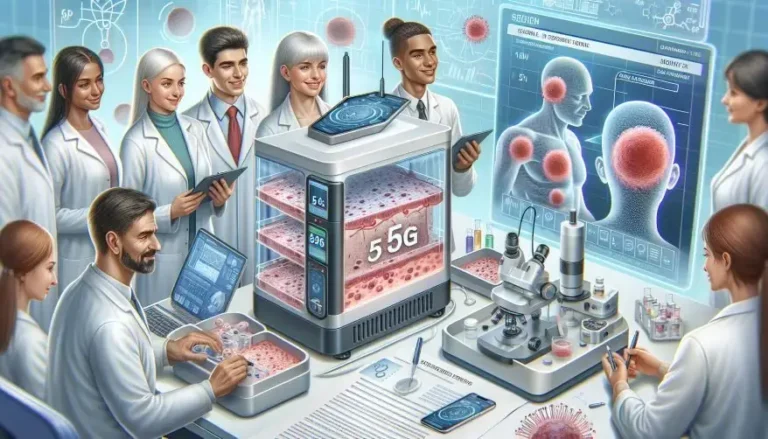
5G and Human Skin Cells: No Harmful Effects Found
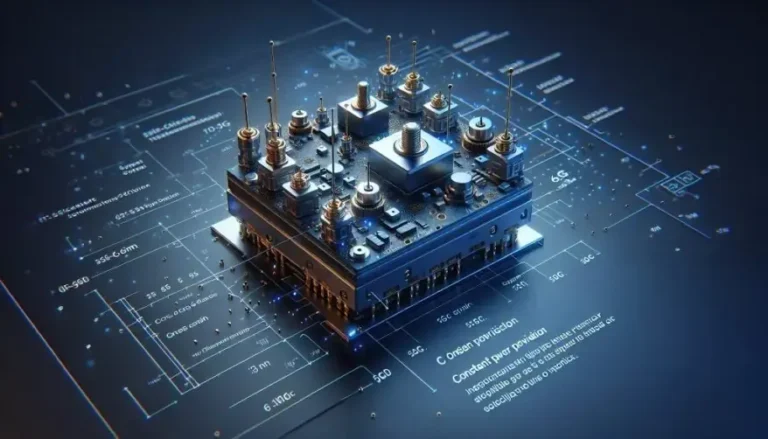
Breakthrough in High-Frequency Switching for 6G Networks

All About 5G Network Technology: What You Need to Know?
5G Technology is the fifth generation of cellular network technology. It represents a major development in wireless communication, offering higher data capacity, improved network performance, and support for a much larger number of connected devices. It builds on earlier mobile network generations while introducing new capabilities for communication, computing, and data exchange.
Unlike previous generations that mainly focused on mobile voice and internet services, 5G supports a wider range of applications. These include connected devices, industrial automation, smart infrastructure, cloud-based services, and real-time communication systems. As a result, 5G Technology is becoming an important part of the modern digital ecosystem.
At ENTECH Magazine, this category explores the technologies, engineering principles, applications, and developments shaping 5G networks. It brings together useful insights into wireless communication, network infrastructure, telecommunications, and emerging connectivity solutions.
5G networks use advanced radio communication technologies and network architecture to transmit data between connected devices and network infrastructure. They rely on radio waves, base stations, antennas, and core network systems to provide wireless connectivity.
Several technologies work together to support 5G performance. These include advanced antenna systems, wider frequency channels, network virtualisation, and improved data processing capabilities.
5G New Radio (5G NR) is the global radio access technology developed for fifth-generation mobile networks. It operates across different frequency ranges, including lower-frequency bands, mid-band frequencies, and millimetre-wave spectrum.
Each frequency range offers different advantages. Lower frequencies can provide wider coverage, while higher frequencies can support greater data capacity over shorter distances. Therefore, network operators select suitable spectrum based on coverage requirements, available infrastructure, and expected network demand.
Massive Multiple-Input Multiple-Output (MIMO) uses large antenna arrays to improve wireless communication. It allows base stations to serve multiple devices and transmit data more efficiently.
Beamforming complements this technology by directing radio signals towards specific devices instead of transmitting them equally in every direction. Consequently, these techniques can improve signal quality, network capacity, and spectrum efficiency.
5G networks use an evolved architecture that separates different network functions and supports flexible deployment. The 5G Core (5GC) manages important functions such as user authentication, mobility, data sessions, and network services.
Furthermore, technologies such as Network Functions Virtualization (NFV) and Software-Defined Networking (SDN) allow operators to manage network resources through software-based systems. This creates opportunities for more flexible and scalable network infrastructure.
5G Technology introduces several capabilities that support different communication requirements. These capabilities are commonly grouped into three broad service categories.
In addition, network slicing allows operators to create multiple logical networks over shared physical infrastructure. Each network slice can support different service requirements. For example, one slice may prioritise high data capacity, while another may support applications that require predictable communication performance.
These capabilities make 5G suitable for a wider range of applications than traditional mobile broadband alone.
5G Technology has applications across consumer services, businesses, public infrastructure, and industrial environments. Its capabilities can support new digital services and improve existing communication systems.
The Internet of Things (IoT) connects physical devices through communication networks. 5G can support large-scale IoT deployments involving sensors, connected appliances, monitoring equipment, and smart infrastructure.
For example, smart city systems can use connected devices to monitor traffic, public utilities, environmental conditions, and energy consumption. Similarly, industrial IoT applications use network connectivity to exchange information between machines and monitoring systems.
Healthcare organisations increasingly use connected technologies for remote monitoring, digital health services, and communication between medical systems.
5G can support applications that require the timely exchange of large amounts of data. These include connected medical equipment, remote monitoring platforms, and certain forms of remote assistance. However, the suitability of these applications also depends on reliability, security, regulation, and supporting infrastructure.
Modern manufacturing facilities use connected machines, sensors, robotics, and automated control systems. 5G networks can support communication between these systems and help improve the coordination of industrial operations.
Moreover, private 5G networks allow organisations to deploy dedicated wireless infrastructure within factories, campuses, and industrial facilities.
Transportation systems can use 5G connectivity to exchange information between vehicles, infrastructure, and traffic management systems. Vehicle-to-Everything (V2X) communication is one area where cellular technologies can support connected transportation applications.
Similarly, logistics organisations can use connected tracking and monitoring systems to improve the visibility of goods and transportation operations.
Building reliable 5G networks requires more than installing wireless base stations. Network operators must develop supporting infrastructure, manage spectrum resources, and maintain secure communication systems.
Fibre-optic connections, radio access networks, small cells, data centres, and core network equipment all contribute to 5G infrastructure. In addition, network planning helps operators manage coverage, capacity, and interference.
Cybersecurity is another important consideration. As more devices and services connect to mobile networks, operators must protect network components, user information, and communication systems. Encryption, authentication, access controls, and continuous monitoring help address these requirements.
Furthermore, network management tools help operators monitor performance, identify faults, and allocate resources efficiently.
5G Technology continues to evolve through improvements in network architecture, radio communication, and software-based infrastructure. 5G-Advanced introduces further developments in areas such as network performance, automation, and energy efficiency.
Artificial intelligence and machine learning are also becoming important in network management. These technologies can help analyse network conditions, identify performance issues, and support automated operations.
Other developments include private 5G networks, edge computing, satellite connectivity, and improved integration with cloud platforms.
At the same time, researchers and telecommunications organisations are exploring sixth-generation (6G) communication systems. These developments aim to build on existing mobile network capabilities and introduce new communication and sensing applications.
Understanding 5G Technology involves exploring several interconnected fields, including telecommunications, wireless engineering, electronics, computer networking, cloud computing, and the Internet of Things.
ENTECH Magazine brings these subjects together through educational articles, technical explainers, industry insights, and coverage of emerging innovations. This category explores 5G networks, mobile communication systems, network architecture, wireless infrastructure, spectrum technologies, and real-world applications across different industries.
Whether you are a student learning about telecommunications, an educator exploring wireless communication, or a technology enthusiast interested in modern network infrastructure, these resources offer useful perspectives on the evolution of mobile connectivity.
Explore our 5G Technology articles to understand how fifth-generation networks work, where they are used, and how ongoing innovations are shaping the future of wireless communication.