Drone camera calibration is critical for mission accuracy. Discover how new real-time tracking methods fix tiny installation errors and improve drone precision instantly.
Drone Camera Calibration: Fix Tiny Errors Fast
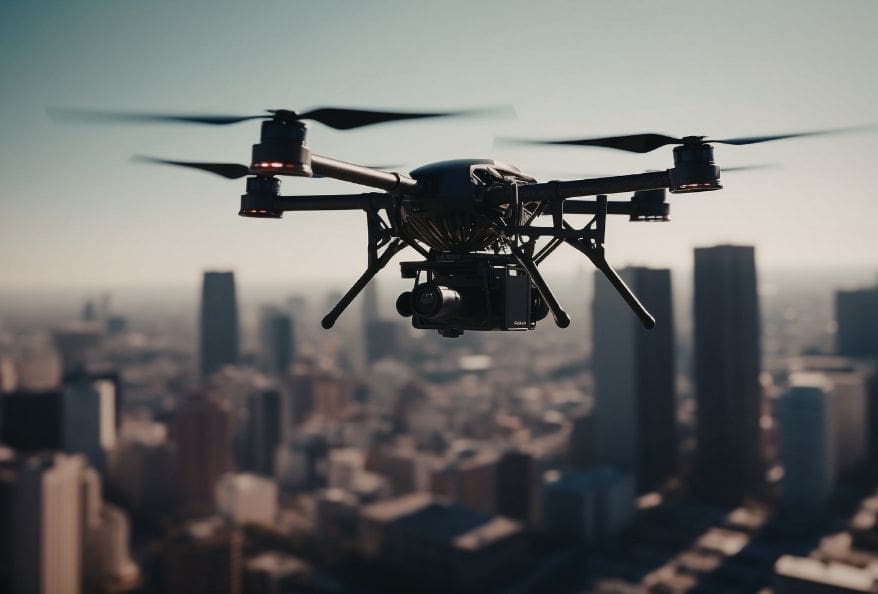
Drone camera calibration plays a key role in mission accuracy. Today, drones are used in rescue work, inspections, mapping, and deliveries. Because of this, precision is very important.
Even a tiny misalignment can create large errors. For example, a yaw error of just 1° can shift a target by more than 5 meters at a distance of 300 meters. As a result, a drone may miss its target completely.
Fortunately, modern drone camera calibration methods can fix these issues in real time. This improves both reliability and performance during flight.
When Drones Go Off Track: Small Errors, Big Problems
At first glance, small errors may seem harmless. However, in drone systems, they quickly become serious problems.
Think about wearing the wrong glasses. Your vision becomes slightly distorted. In the same way, a misaligned camera changes how a drone “sees” the world.
Because of this:
- Inspection drones may miss cracks or defects
- Delivery drones may drop packages at the wrong location
- Rescue drones may fail to find people in need
Clearly, drone camera calibration is not optional. It is essential for safe and accurate missions.
Traditional Drone Camera Calibration Methods
Older calibration methods focus on high accuracy. However, they are not practical in real-world situations.
Challenges of Traditional Calibration
- Requires expensive equipment like laser theodolites
- Needs controlled indoor environments
- Takes a long time to complete
- Must be repeated after transport or maintenance
As a result, these methods are slow and difficult to use in emergencies. In time-critical missions, delays can lead to failure.
Advanced Drone Camera Calibration Using Real-Time Tracking
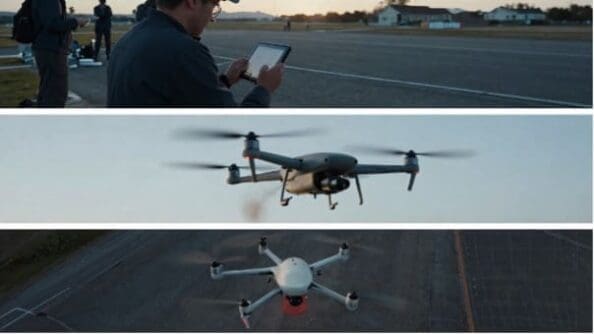
To overcome these challenges, researchers developed a smarter approach. This method performs calibration during flight.
Instead of stopping operations, drones adjust themselves in real time using tracking data.
How It Works
- The system collects data while the drone is flying
- It calculates misalignment using mathematical models
- The drone instantly corrects its camera orientation
This process happens continuously. Therefore, accuracy improves throughout the mission.
Benefits of Modern Drone Camera Calibration
Modern calibration systems offer many advantages over traditional methods.
Real-Time Accuracy
Errors are corrected instantly during flight. This ensures better targeting and navigation.
No Ground Setup
Drones do not need special tools or controlled environments. This makes the system more flexible.
Faster Deployment
Drones can launch quickly without waiting for calibration. This is useful in emergencies.
High Precision Performance
Even in dynamic conditions, drones maintain accurate positioning.Because of these benefits, modern drone camera calibration improves both speed and reliability.
Rapid Calibration During Take-Off and Missions
Another important innovation is rapid calibration during take-off.
In this method, drones calibrate themselves automatically as they begin their mission.
As a result:
- There is no downtime
- Calibration happens in the background
- Missions start faster
For example, power line inspection teams can deploy drones instantly. They do not need to wait for manual adjustments.
This saves both time and effort.
Future of UAV Camera Calibration in Autonomous Systems
Looking ahead, drone camera calibration will play a bigger role in autonomous systems. As drones become smarter, they will rely more on self-correction and real-time data.
This technology also connects with important STEM concepts.
Key LearniKey Learning Areas
- Linear algebra (rotation matrices)
- Sensor fusion in robotics
- Real-time system optimization
Therefore, students interested in robotics, AI, or aerospace engineering can explore exciting careers in this field.
Real-World Impact of Drone Camera Calibration
Drone camera calibration is already making a real difference.
In rescue missions, accurate calibration helps locate missing people faster. In inspections, it ensures that small defects are not missed. In delivery systems, it improves drop accuracy.
Moreover, industries like agriculture, construction, and defense also benefit from this technology.
As drone usage continues to grow, the need for accurate calibration will increase.
Final Thoughts
Drone camera calibration is no longer just a technical step. It is a key innovation that supports modern drone operations.
Small errors can lead to big problems. However, with real-time calibration, these issues can be fixed instantly.
As a result, drones become more reliable, faster, and more efficient.
From saving lives to improving daily operations, this technology has a powerful impact. It also shows how small engineering improvements can create big results.
Additionally, to stay updated with the latest developments in STEM research, visit ENTECH Online.
Reference
- Wang, Y., Zhang, X., Li, J., & Chen, M. (2024). Target Tracking-Based Online Calibration Method for UAV Electro-optical Pod Installation Errors. Automation Journal, 7(2), Article 59.https://doi.org/10.3390/automation7020059
- Author
- Latest Posts

Kottauppari Venkat Raghava
I am a technology-driven IT graduate with a strong passion for science and innovation. I am fascinated by how innovations like artificial intelligence, robotics, and emerging technologies are shaping our world. I specialize in analyzing complex scientific and technological research and presenting it in a clear, accessible way. My goal is to make science and technology understandable and engaging for students, tech enthusiasts, and professionals alike. By breaking down advanced concepts into simple, insightful narratives, I strive to inspire curiosity, learning, and innovation, helping readers stay informed about the breakthroughs that are shaping the future.