They Wait, They Talk, Then They Attack: Meet Tumor-Eating Bacteria
Tumor Eating Bacteria? Scientists Make Cancer-Fighting Microbes Smarter!
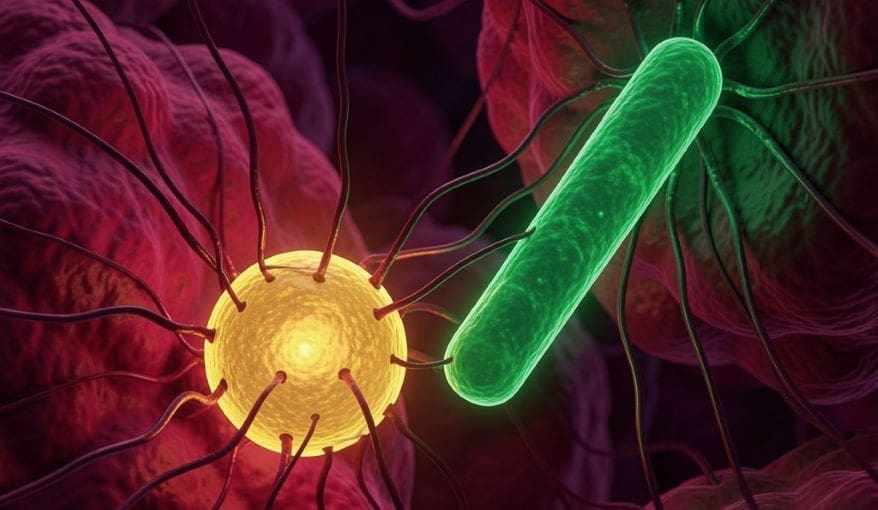
Hacking life is now a real career path. Scientists are engineering living cells to fight cancer. One example is Clostridium sporogenes. These are often called tumor eating bacteria. This bacterium thrives in places without oxygen. Tumors often lack oxygen inside. As a result, these bacteria move toward tumors. At first, this ability was natural. At this point, researchers improved this ability further. They added quorum sensing. To explain, this system lets bacteria communicate. Prior to this, cells acted alone. Now, they act as a coordinated group.
Keywords
Tumor eating bacteria, Clostridium sporogenes, synthetic biology, quorum sensing, cancer treatment, bacteria that fight cancer, STEM careers.
The Key Takeaways
• Clostridium sporogenes grows inside tumors because oxygen is low.
• Scientists engineered it with a “group chat” system called quorum sensing.
• This system tells bacteria when to attack the tumor and release medicine.
Why These Bacteria Target Tumors Naturally
Tumors have poor blood supply. In reality, this creates low oxygen zones. Most cells cannot survive there. However, Clostridium sporogenes prefers such conditions. To illustrate, it grows deep inside tumors. This makes it a powerful cancer tool. Scientists want it to deliver drugs directly. At any rate, this reduces harm to healthy cells.
To list key reasons:
• It grows only in oxygen-free regions.
• It avoids healthy oxygen-rich tissues.
• It can carry therapeutic molecules.
Seeing that it is generally safe, researchers use it widely. In short, nature already provided a useful system. These bacteria can fight cancer in targeted ways.
Engineering Bacterial Communication Using Synthetic Biology
Scientists used synthetic biology to upgrade these bacteria. You can explore basics through Entech Online articles. They built a genetic circuit inside the cells. Summing up, this circuit helps bacteria sense population size. They added genes like agrA and agrB. These genes produce signaling molecules. After that, signals move between nearby cells.
At this point, bacteria can “count” each other. In light of this, they act together. To put it differently, they behave like a team. Another key point is the glowing gene. The bacteria glow only at high population levels. This acts as a visible signal. It confirms quorum sensing works.
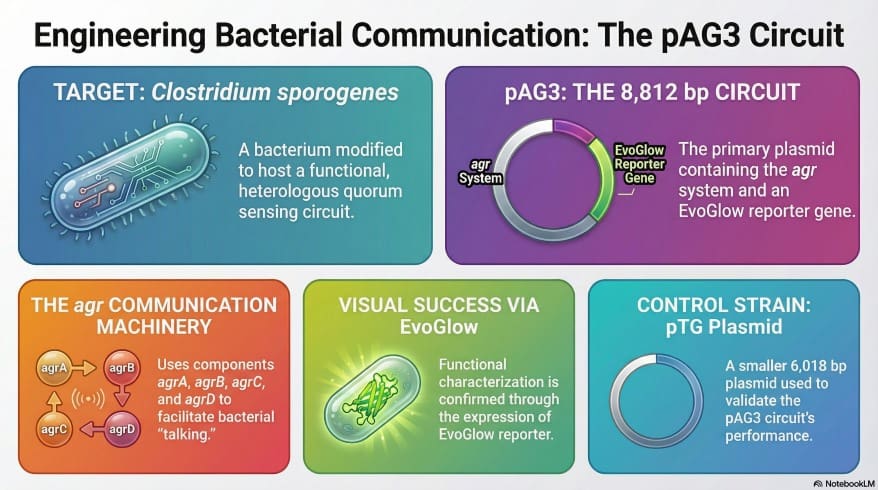
To enumerate what scientists achieved:
• Built a working communication circuit.
• Enabled population sensing in bacteria.
• Added a visible glow output.
With this in mind, researchers can track behavior clearly. This is a step toward controlled cancer therapy.
Future of Cancer Treatment using Tumor Eating Bacteria
This technology can improve cancer treatment methods. These bacteria act like living drugs. They find tumors and grow inside them. After that, they release medicine at the right time. As a result, side effects reduce compared to chemotherapy. At the present time, this field is expanding.
You can learn more about Synthetic Biology to begin. To list skills needed:
• DNA design and basic genetics
• Lab testing and observation
• Data analysis and modeling
In essence, biology now involves building systems. All in all, this research shows clear real-world use. Provided that you stay curious, you can enter this field. To sum up, the future of cancer treatment may involve living cells.
References
Sara Sadr, Bahram Zargar, Marc G. Aucoin and Brian Ingalls, 8 December 2025, ACS Synthetic Biology.
DOI: 10.1021/acssynbio.5c00628
- Author
- Latest Posts

Ayushi Shukla is a science communicator with a strong interest in biology, biotechnology, and emerging medical research. She focuses on translating complex research studies into clear and engaging content for students and early learners.
She holds an M.Sc. in Biotechnology, with expertise in microbial pathogenesis. During her postgraduate research, she worked on diverse areas ranging from in-silico analysis of Mycobacterium tuberculosis to environmental sustainability. As part of this work, she developed a plant growth-promoting bacterial consortium designed to improve crop productivity in high-salinity agricultural conditions.
She has also received training in precision oncology, with experience in RNA-seq analysis and next-generation sequencing (NGS). Her work spans both wet lab and dry lab research, allowing her to connect experimental science with data-driven insights.
Through her work, she aims to bridge the gap between academic science and real-world applications, helping readers understand how modern biology is shaping healthcare and the future of medicine.