The AI disaster relief system uses multimodal data to assess disasters quickly and improve crisis response, helping teams act faster and save lives.
AI Disaster Relief System Transforms Crisis Response
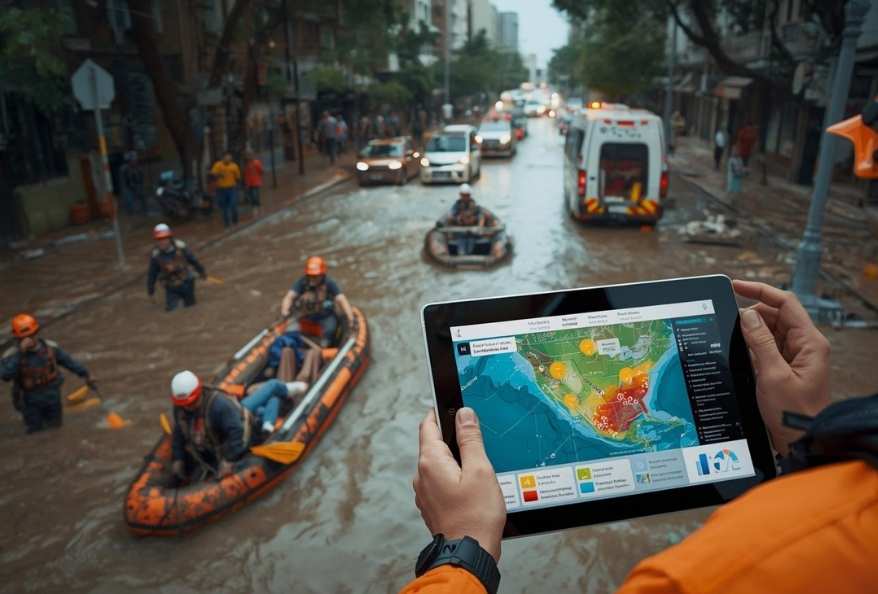
At this point, disasters cause sudden damage and confusion across affected regions. As a result, response time becomes critical for saving lives. A new study introduces an AI disaster relief system called DisasterReliefGPT.
In general, this system uses multimodal data to assess disasters quickly. To explain, it combines images, text, and real-time inputs. As a result, it improves both damage analysis and communication. In fact, researchers show how AI can support faster emergency decisions. All in all, this innovation could reshape disaster management worldwide.
How AI Disaster Relief System Works
At first, the AI disaster relief system gathers data from many sources. These include satellite images, emergency reports, and social media updates. After that, the AI processes this data using advanced models. With the result that, it creates clear and fast damage assessments.
Multimodal Intelligence in Action
To illustrate, multimodal AI means handling different types of data together. In this case, the system connects visual and textual information. At the same time, it detects patterns humans may miss. As can be seen, this improves accuracy in disaster evaluation. Another key point is automation, as the system works continuously without delays during emergencies.
Why AI Disaster Relief System Matters
In reality, traditional disaster response takes time and effort. Data often arrives in separate formats and locations. To put it differently, teams struggle to combine information quickly. The AI disaster response system solves this challenge effectively.
Key Benefits of AI Disaster Relief System
To list, the system provides several advantages. It enables faster identification of affected areas, as well as better communication with communities. It also improves coordination among rescue teams and reduces workload for emergency workers. As a result, response becomes faster and more efficient. At any rate, speed can save lives during disasters.
Real Example of AI Disaster Relief System
Take the case of a major flood event. Water spreads rapidly and blocks roads and communication. In this case, the AI disaster response system analyzes satellite images instantly. At the same time, it reads local reports about damage.
Rapid Decision Support
After that, the system generates a clear situation report. To point out, it highlights critical areas needing urgent help. With this in mind, rescue teams plan faster actions. As a result, evacuation becomes more organized and safe. All things considered, AI reduces confusion during crises.
Role of AI Disaster Relief System in Crisis Communication
At this point, communication becomes a major challenge during disasters. People often receive unclear or delayed information. As a result, confusion increases and safety risks grow. The AI disaster relief system helps solve this problem effectively.
In general, the system creates clear and simple messages for affected communities. To explain, it analyzes incoming data and converts it into easy instructions. As a result, people understand what actions to take quickly. In fact, timely communication can reduce panic and improve safety.
Smart Alerts and Public Guidance
To illustrate, the AI disaster relief system can send alerts through multiple channels. These include mobile notifications, social media updates, and emergency broadcasts. At the same time, it ensures that messages remain consistent across platforms. As can be seen, this avoids misinformation during critical situations.
Another key point is language adaptability. The system can generate messages in different languages. With this in mind, it reaches diverse populations effectively. As a result, more people receive accurate information in real time.
Supporting Emergency Teams
After that, the system also supports rescue teams and authorities. It provides structured updates about affected areas and resources. To point out, this helps teams prioritize actions and allocate support efficiently.
In addition, communication between agencies improves significantly. In contrast to manual coordination, AI enables faster information sharing. With the result that, response efforts become more organized.
All things considered, strong communication plays a vital role in disaster response. The AI disaster relief system enhances both public awareness and operational efficiency. To sum up, it ensures that the right information reaches the right people at the right time.
Challenges Facing AI disaster response system
While this may be true, challenges still exist in implementation. Data quality remains an important issue. In contrast, incomplete data can affect system accuracy. At least, researchers continue improving these models. Another key point involves privacy concerns, as sensitive data must be handled carefully during disasters. All in all, responsible use of AI is essential.
Future of AI Disaster Relief System
At the present time, AI technologies continue to improve rapidly. The AI disaster relief system represents a major step forward. Sooner or later, such systems may become standard tools globally. With this in mind, governments must invest in these technologies. To sum up, AI can support faster and smarter disaster response. In conclusion, this system shows how technology improves safety and communication.
Additionally, to stay updated with the latest developments in STEM research, visit ENTECH Online.
Reference
Reghunath, L. C., Abhishek, A. S., Changat, A., Unnikrishnan, A., Rai, A. K., Napoli, C., & Randieri, C. (2026). DisasterReliefGPT: Multimodal AI for Autonomous Disaster Impact Assessment and Crisis Communication. Technologies, 14(3), 179. https://doi.org/10.3390/technologies14030179
- Author
- Latest Posts

Kottauppari Venkat Raghava
I am a technology-driven IT graduate with a strong passion for science and innovation. I am fascinated by how innovations like artificial intelligence, robotics, and emerging technologies are shaping our world. I specialize in analyzing complex scientific and technological research and presenting it in a clear, accessible way. My goal is to make science and technology understandable and engaging for students, tech enthusiasts, and professionals alike. By breaking down advanced concepts into simple, insightful narratives, I strive to inspire curiosity, learning, and innovation, helping readers stay informed about the breakthroughs that are shaping the future.