Basics of Food and drug toxicology studies harmful effects of substances in food and drugs. Above all, it protects public health from toxins.
Basics of Food and Drug Toxicology: Understanding Sources, Effects, and Prevention
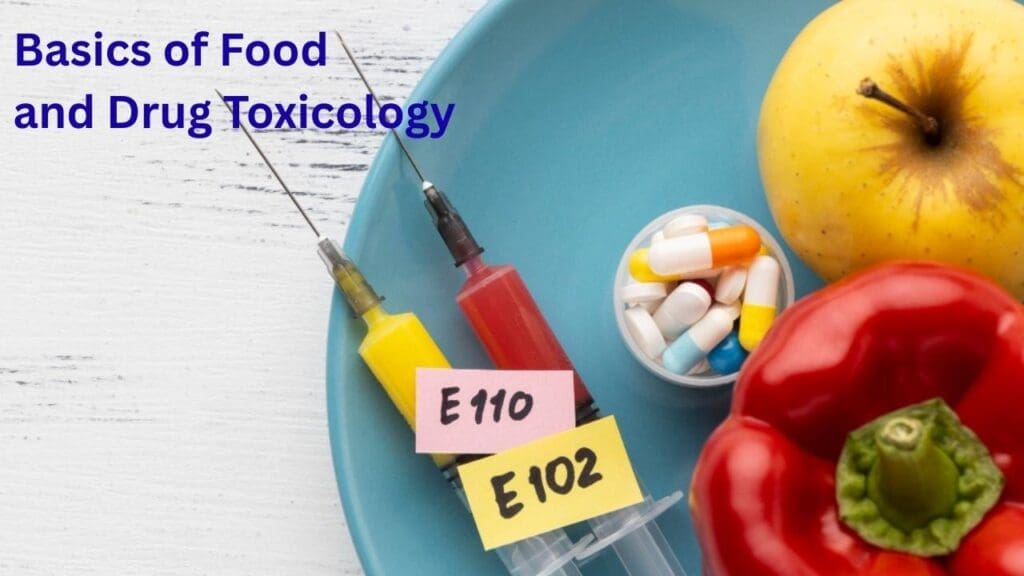
Basics of Food and drug toxicology studies harmful effects of substances in food and drugs. Above all, it protects public health from toxins. People eat food daily. They take drugs when sick. Toxins can hide in both. These cause illness if levels get high. Experts test for safety. They set limits on toxins. This keeps risks low. As a result, safe products reach markets.
Key Takeaways
- Definition: Toxicology studies how chemicals, drugs, and natural toxins affect the body.
- Dose Matters: Low doses may be safe or beneficial, while high doses can be harmful.
- Sources of Toxins: Toxins come from food (heavy metals, additives, mycotoxins) and drugs (side effects, interactions).
- Absorption and Elimination: The body absorbs toxins through gut, skin, and lungs, and organs like liver and kidneys remove most.
- Prevention: Safe food handling, proper drug use, and following regulations reduce toxic risks.
Toxicology and Medication-Related Problems: Sources, Exposure, and Health Effects
Toxicology looks at how toxins enter the body. Toxins come from many sources. First, natural toxins grow in plants and animals. For example, some mushrooms have poisons. Second, chemicals from farms pollute food. Pesticides kill bugs but harm people too. Third, factories add preservatives to food. These stop spoilage. Yet, some cause allergies. In drugs, side effects happen. Overdoses lead to danger. To illustrate, too much pain medicine hurts the liver. What’s more, old drugs break down into toxins. The body absorbs these fast. Skin, lungs, and gut take them in. Blood carries them to organs. Liver and kidneys clean most out. But buildup causes harm. After all, dose matters most. Small amounts stay safe. High doses turn toxic.
Basics of Food and Drug Toxicology: Dose-Response, Toxic Effects, and Safety Regulations
Key principles guide toxicology work. Dose-response shows effects by amount. Low dose may help. High dose hurts. To explain, vitamins aid health up to a point. Beyond that, they poison. Acute toxicity hits fast. One big dose causes sickness. Chronic toxicity builds slow. Years of small doses lead to cancer. As well as that, bioaccumulation stores toxins in fat. Fish in dirty water hold mercury. People eat fish and get it too. Prior to eating, check sources. Clean water and soil cut risks. To enumerate, tests measure toxin levels. Labs use animals first. Now, cell tests replace some. These find safe limits. At any rate, rules from groups like WHO help. They say what is okay.
Food Toxins and Medication-Related Problems: Heavy Metals, Additives, and Mycotoxins
Food toxins include heavy metals and additives. Heavy metals like lead come from pipes. They harm brains in kids. Additives color food bright. But some dyes link to hyperactivity. Provided that, pick natural colors. Nitrites in meat cure it. Yet, they form cancer-causing parts when cooked. So far, studies show links to gut issues. To point out, mycotoxins from mold spoil grains. They damage liver. Seeing that, store food dry. Process it right to kill mold. All in all, fresh food lowers toxin load.
Drug Toxicology and Medication-Related Problems: Side Effects, Interactions, and Vulnerable Populations
Drug toxicology focuses on side effects. Drugs fight disease but can harm. Antibiotics kill germs. They upset gut balance too. Heart drugs fix beats. But they cause dizziness. To put it another way, interactions mix bad. Take two drugs together. They boost toxicity. After that, check with doctors. Allergies make some drugs deadly. Rash or swelling happens fast. While it may be true some drugs save lives, watch doses. Old people process drugs slow. Toxins stay longer in them. As an illustration, painkillers build up. This leads to breathing stops.
Risk Assessment in Toxicology and Medication-Related Problems: Identifying, Measuring, and Managing Hazards
Risk assessment checks dangers. Experts find toxins first. They measure exposure next. Then, they link dose to harm. Balanced against benefits, some risks stay. For food, clean farms help. Good storage cuts mold. In drugs, trials test safety. FDA approves after checks. To sum up, labels warn users. Read them always. At the present time, new tech spots toxins quick. Sensors in factories alert fast. This saves lives.
Prevention Strategies in Toxicology and Medication-Related Problems: Safe Food, Drugs, and Public Health
Prevention beats cure in toxicology. Wash fruits well. Cook meat hot. Avoid expired drugs. Eat varied diet. This spreads risks low. Governments test products. They ban bad ones. As has been noted, education matters. Teach kids safe habits. All things considered, safe food and drugs need team work. People, makers, and rules join in. So as to stay healthy, choose wisely. At last, toxicology advances keep us safe.
Conclusion
Food and drug toxicology serves as a safeguard for public health by identifying and managing the risks associated with chemical exposure. By understanding that “the dose makes the poison,” experts are able to establish safety limits that prevent harmful accumulation in the body. Ultimately, through rigorous testing and informed consumer habits, we can minimize toxic risks and ensure that the products we rely on daily remain safe for consumption.
Additionally, to stay updated with the latest developments in STEM research, visit ENTECH Online.
FAQs
What is toxicology?
Toxicology studies how chemicals, drugs, and natural toxins affect the body.
How do food toxins harm humans?
Toxins like heavy metals, additives, and mycotoxins can damage organs and cause chronic diseases.
Why is dose important in drug toxicology?
The effect of a substance depends on the dose—small amounts may be safe, high amounts toxic.
Additionally, to stay updated with the latest developments in STEM research, visit ENTECH Online.
Reference
Lachenmeier, D. W., Oliveira, P. A., Fabiszewska, A. U., Soares, C. M. D., & Kim, J. H. (2022). Food Toxicology and Food Safety: Report of the 3rd International Electronic Conference on Foods: Food, Microbiome, and Health—A celebration of the 10th anniversary of foods’ Impact on our Wellbeing. Foods, 11(24), 4099. https://doi.org/10.3390/foods11244099
Disclaimer: We do not intend this article/blog post to provide professional, technical, or medical advice. Therefore, please consult a healthcare professional before making any changes to your diet or lifestyle. In fact, we use AI-generated images for illustration and decoration. Their accuracy, quality, and appropriateness can differ. So, users should avoid making decisions or assumptions based only on the text and images.
- Author
- Latest Posts

I completed my Master of Science from the University of Allahabad in 2017 with a strong academic background in life sciences and chemistry. My specialization included Molecular Biology, Microbiology, Genetics, Plant Breeding, Phycology, Paleobotany, and Bioinformatics, along with Organic Chemistry, Inorganic Chemistry, and Physical Chemistry. This multidisciplinary training provided me with a comprehensive understanding of biological systems and analytical scientific approaches.
After completing my postgraduate studies, I gained valuable professional experience in both the education and social development sectors. I worked at A.M. Oxford Public School, where I was actively involved in guiding students toward academic excellence. In this role, I focused on creating an engaging learning environment, encouraging critical thinking, and nurturing students’ curiosity for scientific learning. My experience as an educator strengthened my communication, mentoring, and classroom management skills.
In addition to my teaching experience, I worked with Jeevan Jagriti Foundation, where I contributed to community-based initiatives aimed at improving educational access and awareness among underprivileged sections of society. Through this work, I participated in programs designed to support social development and promote the value of education in marginalized communities.
These professional experiences helped me develop strong interpersonal, leadership, and organizational skills while reinforcing my commitment to education and community service.