Learn the basics of pharmacokinetic parameters to understand how drugs are absorbed, distributed, metabolized, and excreted in the body.
Basics of Pharmacokinetic Parameters: Understanding Drug Absorption and Distribution
Basics of Pharmacokinetic Parameters
Pharmacokinetics studies how the body handles drugs. It looks at absorption, distribution, metabolism, and excretion. As a result, doctors use it to set doses. At first, these processes seem complex. To explain, we break them down simply. What’s more, key parameters help measure them.
Key Takeaways
- Absorption – The process by which a drug enters the bloodstream from its site of administration.
- Distribution – How a drug spreads throughout body tissues and fluids after absorption.
- Metabolism – The chemical transformation of a drug, usually in the liver, into active or inactive forms.
- Excretion – The elimination of a drug or its metabolites from the body, primarily via urine or feces.
- Half-life (t½) – The time required for the drug concentration in plasma to decrease by 50%.
What Is Pharmacokinetics?
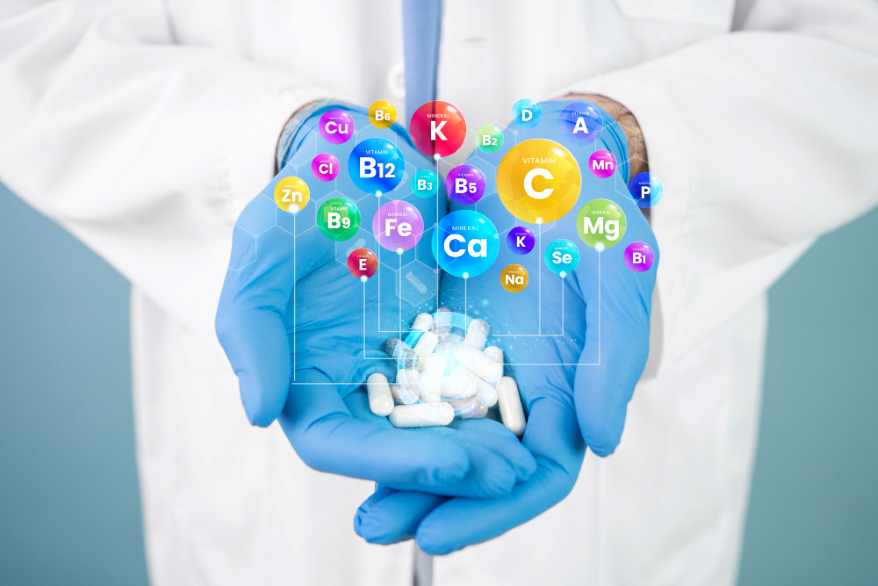
The body takes in drugs. It moves them around. It changes them. It removes them. Seeing that, pharmacokinetics tracks this path. To illustrate, think of a drug as a traveler. It enters, explores, and leaves the body. In general, this guide uses simple terms.
Absorption Basics
Absorption means the drug enters the blood. It happens through the gut or skin. For example, pills dissolve in the stomach. Food can slow this step. Bioavailability shows how much reaches blood. It ranges from zero to one hundred percent. Balanced against that, poor absorption wastes the dose.
Distribution Explained
Distribution spreads the drug to tissues. Blood carries it to organs. At this point, proteins bind some drugs. This affects how much works freely. Bound drugs stay in blood longer. In like manner, fat-soluble drugs enter fatty areas. So far, this process sets peak levels.
Key Parameters to Know
Parameters measure drug behavior. They guide dosing. Prior to use, doctors check them. Four main ones exist: clearance, volume, half-life, and bioavailability. Each tells a story. With this in mind, let’s explore them.
Clearance and How It Works
Clearance removes drug from blood. Organs like liver and kidneys do this. To put it differently, it measures flow rate. High clearance means fast removal. Its units are liters per hour. Then again, low clearance builds up drugs. This risks side effects.
Volume of Distribution
Volume shows where drugs go. It estimates body space the drug fills. Small volume means it stays in blood. Large volume means it spreads to tissues. For instance, water-soluble drugs have small volumes. At the same time, this helps predict tissue levels.
Half-Life Made Simple
Half-life is time to halve drug amount. It shows how long effects last. Short half-life needs frequent doses. Long half-life allows once-a-day use. To sum up, it links to clearance and volume. Provided that, patients with liver issues see changes.
Bioavailability in Action
Bioavailability is the fraction that works. Injection gives one hundred percent. Oral drugs give less. Factors like first-pass metabolism reduce it. As has been noted, it affects dose size. In essence, high bioavailability means better results.
Why These Matter in Medicine
Parameters optimize treatment. They prevent too much or too little drug. In short, they personalize care. For example, kids clear drugs faster. Whereas, elderly have slower metabolism. Age adjusts doses. To that end, monitoring helps.
Dosing with Parameters
Doctors use parameters for schedules. Infusions maintain steady levels. Repeated doses build to plateau. At length, steady-state means balance in and out. While this may be true, timing avoids peaks and troughs. So long as safe levels stay.
Real-World Examples
Take antibiotics. Short half-life needs multiple doses daily. Painkillers with long half-life last longer. As a matter of fact, parameters guide choices. In due time, tech models predict them better.
Challenges and Tips
Factors change parameters. Disease alters clearance. Age affects distribution. To repeat, food impacts absorption. Although this may be true, tests measure real levels. Summing up, knowledge aids safe use. At last, consult experts for advice.
In conclusion, pharmacokinetic parameters explain drug paths. They ensure effective therapy. Use them wisely. Learn more through studies. This builds better health care.
Conclusion
Understanding pharmacokinetic parameters is essential for optimizing drug therapy and ensuring patient safety. Key parameters—absorption, distribution, metabolism, and excretion (ADME)—determine how a drug moves through and acts within the body. Metrics such as bioavailability, half-life, clearance, and volume of distribution help clinicians predict drug concentrations, dosing intervals, and potential toxicity. Knowledge of these parameters allows for individualized therapy, accounting for age, disease, genetics, and interactions. By applying pharmacokinetic principles, healthcare professionals can maximize therapeutic efficacy while minimizing adverse effects, highlighting the critical role of pharmacokinetics in drug development and clinical practice.
FAQs
What are pharmacokinetic parameters?
They are measurements that describe how a drug is absorbed, distributed, metabolized, and excreted in the body.
What is half-life in pharmacokinetics?
Half-life is the time it takes for a drug’s concentration in the blood to reduce by half.
Why is bioavailability important?
Bioavailability indicates the fraction of an administered drug that reaches systemic circulation and is available for action.
Additionally, to stay updated with the latest developments in STEM research, visit ENTECH Online
Reference
Weiss, M. (2025). Recalling the definition of basic pharmacokinetic parameters to avoid potential pitfalls. European Journal of Drug Metabolism and Pharmacokinetics, 51(1), 127–129. https://doi.org/10.1007/s13318-025-00975-y
Disclaimer: We do not intend this article/blog post to provide professional, technical, or medical advice. Therefore, please consult a healthcare professional before making any changes to your diet or lifestyle. In fact, we use AI-generated images for illustration and decoration. Their accuracy, quality, and appropriateness can differ. So, users should avoid making decisions or assumptions based only on the text and images.
- Author
- Latest Posts

I completed my Master of Science from the University of Allahabad in 2017 with a strong academic background in life sciences and chemistry. My specialization included Molecular Biology, Microbiology, Genetics, Plant Breeding, Phycology, Paleobotany, and Bioinformatics, along with Organic Chemistry, Inorganic Chemistry, and Physical Chemistry. This multidisciplinary training provided me with a comprehensive understanding of biological systems and analytical scientific approaches.
After completing my postgraduate studies, I gained valuable professional experience in both the education and social development sectors. I worked at A.M. Oxford Public School, where I was actively involved in guiding students toward academic excellence. In this role, I focused on creating an engaging learning environment, encouraging critical thinking, and nurturing students’ curiosity for scientific learning. My experience as an educator strengthened my communication, mentoring, and classroom management skills.
In addition to my teaching experience, I worked with Jeevan Jagriti Foundation, where I contributed to community-based initiatives aimed at improving educational access and awareness among underprivileged sections of society. Through this work, I participated in programs designed to support social development and promote the value of education in marginalized communities.
These professional experiences helped me develop strong interpersonal, leadership, and organizational skills while reinforcing my commitment to education and community service.