Our brain controls how we make decisions, including choosing to be kind or selfish. For...
Boosting Kindness Through Brain Stimulation, Scientists Find
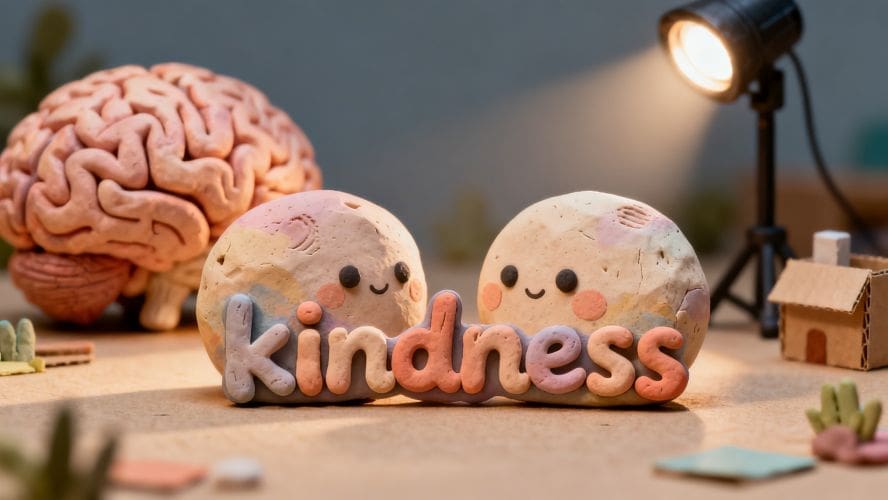
Have you ever thought about what makes people share or help others even when it costs them? Altruism, or the practice of putting others before yourself, plays a huge role in communities. Yet, not everyone shows the same level of kindness. What if boosting kindness through brain was actually possible? What if scientists could actually increase how much people care for others by influencing brain activity? A new study published in PLOS Biology by Jie Hu, Marius Moisa, and Christian C. Ruff (2026) shows this might be possible that is, boosting kindness through brain activity.
How Does Altruism Work in the Brain? Boosting Kindness Through Brain Connections
Our brain controls how we make decisions, including choosing to be kind or selfish. For a long time, researchers wondered which brain parts influence altruistic behavior. The study focused on two key areas important for boosting kindness through brain activity:
- Firstly, the frontal region of the brain, which helps us think about other people’s feelings.
- Finally, the parietal region, involved in gathering and processing information to make a decision.
Previous research using EEG imaging found that when people show altruism, there’s a strong connection between these two regions occurring at a high frequency known as the gamma-band—a type of brain wave that coordinates complex tasks, crucial for boosting kindness through brain processes.
How Researchers Tested Boosting Kindness Through Brain Stimulation
To test if this brain connection actually affects kindness, researchers used a special technique called transcranial alternating current stimulation (tACS). This method sends tiny electrical currents to targeted brain areas to increase their activity and synchronization, effectively boosting kindness through brain wave coupling.
They applied tACS to the frontoparietal network (linking frontal and parietal regions) with the aim to strengthen gamma-band phase coupling—improving timing and coordination between these brain areas.
Participants then made decisions in tasks that involved sharing money, sometimes at personal cost—a clear test of altruism enhanced by boosting kindness through brain stimulation.
What Did They Find?
The results were clear and exciting:
- Participants with enhanced frontoparietal gamma-band coupling showed more altruistic behavior.
- This effect was particularly strong when people shared despite personal cost.
- Computational models showed the stimulation didn’t create random decisions but genuinely increased how much people valued others’ outcomes over their own.
Why Is This Important for Teens Curious About STEM?
This research provides a striking example of how neuroscience and technology combine to change human behavior. It highlights a direct way to influence social kindness by boosting kindness through brain connectivity using non-invasive brain stimulation.
Learning about brain activity and electrical stimulation links to fields like biomedical engineering, psychology, neuroscience, and computer science.
For teens interested in STEM (Science, Technology, Engineering, Math), this study shows how interdisciplinary knowledge leads to real-world impact, potentially inspiring careers aimed at boosting brain technology.
Careers Inspired by Boosting Kindness Through Brain Research
If this topic excites you, consider these careers where you could help advance boosting kindness through brain technologies:
- Neuroscientist: Study brain function with a focus on behavior and cognition.
- Biomedical Engineer: Develop medical devices like brain stimulators.
- Psychologist: Research or treat human behavior and social interaction.
- Data Scientist: Analyze brain data and create predictive models.
- Ethicist in Technology: Guide responsible use of brain stimulation and AI.
Many universities offer STEM programs with lab work and internships specializing in brain science and engineering, perfect for hands-on experience in brain innovations.
What Does This Mean for Our Future
All things considered, this study opens the door to new ways of encouraging kindness and social bonding. Following ethical guidelines, brain stimulation could one day help people with empathy challenges or social difficulties by boosting kindness through brain mechanisms.
Currently, the technology remains mostly within research settings, but in the near future, it might enable therapies for enhanced caring, teamwork, and cooperation.
Scientifically, we’re moving toward understanding not just how we think, but how to enhance how we feel and share with others—boosting kindness through brain function.
Learn More About Brain Science and Technology
For those eager to explore more, check out these resources on EnTech Online that explain brain waves and brain stimulation simply:
- Understanding Brain Waves and What They Mean
- How Electrical Brain Stimulation Could Change Medicine
Both offer exciting career advice and highlight pathways to boosting kindness through brain research.
Conclusion
This fascinating study by Hu, Moisa, and Ruff (2026) proves enhancing brain waves in specific areas can increase altruism. It sheds light on the neural basis of kindness and presents ways to support social behavior through technology by boosting kindness through brain connectivity.
For students interested in STEM, it’s a powerful example of science, technology, and human behavior intersecting. Growing STEM skills will let you contribute to breakthroughs that improve lives worldwide.
Additionally, to stay updated with the latest developments in STEM research, visit ENTECH Online. Basically, this is our digital magazine for science, technology, engineering, and mathematics. Also, at ENTECH Online, you’ll find a wealth of information.
Reference
Hu, J., Moisa, M., & Ruff, C. C. (2026). Augmentation of frontoparietal gamma-band phase coupling enhances human altruistic behavior. PLOS Biology, 24(2), e3003602. https://doi.org/10.1371/journal.pbio.3003602
- Author
- Latest Posts

A Master’s-qualified Zoologist with a focus on Limnology, I combine hands-on laboratory experience with a sophisticated background in science communication. My career is defined by an interdisciplinary approach to the life sciences, merging technical research skills with a proven ability to teach and engage diverse audiences. I am committed to lifelong learning and the creative dissemination of medical and biological research, ensuring scientific literacy and inspiration remain at the forefront of the field.