AI Sees Atoms Move! Revolutionizing Nanoparticle Imaging
AI-powered system uses a type of AI called a deep neural network. Think of it as a super-powered image editor that can understand the physics of the imaging process. It…

AI Sees Atoms Move! Revolutionizing Nanoparticle Imaging
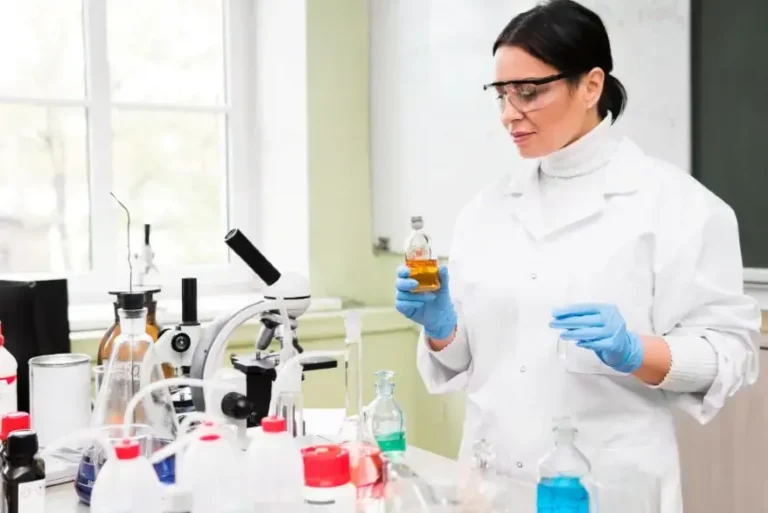
Biochemical Engineering: Career Guidance for Aspiring Engineers
Biochemical Engineering is an interdisciplinary branch of engineering that combines chemical engineering principles with biology, chemistry and biotechnology. It focuses on designing and improving processes that use living organisms, cells, enzymes and biological materials to produce useful products. These products include medicines, biofuels, food ingredients, industrial enzymes and other biochemicals.
Biochemical engineering plays an important role in industries such as pharmaceuticals, food processing, agriculture, renewable energy and environmental management. At ENTECH STEM Magazine, this category brings together educational articles, technical insights and industry developments related to biochemical engineering. It helps students, aspiring engineers and technology enthusiasts understand how biological processes can be developed and used on an industrial scale.
Biochemical engineering involves several specialised areas that combine biological knowledge with engineering methods. Engineers study how biological reactions work and how to control them in industrial environments. They also develop equipment and processes that improve production efficiency, product quality and resource utilisation.
Some important areas of biochemical engineering include:
Bioprocess engineering focuses on using biological systems to manufacture useful products. It involves the design, development and optimisation of processes that use microorganisms, cells or enzymes.
These processes may produce antibiotics, proteins, organic acids, biofuels and other valuable substances. Engineers study factors such as temperature, pH, oxygen availability, nutrient supply and reaction conditions to improve production.
Enzymes are biological molecules that accelerate chemical reactions. They play an important role in biochemical engineering because they can help produce useful substances under controlled conditions.
Enzyme technology involves studying enzyme activity, reaction kinetics, stability and industrial applications. Biocatalysis uses enzymes or whole cells to carry out specific chemical transformations.
These technologies have applications in food processing, pharmaceuticals, detergents, chemical manufacturing and biotechnology. Furthermore, researchers explore enzyme engineering to improve the performance and stability of biological catalysts.
Fermentation is a biological process in which microorganisms convert nutrients into useful products. It is widely used in food production, pharmaceutical manufacturing and industrial biotechnology.
Biochemical engineers study microbial growth, fermentation conditions, nutrient requirements and product formation. Depending on the application, fermentation processes may use batch, fed-batch or continuous operating methods.
Industrial fermentation supports the production of products such as organic acids, antibiotics, enzymes, food ingredients and bioethanol.
A bioreactor is a specialised vessel or system that provides controlled conditions for biological processes. It supports the growth of microorganisms, animal cells, plant cells or other biological systems.
Biochemical engineering covers bioreactor design, mixing, heat transfer, mass transfer, aeration and process control. Engineers must maintain suitable operating conditions to support biological activity and product formation.
Bioreactors are widely used in pharmaceutical production, biotechnology research, food processing and industrial fermentation.
Microorganisms and biological cells are important resources in biochemical engineering. Engineers and researchers study how these systems grow, use nutrients and produce valuable substances.
Cellular engineering and metabolic engineering involve modifying or optimising biological pathways to improve the production of specific compounds. These approaches support research in industrial biotechnology, pharmaceuticals, biofuels and sustainable manufacturing.
After a biological process produces the required substance, engineers must separate and purify the final product. This stage is known as downstream processing.
It involves techniques such as filtration, centrifugation, extraction, chromatography and membrane separation. The appropriate method depends on the product, its properties and the required level of purity.
Downstream processing is especially important in pharmaceutical and biotechnology industries, where product quality and consistency are essential.
Biochemical engineering has applications across several industries because biological processes can produce valuable materials and support sustainable manufacturing.
Some important applications include:
Consequently, biochemical engineering connects scientific research with practical manufacturing processes across different sectors.
Advances in biotechnology, automation and computational science continue to expand the possibilities of biochemical engineering.
Some important developments include:
In addition, advances in artificial intelligence, automation and data analytics are helping engineers monitor biological processes and analyse complex production data.
Biochemical engineering offers learning opportunities for students interested in chemical engineering, biotechnology, biology and industrial research. Depending on the institution, students may explore this specialisation through chemical engineering, biotechnology or related academic programmes.
Important subjects include microbiology, biochemistry, enzyme kinetics, chemical reaction engineering, thermodynamics, fluid mechanics, mass transfer and bioreactor design. Students also learn about fermentation, microbial growth, biological process control and product recovery.
Practical learning is equally important. Laboratory experiments, research projects, internships and exposure to industrial processes help students understand how biological systems operate in engineering environments.
Career opportunities exist across pharmaceutical companies, biotechnology organisations, food processing industries, chemical manufacturers, research laboratories and bioenergy companies. Depending on their qualifications and experience, graduates may explore roles in bioprocess engineering, fermentation technology, process development, quality assurance, research and development, and industrial biotechnology.
Biochemical engineering demonstrates how biological sciences and engineering work together to develop useful products and industrial processes. It connects chemistry, microbiology, biotechnology and chemical engineering to address challenges in manufacturing, healthcare, energy and environmental sustainability.
Through this category, ENTECH STEM Magazine brings together educational articles, technical explanations, industry insights and career-related resources on biochemical engineering. Readers can explore fermentation, enzyme technology, bioreactors, bioprocessing, industrial biotechnology and emerging developments in biological manufacturing.
Whether you are a student considering biochemical engineering as a career, an aspiring researcher interested in biotechnology or a technology enthusiast curious about biological processes, explore our collection of biochemical engineering articles and discover how this field contributes to scientific and industrial innovation.