Advances in Algal Genomics Using Long-Read Sequencing Analysis
Long-Read Sequencing is advancing modern healthcare alongside tiny biological tools designed to track your health in real time.
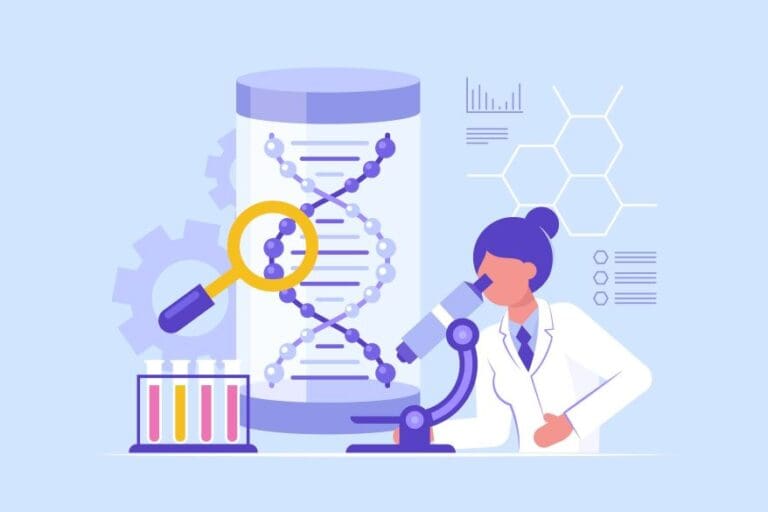
Advances in Algal Genomics Using Long-Read Sequencing Analysis

AI Technology Revolutionizes Heart Health Monitoring with HF-index
Bioinformatics is an interdisciplinary field that combines biology, computer science, mathematics, and statistics to collect, store, analyse, and interpret biological data. It helps researchers make sense of large and complex datasets generated through biological experiments, genetic research, and modern laboratory technologies.
The growth of DNA sequencing, molecular biology, and high-throughput research methods has created enormous amounts of biological information. Traditional methods alone cannot efficiently manage and analyse all this data. Therefore, scientists use computational tools, databases, algorithms, and statistical methods to identify patterns and discover meaningful biological insights.
Today, Bioinformatics supports research in genomics, molecular biology, biotechnology, healthcare, agriculture, and drug discovery. It also plays an important role in understanding biological systems at molecular and cellular levels.
At ENTECH Magazine, this category explores the science, computing methods, technologies, and innovations that help researchers analyse biological information and advance life science research.
Bioinformatics relies on several computational methods and technologies to process biological information. These methods help researchers organise datasets, compare biological sequences, study molecular structures, and understand complex biological processes.
Genome sequencing determines the order of DNA building blocks within an organism’s genetic material. Modern sequencing technologies can generate large volumes of genetic data in relatively short periods.
Bioinformatics tools help researchers process these datasets, identify genetic variations, compare sequences, and study relationships between genes and biological characteristics.
Next-Generation Sequencing (NGS) has further expanded the scope of genomic research. It allows scientists to analyse large numbers of DNA fragments and study genetic information at different scales.
Proteins perform many essential functions in living organisms. Understanding their structures and interactions helps researchers investigate biological processes and molecular mechanisms.
Structural bioinformatics uses computational methods to study protein sequences, three-dimensional structures, and molecular interactions. These methods can also support protein structure prediction and the investigation of potential drug targets.
Furthermore, computational tools help researchers compare proteins and identify similarities that may provide insights into their biological functions.
Biological databases store and organise information about genes, proteins, molecular structures, and other biological components.
Resources such as GenBank, UniProt, and the Protein Data Bank provide researchers with access to biological information from different studies and experiments.
These databases make it easier to retrieve, compare, and analyse scientific data. In addition, standardised data formats and annotation systems help researchers share information across different research platforms.
Algorithms and statistical methods are essential for analysing complex biological datasets. They help identify patterns, compare sequences, classify biological information, and interpret experimental results.
Machine learning adds another dimension to Bioinformatics. It allows computational systems to identify patterns within large datasets and support tasks such as protein analysis, gene expression studies, and biological classification.
As biological datasets continue to grow, advanced computational methods are becoming increasingly important in life science research.
Bioinformatics has applications across several scientific and industrial fields. Its ability to process large amounts of biological information helps researchers investigate complex questions that involve genes, proteins, cells, and entire biological systems.
Genomics involves the study of an organism’s complete genetic material. Bioinformatics tools help scientists analyse genome sequences, identify genetic variations, and compare genetic information across different organisms.
These methods support research into inherited characteristics, gene functions, evolutionary relationships, and genetic diversity.
Moreover, comparative genomics helps researchers identify similarities and differences between genomes, providing insights into how organisms evolve and function.
Bioinformatics supports biomedical research by helping scientists analyse genetic, molecular, and clinical research datasets.
For example, researchers can study genetic variations associated with particular diseases and investigate how molecular differences influence biological processes.
In precision medicine research, bioinformatics can help analyse molecular information to understand differences between individuals and disease subtypes. However, translating research findings into clinical decisions requires appropriate validation and professional interpretation.
Developing new medicines involves understanding biological targets, molecular interactions, and potential therapeutic compounds.
Bioinformatics supports this process by helping researchers study protein structures, identify possible drug targets, and analyse molecular datasets.
Computational approaches can also support molecular modelling and the screening of potential compounds. Consequently, these tools can help researchers prioritise areas for further laboratory investigation.
Bioinformatics also plays an important role in agricultural research. Scientists use computational tools to study plant genomes, genetic variations, crop characteristics, and relationships between organisms and their environments.
These methods can support research into crop improvement, plant disease resistance, agricultural productivity, and genetic diversity.
Similarly, comparative genomic analysis helps researchers understand the genetic characteristics of different plant varieties.
Researchers use Bioinformatics to study microorganisms, including bacteria, viruses, fungi, and other biological organisms.
Sequence analysis and comparative genomics can help scientists investigate microbial diversity, genetic relationships, and evolutionary changes.
Furthermore, metagenomics allows researchers to study genetic material collected from environmental samples. This approach can provide information about microbial communities without requiring the isolation of every organism.
Bioinformatics is closely connected to several other scientific disciplines. Although these fields overlap, they often focus on different aspects of biological research.
Together, these disciplines help researchers connect molecular information with larger biological processes.
For example, bioinformatics can help analyse gene expression data, while computational biology can model the relationships between genes. Systems biology can then use these findings to investigate how different biological pathways work together.
Although Bioinformatics has transformed biological research, it also faces several technical and scientific challenges.
The growing volume of biological data requires substantial computing resources, storage infrastructure, and efficient data management systems. In addition, researchers must address differences in data quality, formats, and experimental methods.
Other important challenges include:
Addressing these challenges is essential for improving the reliability and usefulness of computational biological research.
Advances in artificial intelligence, cloud computing, sequencing technologies, and high-performance computing continue to expand the scope of Bioinformatics.
Some important developments include:
Furthermore, the integration of AI and biological research is creating new opportunities in biotechnology, drug development, agriculture, and healthcare.
Understanding Bioinformatics involves exploring several interconnected fields, including molecular biology, genetics, computer science, statistics, artificial intelligence, and data science.
ENTECH Magazine brings these subjects together through educational articles, scientific explainers, technology insights, and coverage of emerging research developments. This category explores genomics, DNA sequencing, protein analysis, biological databases, computational biology, AI applications, and other technologies shaping modern life sciences.
Whether you are a student interested in biotechnology, an educator exploring computational biology, or a technology enthusiast following developments in biological data science, these resources offer useful perspectives on this growing field.
Explore our Bioinformatics articles to understand how computing and biological sciences work together to analyse complex life science data and support scientific discoveries.