Computer-Designed Enzymes Take On Plastic Bottles
A statistical model built from natural protein families produced hundreds of active PET-breaking enzymes, and the best beat a leading benchmark in most test conditions.
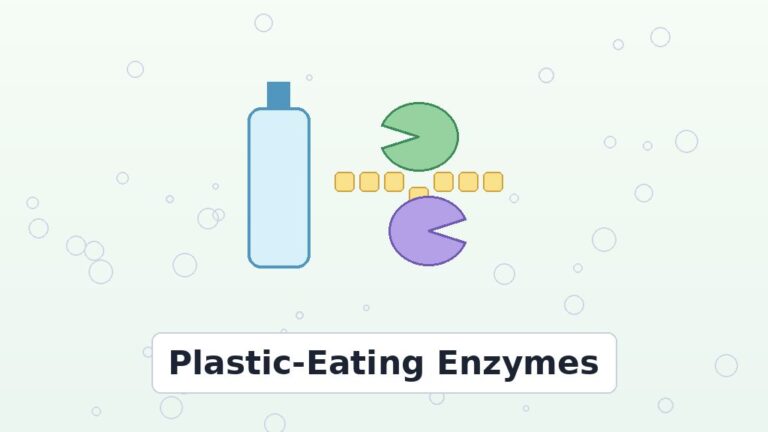
Computer-Designed Enzymes Take On Plastic Bottles

Sun-Powered Wood Sponge: Water Harvesting from Thin Air!
Environmental Biotechnology applies biological systems and processes to address environmental challenges. It uses microorganisms, plants, enzymes, and other biological materials to prevent pollution, treat waste, restore contaminated environments, and recover useful resources. By combining biology with engineering and environmental science, this field develops practical approaches to managing natural resources and reducing environmental damage.
From wastewater treatment plants to the restoration of polluted soil, Environmental Biotechnology has applications across many sectors. It also supports research into renewable energy, waste reduction, and more sustainable industrial processes. As environmental challenges become more complex, biological technologies are creating new opportunities to protect ecosystems and improve resource management.
Environmental Biotechnology is the application of biological processes and technologies to environmental protection and management. It often uses microorganisms such as bacteria and fungi, along with their enzymes, to break down pollutants or transform unwanted substances into less harmful forms.
Plants and algae can also play important roles in selected environmental applications. For example, certain plants can absorb or stabilise contaminants in soil, while algae can support wastewater treatment and the recovery of useful materials.
The field combines knowledge from microbiology, biotechnology, ecology, biochemistry, environmental engineering, and chemical engineering. Scientists and engineers use this knowledge to understand how biological systems interact with pollutants, waste materials, and natural environments.
Environmental Biotechnology supports a range of technologies designed to reduce pollution, improve waste management, and protect ecosystems.
Bioremediation uses living organisms or their biological activity to remove, break down, or reduce the impact of environmental contaminants. Microorganisms are commonly used because some can transform specific pollutants into less harmful substances.
This approach can be applied to contaminated soil, groundwater, and industrial sites. Researchers study the organisms involved, the nature of the contaminants, and the environmental conditions needed for the process to work.
Bioremediation is not suitable for every pollutant or site. Its effectiveness depends on factors such as contaminant properties, temperature, oxygen availability, and the presence of suitable biological communities.
Biological wastewater treatment uses microorganisms to break down organic matter and remove certain pollutants from wastewater. These processes are widely used in municipal and industrial treatment facilities.
Activated sludge systems, biofilters, and other biological treatment methods support the removal of organic pollutants. More specialised biological processes can also help remove nutrients such as nitrogen and phosphorus.
Engineers monitor factors such as dissolved oxygen, microbial activity, and treatment performance to maintain effective operation. Biological treatment is often combined with physical and chemical methods to meet required water-quality standards.
Microorganisms play an important role in the decomposition of organic waste. Composting uses controlled biological activity to convert biodegradable materials into a more stable, nutrient-rich product.
Environmental Biotechnology also supports research into organic waste treatment, landfill management, and the recovery of useful materials from waste streams.
These approaches can help reduce the amount of biodegradable waste sent to disposal facilities. However, effective waste management also depends on proper segregation, collection, process control, and monitoring.
Phytoremediation uses plants and their associated microorganisms to remove, stabilise, or transform certain contaminants in soil and water.
Different plants interact with contaminants in different ways. Some absorb selected substances into their tissues, while others help stabilise pollutants around their roots. Plant-associated microorganisms can also contribute to the transformation of contaminants.
Researchers study phytoremediation as a potential approach for selected contaminated sites. Its suitability depends on the type and concentration of pollutants, soil conditions, climate, and the plants involved.
Environmental monitoring helps scientists and engineers understand changes in air, water, and soil quality. Biotechnology contributes through biosensors and biological indicators.
A biosensor uses a biological component, such as an enzyme, cell, or biological molecule, to detect a particular substance or change. These devices can support the detection of selected pollutants and help monitor environmental conditions.
Biological monitoring can also provide information about the health of ecosystems. When combined with conventional measurement methods, it can support more comprehensive environmental assessment.
Some environmental biotechnologies recover useful resources from organic waste and wastewater. Anaerobic digestion, for example, uses microorganisms to break down organic matter in the absence of oxygen and produce biogas.
Biogas can be used as an energy source after suitable treatment. Other biological processes can support the recovery of nutrients and valuable materials from waste streams.
These approaches connect environmental management with the circular economy. Their sustainability depends on factors such as energy use, process efficiency, emissions, and the quality of recovered products.
Environmental Biotechnology draws on several scientific and engineering disciplines. Microbiology helps researchers understand the organisms involved in biological treatment. Biochemistry explains the reactions and enzymes that support the transformation of pollutants and organic materials.
Molecular biology and genomics provide tools for studying microbial communities and identifying organisms with useful biological functions. Bioinformatics helps researchers analyse the large datasets generated by these studies.
Environmental engineers also apply process design, fluid mechanics, mass transfer, and process-control principles. These concepts help them develop and operate treatment systems at laboratory, pilot, and industrial scales.
Sensors, automation, and data analytics are increasingly important as well. They help monitor operating conditions, identify changes in treatment performance, and support more informed process management.
Environmental Biotechnology overlaps with several areas of science and engineering, but each has a different emphasis.
Biotechnology is the broader field. It uses biological systems and processes to develop products and technologies across healthcare, agriculture, manufacturing, and other sectors.
Bioprocess Engineering focuses on designing and optimising processes that use biological systems to manufacture products. Some bioprocesses also support environmental applications, such as wastewater treatment and resource recovery.
Environmental Engineering covers a wider range of technologies for managing environmental systems. These include physical, chemical, biological, and engineering-based approaches to water treatment, waste management, pollution control, and environmental protection.
Environmental Biotechnology is particularly concerned with the use of biological systems within these environmental applications.
Biological treatment systems depend on living organisms and their surrounding conditions. Changes in temperature, pH, oxygen levels, or pollutant concentration can affect their performance.
Some contaminants are difficult to break down, while others may inhibit biological activity. Treatment processes may also require considerable time, monitoring, and careful management. In addition, results from laboratory research do not always translate directly into large-scale applications.
Researchers and engineers must also consider cost, energy requirements, environmental risks, and regulatory standards. Monitoring is essential to confirm that treatment processes are working as intended and that recovered materials or treated water meet relevant quality requirements.
New developments in biotechnology and environmental science are expanding the possibilities for pollution control and resource management.
Advances in microbial genomics and metagenomics are helping researchers study complex microbial communities. These tools can provide insights into how microorganisms interact and contribute to environmental processes.
Synthetic biology and enzyme engineering may also support the development of biological systems with specific functions. Meanwhile, artificial intelligence and data analytics can help researchers interpret environmental data and improve process monitoring.
Other areas of growing interest include advanced wastewater treatment, nutrient recovery, biological approaches to plastic waste, bio-based materials, and waste-to-energy technologies. Researchers are also exploring ways to combine biological treatment with physical and chemical methods.
The long-term goal is to develop reliable technologies that protect environmental quality while making better use of resources.
Environmental Biotechnology connects biological science with practical solutions for environmental protection. Its applications range from wastewater treatment and bioremediation to environmental monitoring, composting, and resource recovery.
At ENTECH STEM Magazine, this category explores the science, technologies, research, and engineering principles behind these developments. Discover articles on microbial processes, pollution control, sustainable waste management, environmental monitoring, and emerging biotechnology applications to understand how biological innovation can contribute to a cleaner and more resource-efficient future.