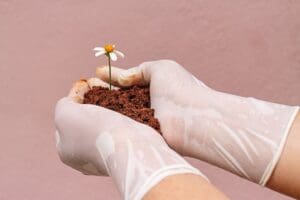
Biotechnological advances help make everyday crop production more resilient and efficient, directly benefiting farmers and consumers through future-proofing agriculture.
Future-Proofing Agriculture Through Sustainable Farming Practices
This article leverages cutting-edge biotechnologies like genome editing, RNA interference (RNAi), and omics approaches for future-proofing agriculture. These tools develop stress-tolerant, high-yield crops that endure drought, heat, salinity, and disease. Combined with targeted biomolecule delivery and sustainable systems, they enhance resilience, productivity, and adaptability against climate change.
Key Takeaways
- Biotechnology is revolutionizing crop improvement. Specifically, research predominantly targets abiotic stresses.
- For instance, advanced tools like CRISPR/Cas genome editing and nanotechnology offer precise trait modification.
- However, ethical, regulatory, and socioeconomic challenges persist. Ultimately, sustainable agriculture relies on interdisciplinary approaches.
Building Climate-Resilient and Efficient Agriculture Through Biotechnology

Biotechnological advances help make everyday crop production more resilient and efficient, directly benefiting farmers and consumers through future-proofing agriculture. For instance, tools like genome editing and AI-driven phenotyping work together with drone monitoring to detect stress early for enhanced climate resilience. As a result, this reduces crop failures and stabilizes food supply. Moreover, these innovations improve yield, boost nutritional quality, and increase sustainability. Ultimately, farmers manage climate challenges while ensuring reliable food reaches markets and tables worldwide.
Also read: 3 Ultimate Genome Editing Methods Explained
Go-to-Market Blueprint
Commercialization begins with biotechnological innovations—like genome editing, RNAi, and omics-based stress tolerance research—developed in labs for future-proofing agriculture. Successful traits (e.g., drought or disease resistance for climate resilience) are incorporated into crop lines, then undergo field testing and regulatory evaluation to ensure safety and efficacy. After regulatory approval, products are scaled and brought to market. However, public acceptance, ethical concerns, and regulatory harmonization significantly influence how quickly these climate-resilient biotech crops reach farmers and consumers.
Learning and Job Pathways
Students can pursue careers at the intersection of agricultural biotechnology, climate resilience, and data science by specializing in crop genetics, CRISPR genome editing, RNAi, and omics-driven stress tolerance research—key to future-proofing agriculture. For example, roles include plant biotechnologist, stress-resilience crop breeder, phenomics and precision agriculture specialist, bioinformatics/data analyst, and agritech research scientist focused on sustainable crop development. Moreover, skills in molecular biology, machine learning, field phenotyping, and regulatory/ethical aspects equip graduates to translate lab innovations into resilient crops and sustainable farming solutions that address climate change challenges and global food security.
Conclusion
Beyond the lab, future-proofing agriculture for climate resilience and stress management concludes that biotechnological innovations are crucial. As a result, they build climate-resilient agriculture capable of withstanding increasing environmental stresses. The review highlights how modern tools—such as genome editing (e.g., CRISPR/Cas), RNA interference, precision phenotyping, and omics approaches—have advanced the development of crops with enhanced tolerance to drought, salinity, heat, and other stresses by targeting genes involved in stress response pathways and growth regulation.
These technologies not only improve stress resilience but also boost yield, nutritional quality, and overall sustainability, helping secure food supplies amid climate change pressures. However, the authors also emphasize that ethical concerns, regulatory hurdles, public acceptance, and socioeconomic factors still challenge widespread adoption of these innovations. To maximize impact, interdisciplinary research and thoughtful policy frameworks are needed to translate laboratory breakthroughs into real‑world agricultural solutions that benefit farmers, consumers, and ecosystems.
FAQs
What kinds of innovations are discussed for enhancing crop climate resilience?
The article highlights biotechnological innovations such as genome editing (e.g., CRISPR/Cas), RNA interference (RNAi), advanced omics approaches, precision phenotyping, and targeted biomolecule delivery to develop crops tolerant to drought, salinity, heat, and other stresses.
Why is biotechnology important for future agriculture?
Biotechnology enables creation of stress-resistant, higher-yielding, and nutritionally improved crops. As a result, it helps address food security challenges under climate change. Ultimately, this makes agriculture more sustainable and adaptive.
What challenges could slow adoption of these technologies?
For instance, ethical concerns, regulatory barriers, and public acceptance pose major hurdles. Additionally, socioeconomic impacts and unequal access between developed and developing countries slow widespread commercial adoption of biotech innovations.
Additionally, to stay updated with the latest developments in STEM research, visit ENTECH Online. Basically, this is our digital magazine for science, technology, engineering, and mathematics. Also, at ENTECH Online, you’ll find a wealth of information.
Reference
Pehlivan, N., Altaf, M. T., Emamverdian, A., & Ghorbani, A. (2025). Beyond the lab: future-proofing agriculture for climate resilience and stress management. Frontiers in Plant Science, 16, 1565850. https://doi.org/10.3389/fpls.2025.1565850
- Author
- Latest Posts

I completed my Master of Science from the University of Allahabad in 2017 with a strong academic background in life sciences and chemistry. My specialization included Molecular Biology, Microbiology, Genetics, Plant Breeding, Phycology, Paleobotany, and Bioinformatics, along with Organic Chemistry, Inorganic Chemistry, and Physical Chemistry. This multidisciplinary training provided me with a comprehensive understanding of biological systems and analytical scientific approaches.
After completing my postgraduate studies, I gained valuable professional experience in both the education and social development sectors. I worked at A.M. Oxford Public School, where I was actively involved in guiding students toward academic excellence. In this role, I focused on creating an engaging learning environment, encouraging critical thinking, and nurturing students’ curiosity for scientific learning. My experience as an educator strengthened my communication, mentoring, and classroom management skills.
In addition to my teaching experience, I worked with Jeevan Jagriti Foundation, where I contributed to community-based initiatives aimed at improving educational access and awareness among underprivileged sections of society. Through this work, I participated in programs designed to support social development and promote the value of education in marginalized communities.
These professional experiences helped me develop strong interpersonal, leadership, and organizational skills while reinforcing my commitment to education and community service.