CRISPR has opened many new ways in medicine that people couldn’t imagine before. One of the most hopeful uses is to treat diseases caused by genes.
Your DNA Can Be Rewritten — Here’s How Scientists Are Doing It (And Why You Should Care)
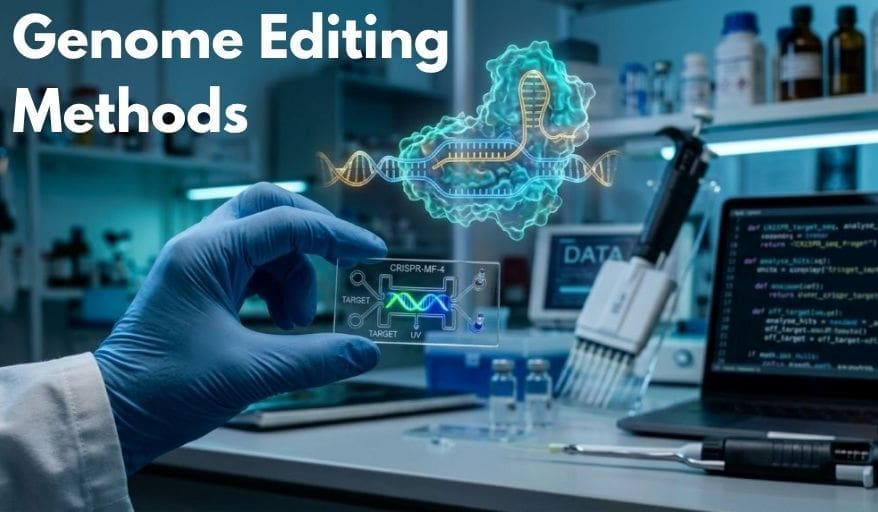
Imagine editing your own DNA like correcting a spelling mistake in a document. Scientists can actually do this now. CRISPR-Cas systems represent one of the most powerful tools ever created for changing genetic code. These technologies let researchers fix diseases, create new crops, and develop better medicines. But what exactly are genome editing methods? How do they work? Most importantly, what career opportunities exist in this exciting field? This article explores the science behind genetic engineering and shows you why this field offers incredible opportunities for curious minds like yours. Whether you’re interested in medicine, agriculture, or biotechnology, understanding genome editing methods opens doors to a future that’s being shaped right now.
Key Takeaways
- Genome editing methods allow scientists to make precise changes to DNA sequences
- CRISPR-Cas9 is the most widely used genome editing technology today
- Multiple techniques assess editing efficiency and accuracy
- High-demand job roles exist across research, clinical, and industrial sectors
- Strong foundation in biology, chemistry, and mathematics is essential for this career path
What are Genome Editing Methods? Understanding the Basics
Genome editing methods are techniques that allow scientists to modify DNA sequences with extreme precision. For example, think of your genome as a massive instruction manual written in a special chemical language. In particular, these methods let researchers find specific sections and make changes. Consequently, they can add new instructions, remove faulty ones, or correct mistakes.
The human body contains approximately three billion DNA base pairs. For instance, each base pair carries genetic information. In contrast, modern genome editing methods can target and modify just a single base pair among all those billions. To put it simply, that’s like finding one specific word in 100 books and changing it. As a result, this precision represents a revolutionary shift in biological science.
Table 1: Concepts of Various Genome Editing Methods
| Concept | What It Means |
| CRISPR-Cas | A tool that cuts DNA at specific spots |
| Genome Editing | Changing genes intentionally |
| SELECT | A new method that boosts editing accuracy |
| T7EI | A lab test to check if editing worked |
How Scientists Measure Genome Editing Success: Assessment Methods

Comparative analysis studies have evaluated major assessment methods in detail. These studies compare T7 Endonuclease I, TIDE (Tracking of Indels by Decomposition), ICE (Inference of CRISPR Edits), droplet digital PCR, and fluorescent reporter cell systems. Each method offers distinct advantages and limitations.
The Five Major Assessment Techniques
T7 Endonuclease I (T7EI) – It detects mismatched DNA sequences. When edited and unedited DNA strands pair up, they form mismatches. The enzyme cuts at these mismatches. Scientists can then count the fragments to estimate editing efficiency. This method is quick and inexpensive. However, it requires some molecular biology experience.
TIDE (Tracking of Indels by Decomposition) – It analyzes DNA sequencing data from standard laboratory equipment. Scientists sequence their edited DNA. They then compare the sequence traces to normal DNA. Computational tools break down the data to estimate editing efficiency. This method works well for many applications. Most importantly, it avoids additional lab work.
ICE (Inference of CRISPR Edits)– It represents a newer web-based tool. Like TIDE, it analyzes sequencing data. However, ICE interprets the data differently. It provides detailed information about the specific edits that occurred. Scientists appreciate its accuracy and ease of use.
Droplet digital PCR (ddPCR)– It counts individual DNA molecules. This method is highly quantitative and precise. To clarify, ddPCR divides samples into thousands of tiny droplets. Each droplet either contains the edited sequence or it doesn’t. Counting positive droplets reveals editing efficiency. This technique offers exceptional sensitivity. Nonetheless, it requires specialized equipment.
Fluorescent reporter cell systems -It use living cells with built-in genetic sensors. When editing occurs successfully, cells produce fluorescent proteins. Scientists can then count glowing cells under a microscope. This method provides real-time feedback. Similarly, it shows which cells were edited.
Choosing the Right Assessment Method
The choice of assessment method matters significantly. To enumerate the key considerations: consider your budget, timeline, available equipment, and required accuracy. For example, a school lab might use T7EI or TIDE. In contrast, a pharmaceutical company might use ddPCR for regulatory compliance. All things considered, many research teams use multiple methods together.
Exploring Other Genome Editing Method
Zinc Finger Nucleases
Zinc finger nucleases (ZFNs) are proteins that cut DNA at very specific places. They have two parts: one part that grabs onto the DNA using zinc finger shapes and another part that cuts the DNA.
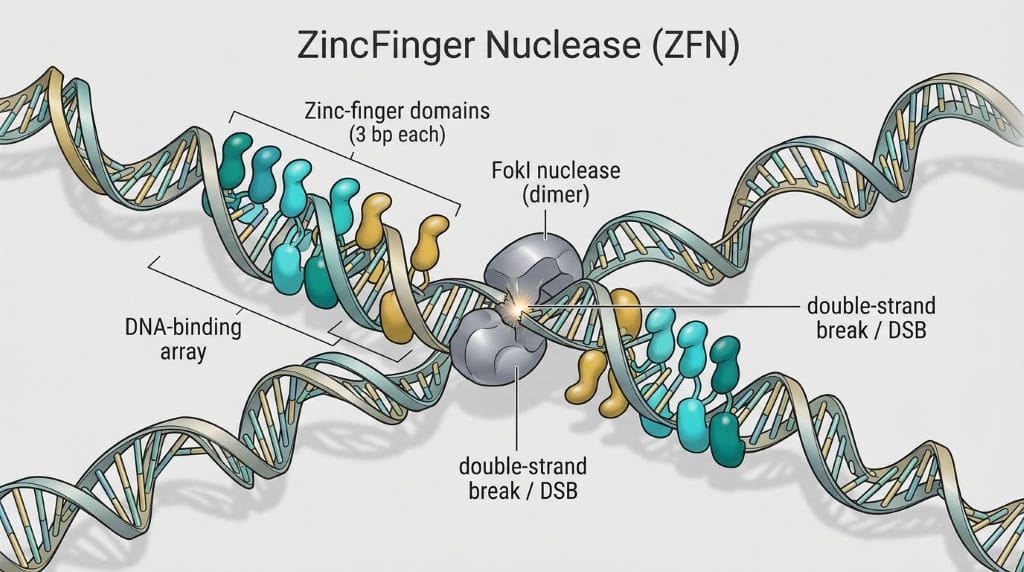
Each zinc finger can recognize a small segment of DNA made up of three bases. Moreover, by linking several zinc fingers together, ZFNs can accurately discover and target specific DNA sequences. Once the ZFNs reach their target site, they then create a double-strand break in the DNA
The cut made by ZFNs is fixed by the cell’s natural repair system, which often changes the DNA sequence. While ZFNs work well, they can be hard to design and use.
TALENs
TALENs are another tool to edit genes carefully. Like ZFNs, they join a part that sticks to DNA with a part that cuts the DNA.
TALENs use special proteins called transcription activator-like effectors from Xanthomonas bacteria. These proteins can stick to specific DNA parts very carefully. These proteins can tell the difference between single letters in DNA, so scientists can easily change TALENs to fit different parts of DNA. When they stick to DNA, their cutting part makes a break, helping the cell to fix or change the gene during repair.
TALENs are easier to use and change than ZFNs. They work well in many research and medical areas.
Real-World Applications: Where Genome Editing Methods Save Lives
Table. 2: Application area of Genome Editing Methods
| Application Area | Current Uses | Future Potential |
| Medical | Genetic disease research, cancer studies | Direct patient treatments |
| Agricultural | Disease-resistant crops, improved nutrition | Climate-adapted varieties |
| Industrial | Metabolic engineering of microorganisms | Sustainable chemical production |
| Research | Gene function studies, biological tools | Comprehensive disease understanding |
Genome editing technologies are already changing medicine and science. Medical applications represent perhaps the most exciting frontier. Researchers are developing treatments for genetic diseases like cystic fibrosis and sickle cell disease. Certain cancers involve genetic mutations. Genome editing offers hope for correcting these problems. Agricultural applications are equally important. Scientists create crop varieties that resist disease, require less water, or provide better nutrition.
Recent innovations demonstrate remarkable progress. In particular, the SELECT strategy integrates CRISPR-Cas systems with DNA damage response mechanisms. Consequently, this approach achieves editing efficiencies reaching nearly 100% for point mutations. Even better, for some applications, it preserved 94.2% efficiency in high-throughput library editing. Ultimately, these results showcase how new methodologies continue improving this technology.
Industrial applications also expand rapidly. Microorganisms produce many valuable compounds like medications and industrial chemicals. Genome editing allows scientists to design microorganisms that produce these compounds more efficiently. Hence, this drives down costs and increases sustainability.
The Future of Genome Editing Method

Potential Breakthroughs Shaping the Future of the Genome Editing Method
Genome editing methods is about to change healthcare and farming in big ways. In farming, genome editing can help make crops that survive tough weather and grow more food. This technology can also help us create new biofuels and bacteria to solve big world problems.
Career Opportunities in Genome Editing
The genome editing field is booming. Companies need skilled people. Research labs need scientists. Hospitals need genetic counselors. Let me outline some job roles.
Research Scientists
These people design experiments. They test new methods, publish new findings. They work in academia or industry. You need a PhD for most positions.
Bioinformaticians
They analyze sequencing data. Write software and build databases. They need programming skills (Python, R). A bachelor’s or master’s degree works.
Lab Technicians
They perform experiments. Maintain equipment and also record data. They need a bachelor’s degree. This is a good entry point.
Conclusion: The Path Forward for Genome Editing Method
Impact on Society
Genome editing methods stand at the forefront of scientific advancement, as they are capable of transforming countless aspects of our lives. For instance, their potential to cure genetic diseases could lead to significant improvements in public health. Moreover, beyond medicine, agriculture can benefit greatly, for example, by producing crops that are more resistant to diseases and environmental changes. As a result, these innovations promise to enhance food security and, at the same time, reduce reliance on pesticides
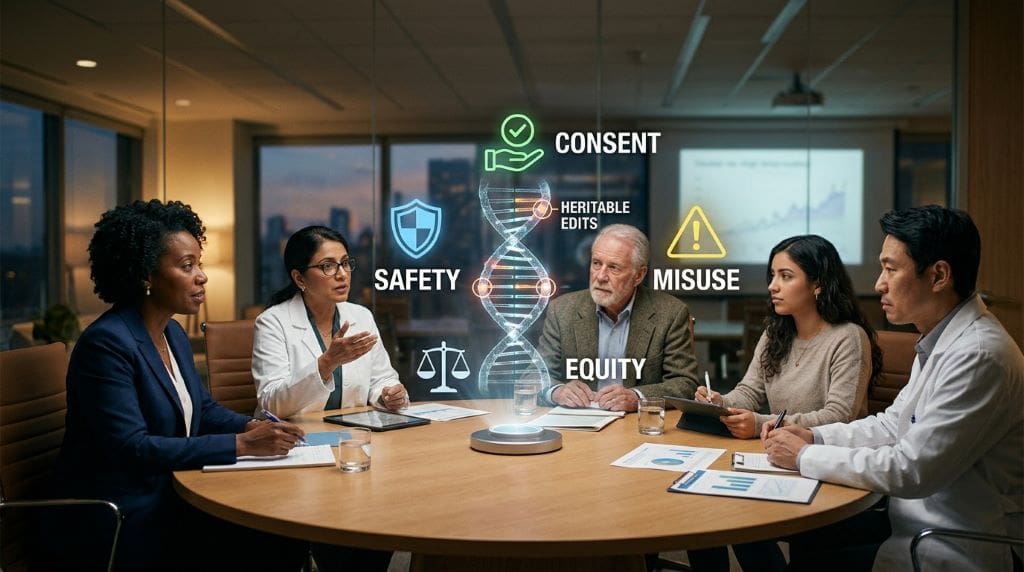
However, such a powerful tool does not come without concerns. Ethical considerations are paramount, especially concerning germline editing, which can alter human DNA for future generations. The potential impact on biodiversity should also be considered, as altering one species could have unintended consequences on ecosystems. Society must engage in open discussions to navigate these challenges responsibly.
Balancing Risks and Benefits
Finding the right balance between getting the benefits of genome editing and minimizing its risks is crucial. This balancing act involves thorough regulatory frameworks that ensure safe and ethical use. Regulations should be stringent enough to prevent misuse but flexible enough to encourage innovation.
Public engagement plays a key role in helping people understand genome editing and its responsible use. To begin with, it spreads clear knowledge about what this technology does. In particular, simple and open messages help people learn without confusion. Consequently, trust grows between the public, scientists, and policymakers.
Beyond this, involving people from different backgrounds adds many viewpoints. For instance, communities can share their needs and concerns. Therefore, policies can reflect a wide range of ideas. Ultimately, this approach supports fair, safe, and equal use of genome editing.
As we move forward, continuous research remains vital to understand the long-term effects of genome editing. To begin with, scientists need steady study and review. In addition, global teamwork plays a key role, since gene-editing tools cross borders with ease. For this reason, countries must share data and work together.
Frequently Asked Questions
What is Genome Editing?
genome editing is a method that lets scientists change DNA. In other words, it allows clear and exact changes in genes. As a result, traits or functions can change. For example, scientists use tools such as CRISPR-Cas9. In this way, this tool targets a specific DNA sequence so that it can make a precise cut. As has been noted, this method is fast and accurate.
How Does CRISPR-Cas9 Work?
CRISPR-Cas9 works with a guide RNA that finds a specific DNA sequence. In other words, the guide RNA acts like a search tool so as to locate the exact spot. As a result, once the target is found, the Cas9 enzyme cuts the DNA at that point. To put it another way, it makes a clean and precise break. As has been noted, this step is very accurate.
What Are the Benefits of Genome Editing Method?
Genome editing offers many benefits across different fields. First of all, it plays an important role in medicine. It can fix faulty genes at their source. For this reason, it may help treat genetic disorders. In fact, it can target diseases like cystic fibrosis, sickle cell anemia, and muscular dystrophy by correcting harmful mutations. Not only that, it also improves how scientists understand these conditions.
References
- Liu, X., Tan, H., Wang, J., Cao, Y., Li, P., Fan, X., Wang, Q., Zhang, H., Zhang, J., Yang, T., Zhao, G., Zhang, X., Duan, X., Zi, L., Liu, L., Ma, L., Chen, Z., Liang, L., & Liu, R. (2025). SELECT: high-precision genome editing strategy via integration of CRISPR–Cas and DNA damage response for cross-species applications. Nucleic Acids Research, 53(12). https://doi.org/10.1093/nar/gkaf595
- Yao, B., Yang, Q., Gonçalves, M. a. F. V., Schiffelers, R., Sluijter, J. P. G., & Lei, Z. (2025). Comparative Analysis of Methods for Assessing On-Target Gene Editing Efficiencies. Methods and Protocols, 8(2), 23. https://doi.org/10.3390/mps8020023
- Robb, G. B. (2019). Genome Editing with CRISPR‐Cas: An Overview. Current Protocols Essential Laboratory Techniques, 19(1). https://doi.org/10.1002/cpet.36
- Author
- Latest Posts

I completed my Master of Science from the University of Allahabad in 2017 with a strong academic background in life sciences and chemistry. My specialization included Molecular Biology, Microbiology, Genetics, Plant Breeding, Phycology, Paleobotany, and Bioinformatics, along with Organic Chemistry, Inorganic Chemistry, and Physical Chemistry. This multidisciplinary training provided me with a comprehensive understanding of biological systems and analytical scientific approaches.
After completing my postgraduate studies, I gained valuable professional experience in both the education and social development sectors. I worked at A.M. Oxford Public School, where I was actively involved in guiding students toward academic excellence. In this role, I focused on creating an engaging learning environment, encouraging critical thinking, and nurturing students’ curiosity for scientific learning. My experience as an educator strengthened my communication, mentoring, and classroom management skills.
In addition to my teaching experience, I worked with Jeevan Jagriti Foundation, where I contributed to community-based initiatives aimed at improving educational access and awareness among underprivileged sections of society. Through this work, I participated in programs designed to support social development and promote the value of education in marginalized communities.
These professional experiences helped me develop strong interpersonal, leadership, and organizational skills while reinforcing my commitment to education and community service.