Learn how to future-proof your STEM career by developing essential human skills like communication, emotional intelligence, and leadership to thrive alongside AI.
How to Future-Proof Your STEM Career Before You Even Start
Estimated reading time: 6 minutes
Having a future in STEM is about more than being the best coder or acing your science classes. The game is changing fast. As AI gets smarter, the skills that really matter are more human. Tomorrow’s leaders will work effectively with AI while bringing human strengths like creativity, critical thinking, collaboration and adaptability.
So, You’re Good at Tech, But What Else?
In the past, you could stand out by mastering technical knowledge. Opportunities often followed naturally if you were the best programmer or engineer in the room. However, AI tools can now perform many technical tasks faster and more efficiently than even experts. This is completely changing how people work.
Even as technology transforms the workplace, people will always be the heart of innovation, progress and decision-making. In fact, STEM occupations are projected to grow by 6% from 2024 to 2034 (NSF, 2026), ensuring a career path for students entering the workforce. While technology can quickly process information, it can’t replace human judgment, creativity, critical thinking and empathy.
Why You Have to Be Able to Explain Your Great Ideas
According to a survey, 26% of employees are worried about how AI will affect their work (The Center for Leadership Studies, 2024). So one of the smartest investments you can make is becoming an effective communicator, because your ideas can only have an impact if others understand them. Imagine you’ve developed an innovative engineering design or uncovered important research findings. However, if you can’t explain its significance to others, your work may never reach its full potential.
Strong communication skills can help you stand out, build confidence, and work more effectively with classmates and future colleagues. Your ability to share your ideas clearly, connect with others and explain complex concepts in simple terms can mean the difference between being a high-performing worker or a future leader.
The good news is that you can begin developing communication skills now by participating in discussions or volunteering for presentations. Try writing about your work, or practice explaining technical concepts to friends and family.
From Group Projects to Leadership Skills
Many people think leadership begins only when they become a leader in title. In reality, leadership begins long before you receive the responsibility. Leadership is about taking initiative and solving problems, as well as supporting others and creating positive outcomes. You don’t need formal authority to demonstrate these qualities.
You can find leadership opportunities everywhere. Try leading a group project or organize a campus event, and there is also a chance to mentor younger students. You can coordinate research activities or volunteer for difficult responsibilities. These experiences can help you develop decision-making abilities, accountability and organizational skills.
Embracing Change to Future-Proof Your STEM Career
The one certainty about the future of STEM careers is that it will change. New technologies emerge every year, and workplace expectations shift rapidly, to the point that employers expect 39% of workers’ core skills to change by 2030 (WEF, 2025).
So you have to develop your adaptability. Embrace unfamiliar challenges and remain open to learning. For example, software developers had to learn to work with AI coding tools, and engineers are increasingly integrating sustainability principles into their work. Those who embrace these shifts position themselves for future opportunities, while those who resist change risk falling behind.
Emotional Intelligence as Your Secret Weapon in a High-Tech World
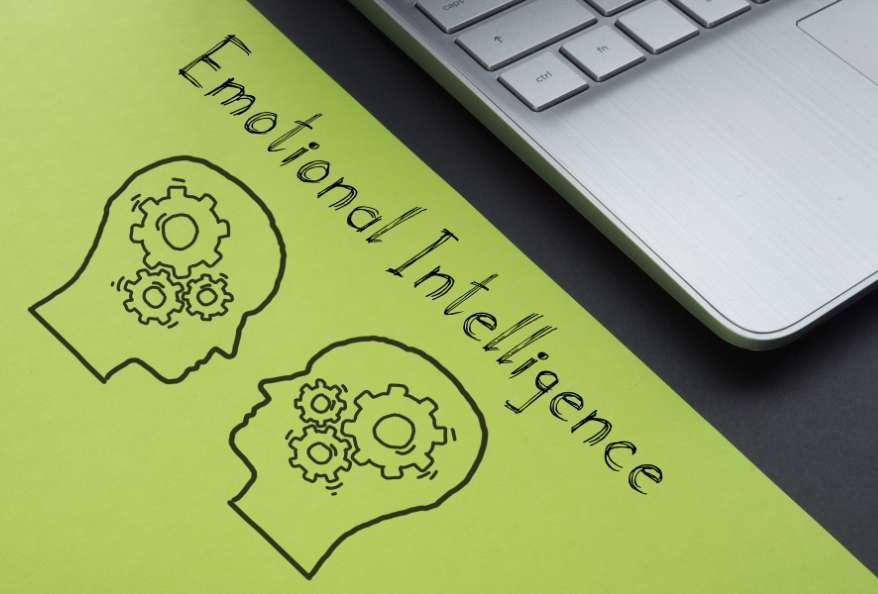
In highly technical fields, emotional intelligence (EQ) can be overlooked, but it is a valuable skill. It can help you in your future career as many employers look for candidates who have strong EQ when hiring (Indeed, 2025).
EQ involves understanding your own emotions and recognizing others’ feelings. It means you can communicate effectively under pressure and manage relationships constructively. These abilities influence how well you collaborate, lead, and navigate school or workplace challenges.
Imagine a stressed-out robotics club team right before a national competition, struggling to work together and facing setbacks. In this scenario, technical expertise alone may not be enough to keep the project moving forward, especially if team members feel frustrated or overwhelmed. This is where EQ can become an advantage.
Your strong EQ can keep the team focused, encourage open communication and support teammates in overcoming challenges. By listening to others, showing empathy and helping the group work through problems together, you can turn setbacks into opportunities for growth. Empathy, collaboration and the ability to connect with others are strengths that technology can’t replace. As you develop them, you’ll become a better teammate and a future leader who can inspire others.
Future-proof your STEM career: Human vs. AI
As AI becomes more capable, it is important to understand where the technology excels and where your uniquely human strengths give you an advantage.
| What AI Does Best | What You Do Best |
| Process large amounts of data | Interpret results within a real-world context |
| Generate code, calculations or technical output quickly | Understand project goals and user needs |
| Automate repetitive tasks | Focus on strategy, creativity and problem solving |
| Work without fatigue | Build trust, relationships and collaboration |
| Follow instructions | Provide creativity and original ideas |
To be the most successful STEM professional, you don’t have to compete against AI. You have to know how to leverage AI’s strengths while contributing the creativity, empathy, leadership and decision-making.
Start Building Your Future-Proof STEM Career Today
You don’t need to wait until graduation to begin developing future-proof capabilities. Every presentation, research project, internship, volunteer experience and collaborative assignment offers an opportunity to strengthen skills that will serve you throughout your career.
Technical expertise will always be a foundation of success in STEM careers. However, in a world where AI can automate more technical tasks than ever before, your ability to communicate, lead, adapt and connect with others will be what makes you stand out. The future belongs to professionals who can combine the power of technology with the strengths that make us uniquely human.
Future-proof your STEM career: Challenge
Develop those abilities now by explaining your favorite complex scientific concept to a 10-year-old sibling or a non-tech family member without using any heavy jargon. This helps you prepare for a STEM career that can thrive no matter how technology evolves.
Additionally, to stay updated with the latest developments in STEM research, visit ENTECH Online. Basically, this is our digital magazine for science, technology, engineering, and mathematics. Further, at ENTECH Online, you’ll find a wealth of information.
References:
- National Science Board. (2026). The STEM Labor Market: 2024—2034. National Science Foundation. https://ncses.nsf.gov/pubs/nsb20261
- The Center for Leadership Studies. (2024). The Growing Value of Human Connection in Leadership. https://situational.com/blog/growing-value-of-human-connection-in-leadership/
- World Economic Forum. (2025). The Future of Jobs Report 2025: Skills Outlook. https://www.weforum.org/publications/the-future-of-jobs-report-2025/in-full/3-skills-outlook/#3-skills-outlook
- Indeed Editorial Team. (2025). Emotional intelligence interview questions (With examples). Indeed Career Guide. https://www.indeed.com/career-advice/interviewing/emotional-intelligence-interview-questions
- Author
- Latest Posts

Tessa Dodson is the Senior Writer at Classrooms.com, where she creates educational content that makes complex concepts accessible and engaging for both students and educators. With a background in education and writing, Tessa specializes in helping students navigate academic challenges and explore their career potential, especially in STEM fields. She has helped many young adults identify their strengths, overcome academic anxieties, and develop actionable plans for pursuing their goals. She is also passionate about lifelong learning and believes education should inspire curiosity and empower students to pursue meaningful work.


