Permanent magnet manufacturing brings together both science and craftsmanship.
Magnet Manufacturing Process: How Permanent Magnets Are Made
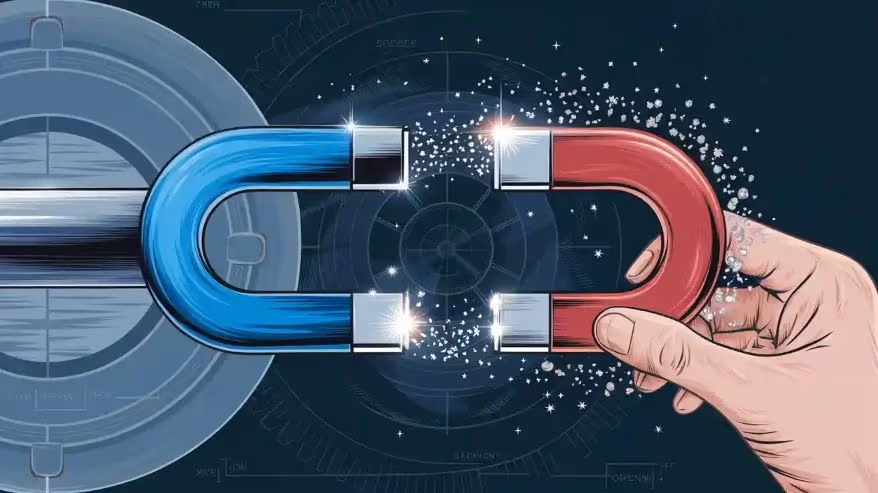
Permanent magnets are everywhere in modern technology. They power electric motors and household appliances. But how are these powerful magnets actually made? Let’s explore the magnet manufacturing process step by step.
First, manufacturers select the right raw materials. Then, they transform these materials into strong magnets. The process involves several important stages. Each stage requires precision and expertise. Quality control happens throughout the entire process. Next, the mixing and pressing stages begin. After that, sintering creates the magnet structure.
Magnetization is the final manufacturing step. This process gives magnets their magnetic power. Quality testing ensures each magnet meets standards. Understanding this process helps us appreciate magnet complexity. These objects seem simple but require advanced technology. Materials science and engineering work together perfectly.

Permanent magnet manufacturing brings together both science and craftsmanship. As a result, innovation blends with traditional manufacturing methods at every step. Because of this, each product achieves a high level of magnetic excellence. Not only does this knowledge benefit industry professionals, but it also sparks curiosity in learners. In fact, anyone interested in materials science will find something valuable here. Moreover, the manufacturing process reveals many fascinating scientific principles.
Did you know? Additive manufacturing helps create complex shapes and reduces waste in making magnets.
Types of Permanent Magnets
You will find many types of magnets in daily life. Each type has unique magnetic properties and uses. Let’s explore the main types you might encounter.
A permanent magnet keeps its magnetism for a long time. You see these in speakers, motors, and toys. The most common types of magnets here are neodymium, alnico, and ferrite. Neodymium permanent magnets stand out for their strength. For example, a small N52 neodymium magnet can lift up to 3 kg. However, it loses strength at high temperatures. Ferrite magnets work better in heat but are not as strong. Alnico magnets offer good strength and resist heat well. These differences help you choose the right types for your needs.
| Magnet Type | Strength (Gauss) | Pull Force (kg) | Temp Resistance |
|---|---|---|---|
| Neodymium N35 | 11,700 | 1.5 | Low |
| Neodymium N52 | 14,500 | 3.0 | Low |
| Ferrite | 3,800 | 0.5 | High |
| Alnico | 1,200 | 0.2 | Very High |
Ferrite Magnets
Ferrite magnets, also called ceramic magnets, use iron oxide and strontium or barium. These permanent magnets cost less than others. You see them in motors, speakers, and appliances. They resist corrosion and work well in wet places. Ferrite permanent magnets have lower strength but last long. They also have a low environmental impact. Factories make about 1 million tons each year. You save money and help the planet by choosing ferrite.
Performance tests show ferrite magnets cost about $5.15 each. They use less energy and have a 35% lower environmental impact than other types. You can use them in large-scale production.

Ferrite magnets serve as an economical choice in several applications. Their low cost makes them ideal for mass production. We often see them in household items, toys, and speakers. Despite their lower magnetic strength compared to neodymium magnets, they offer excellent resistance to demagnetization. This characteristic ensures long-term reliability in various conditions.
Moreover, these magnets are resistant to corrosion. This property enhances their durability in harsh environments. We also appreciate their lightweight nature, which allows for easy integration into designs. Alnico magnets, while offering different advantages, do not compete with the cost-effectiveness of ferrite. As we continue to innovate, our focus remains on utilizing ferrite magnets for budget-friendly solutions without sacrificing quality.
NdFeB Magnet
Neodymium iron boron magnets are the most powerful permanent magnet you can buy. You see NdFeB in electric motors, hard drives, and headphones. These magnets use neodymium, iron, and boron. NdFeB magnets are small but strong. They help make devices lighter and more efficient. However, they break easily and rust fast. You need coatings to protect them.

NdFeB permanent magnet types lead the market with over 54% share. They power electric vehicles and wind turbines. You get high torque and efficiency. Still, they lose strength in heat and need careful handling. NdFeB magnets use less rare earth material now, which cuts costs and boosts efficiency.
Tip: Use NdFeB permanent magnet for strong force in small spaces.
NdFeB magnets changed how you use magnets in modern tech. You find them in almost every high-tech device today.
Alnico Magnets
You find aluminum nickel cobalt magnets in many industrial tools. These permanent magnets use iron, aluminum, nickel, and cobalt. Also, some types add titanium or copper. As a result, you get strong magnetic properties and high temperature stability.

Additionally, these magnets resist corrosion well. You use them in electric motors, sensors, and relays. They also work in MRI machines and scientific instruments. Indeed, their stability makes them reliable in harsh environments.
Note: Alnico magnets keep working even at 500°C. This makes them perfect for high-heat jobs.
| Material Component | Effect on Magnetic Properties | Industrial Relevance |
|---|---|---|
| Cobalt (Co) | Raises coercivity | Resists demagnetization |
| Titanium (Ti) | Boosts coercivity | Used in high-performance grades |
| NiAl-rich matrix | Adds durability | Supports stability |
Rare Earth Magnets
Rare earth magnets include neodymium and samarium cobalt magnets. These permanent magnets give you the strongest magnetic properties. You use them in electric vehicles, wind turbines, and electronics.
Samarium cobalt magnet types work better at high temperatures. They resist corrosion and last longer. SmCo magnets cost more but offer great stability.
| Feature | NdFeB Magnets | Ferrite Magnets | Alnico Magnets | SmCo Magnets |
|---|---|---|---|---|
| Magnetic Strength | Extremely strong | Weaker | Moderate | Strong |
| Durability | Brittle, needs coating | Durable | Durable | Durable |
| Cost | Higher | Low | Moderate | Highest |
| Temp Stability | Low | High | Very High | Very High |
The table above clearly indicates the superiority of SmCo magnets over other types of permanent magnets.
Table below shows estimated market share of different types of permanent magnets.
| Magnet Material | Market Share (2024) | Key Applications | Energy Density / Efficiency Notes |
|---|---|---|---|
| NdFeB | 54.55% | EV motors, sensors, electronics | Highest energy density |
| Ferrite | 48.4% | Motors, appliances, speakers | Durable, cost-effective |
| Alnico | Smaller share | Industrial, scientific | Stable at high temperatures |
| SmCo | Niche | Aerospace, wind, high-temp | High cost, high performance |
How Magnets Are Made
Magnets are made in several different ways. As a result, each method shapes the final product in its own unique way. For example, factories carefully choose the best method based on the type of magnet and how it will be used. The main manufacturing methods include powder metallurgy, sintering, casting, pressure bonding, and extrusion or calendering. Furthermore, each method changes the microstructure and strength of the magnet. Consequently, you get different results with each process. In the end, the chosen method affects how the magnet performs in real-world applications.
Powder Metallurgy
Powder metallurgy is a key way to make strong magnets. You start with metal powders. You mix, press, and heat them. This method works well for rare earth magnets like NdFeB and SmCo. You can control the shape and size. The steps include:
- Alloy preparation
- Powder production
- Particle alignment
- Pressing
- Sintering
- Heat treatment
- Machining
- Magnetizing
You use pressing to shape the powder. Then, you heat it to bond the particles. As a result, this process gives you high strength and energy. Also, you can make complex shapes with less waste. Specifically, factories use this for high-performance magnets.
Note: The microstructure and properties of permanent magnets depend on the chosen process. Powder metallurgy lets you fine-tune these features for the best results.
Sintering
Sintering is a heating process. You press the powder into a shape first. Then, you heat it below the melting point. This step bonds the particles. Sintering is common for ferrite and rare earth magnets. You get dense, strong magnets this way.
Research shows that sintering temperature changes the magnet’s density and strength. For example, strontium hexaferrite magnets reach 91.4% density at 1050°C. Higher temperatures can cause grain growth and affect magnetic properties. You must control the sintering process to get the best results. The sintering process also affects electrical properties and grain size. You see these changes in magnets with different additives and temperatures.
You use pressing before sintering to set the shape. Then, you heat the magnet to lock in the structure. This method gives you magnets with high coercivity and stability.
Casting
Casting is a traditional way to make magnets. In this process, you first melt the metal and then pour it into a mold. As the metal cools, it hardens into the shape you want. Because of this, casting is often used for making alnico magnets. This method is especially useful when you need large or complex shapes.
Unlike powder methods, casting does not use pressing. Therefore, you end up with a different microstructure in the finished magnet. As a result, cast magnets have good strength and can work well at high temperatures. After casting, you often need to machine the magnet to get the final size. Overall, casting offers flexibility and reliability, especially when you need magnets with special shapes or properties.
Pressure Bonding
Pressure bonding is a low-temperature method. You mix magnetic powder with a binder. Then, you press the mix into a shape. This method works for sensitive materials like Sm-Fe-N. These materials break down at high heat. You cannot use sintering or hot pressing for them.
You use compression molding or injection molding here. The process keeps the magnetic properties safe. Bonded magnets have lower strength but can take complex shapes. For example, bonded Sm-Fe-N magnets reach a maximum energy product of 14 MGOe. You use pressing to form the magnet without high heat.
Extrusion and Calendering
Extrusion and calendering shape flexible magnets. You mix magnetic powder with plastic. Then, you push the mix through a die (extrusion) or roll it flat (calendering). This method makes strips, sheets, or custom profiles.
Process efficiency matters here. For example, in extrusion, you control nozzle temperature, speed, and layer thickness. You keep the filament diameter steady for smooth flow. These steps help you avoid clogs and save time. You get flexible magnets for fridge seals and crafts.
Tip: Optimizing extrusion parameters boosts yield and saves time in magnet production.
Magnetization Process
After shaping, you must magnetize the product. For this, you expose the magnet to a strong magnetic field. Particularly, this step aligns the domains inside. As a result, the magnet gain its full strength. Without this step, the magnet stays weak.
Thus the magnets are made by combining the right materials, process, and magnetization. Each step matters. You get the best magnets by matching the method to the material.
| Method | Used For | Key Steps | Typical Products |
|---|---|---|---|
| Powder Metallurgy | NdFeB, SmCo | Pressing, sintering, magnetize | High-strength magnets |
| Sintering | Ferrite, rare earth | Pressing, heating, magnetize | Motors, sensors |
| Casting | Alnico | Melting, molding, machining | Large, stable magnets |
| Pressure Bonding | Sm-Fe-N, bonded types | Mixing, pressing, molding | Complex shapes, low heat |
| Extrusion/Calendering | Flexible magnets | Mixing, shaping, magnetize | Strips, sheets |
Each method shapes the final product’s strength, shape, and use.
Always match the manufacturing method to the magnet’s job for the best results.
Quality and Testing
Magnet Strength Testing
You need to check the strength of your magnets before using them. Testing follows strict rules. Labs use standards like ASTM D638, ASTM E8, and ISO 6892. Indeed, these rules help you get results you can trust. Thus, you avoid mistakes by using calibrated equipment and preparing samples the right way. Trained workers run the tests and keep good records.
- Standardized tests reduce errors.
- Statistical analysis helps you understand the results.
- Labs use mean, standard deviation, and confidence intervals.
- Accredited labs, like those with ISO/IEC 17025, show high skill and care.
Tip: Companies trust labs with certifications. Over 80% prefer accredited labs for better results.
Surface Finishing
Surface finishing protects your magnets from damage. Specifically, you can choose coatings like nickel, zinc, or epoxy. In fact, these layers stop rust and wear. A smooth finish also helps your magnet fit better in devices. Additionally, factories test the coating by checking thickness and looking for cracks. They use special tools to measure how well the finish sticks.
| Finish Type | Main Benefit | Common Use |
|---|---|---|
| Nickel | Rust protection | Electronics |
| Epoxy | Chemical shield | Medical devices |
| Zinc | Cost-effective | Toys, crafts |
Note: Good finishing keeps your magnet strong and safe for longer.
Safety and Consistency
You must keep safety in mind when handling magnets. In fact, strong magnets can pinch fingers or damage electronics. Particularly, use gloves and keep magnets away from children. Factories check each batch for size, strength, and coating quality. Also, they use the same tests every time to keep results steady.
- Use proper tools and safety gear.
- Store magnets in marked containers.
- Test each batch for strength and finish.
- Keep records for every test.
Consistent testing and safety steps help you get reliable magnets every time.
Always follow safety rules and quality checks for the best results.
You see magnets everywhere. Each type uses special metals and methods. Your choice of material and process shapes how well magnets work. Additive manufacturing brings new shapes but costs more. Recycling neodymium magnets saves energy and boosts performance.
- Magnetic bars help keep food and medicine safe.
- Industry uses more magnets as automation grows.
- Asia Pacific leads market growth with new factories.
- Rare-earth magnets power electric cars and wind turbines.
You rely on these tools for clean energy, smart devices, and health care. Stay curious. New advances will keep shaping your world.
Closing Remarks: Cost-Effective Magnet Solutions
- Ferrite magnets: Affordable and widely used for various applications.
- Neodymium magnets: Strong but more expensive than ferrite alternatives.
- Samarium cobalt magnets: High performance with a higher price point.
- Alnico magnets: Durable and stable, but less cost-effective.
References
Burns, D. (2019, September 7). Permanent magnets and electromagnets. Master Magnetics. https://www.magnetsource.com/blogs/blog2/permanent-magnets-and-electromagnets-different-magnet-types-feature-different-properties
Hassan, B. (2023). Perspective Chapter: Environmental Impact of Modern Permanent Magnets. In IntechOpen eBooks. https://doi.org/10.5772/intechopen.111661
Additionally, to stay updated with the latest developments in STEM research, visit ENTECH Online. Basically, this is our digital magazine for science, technology, engineering, and mathematics. Furthermore, at ENTECH Online, you’ll find a wealth of information.
- Author
- Latest Posts

Charudatta Pathak was a student at St. Aloysius High School in Bhusawal, established in 1874, making it one of India’s oldest convent institutions. He earned his bachelor’s degree in mechanical engineering from SSVPS College of Engineering, Dhule in 1995, demonstrating exceptional academic achievement. Thereafter, he launched his career as a CNC programmer in a toolroom. He has utilized FANUC, Deckel, Maho, and Mikron controllers to operate 2-axis and 3-axis machines for the fabrication of jigs, fixtures, dies, and molds. He commenced his career as an academic in 1996, when he assumed the role of lecturer at SSVPS College of Engineering, Dhule. Additionally, he earned his post-graduate degree in CAD/CAM from L. D. College of Engineering, Ahmedabad, in 2000, and then acquired a Ph.D. from COEP in 2011 while concurrently engaged in teaching. Until 2023, he occupied many academic roles, including lecturer, assistant professor, professor, dean, principal, director, and vice chancellor at both public and private universities throughout India. From 2008 to 2010, he served as the project lead in the CAE department of a European multinational firm. During his 28-year professional tenure, he identified a need for dependable books targeted at students in grades 8 to 12, particularly for nascent career planning. He founded ENTECH Digital Magazine, a free monthly publication available on entechonline.com and magzter.com. Teens with a strong interest in Science, Technology, Engineering, and Mathematics (STEM) who aspire to pursue careers in these fields may find ENTECH Digital Magazine beneficial.