This article illustrate the function of multi-omics phenotyping bioinformatics to combine genes, proteins, metabolites with high-throughput phenotyping and machine learning.
Harnessing Multi-Omics Phenotyping Bioinformatics for Precision Agriculture
This article illustrate the function of multi-omics phenotyping bioinformatics to combine genes, proteins, metabolites with high-throughput phenotyping and machine learning. This shifts breeding from isolated tests to data-driven decisions, yielding sustainable, resilient varieties despite challenges.
Key takeaways
- Fruit agriculture is transformed by multi-omics integration (genomics, metabolomics, phenomics).
- High-throughput phenotyping accelerates trait measurement.
- Bioinformatics and machine learning enable predictive breeding.
- Major bottlenecks still slow real-world cultivar delivery.
- The shift reframes breeding as a data-to-decisions challenge needing systemic change.
Also read: 3 Ultimate Genome Editing Methods Explained
Real-life use
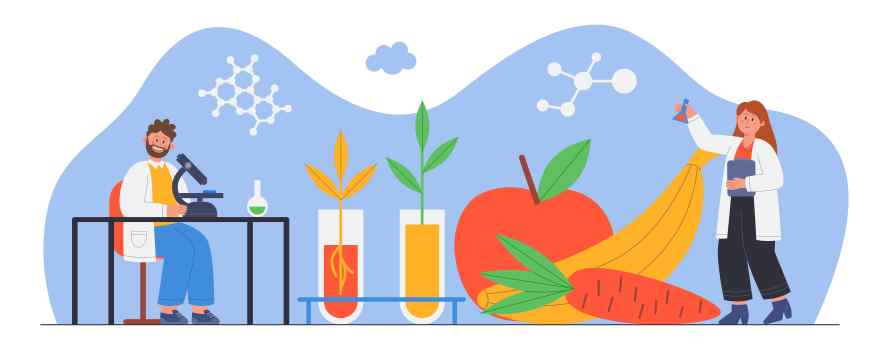
Multi-omics phenotyping bioinformatics, uses modern multi-omics, high-throughput phenotyping, and advanced bioinformatics to improve fruit breeding and agricultural decision-making. For example, rapid genomic and metabolic profiling can identify desirable traits like flavor, nutrition, stress resistance, and yield more quickly than traditional methods. Additionally, high-throughput imaging and spectroscopy allow non-destructive fruit quality assessment, which enables better orchard management and post-harvest sorting. Moreover, machine learning interprets complex datasets to predict cultivar performance under varying climates, thus helping farmers plant varieties suited to future conditions. Although multi-omics phenotyping bioinformatics mainly research-focused, they ultimately underlie future improvements in fruit quality, resilience, sustainability, and precision agriculture practices.
Business viability roadmap
Multi-omics phenotyping bioinformatics, uses cutting-edge multi-omics and phenotyping technologies to rapidly generate genomic insights. However, commercialisation remains slow and costly. For example, delivering an improved fruit cultivar to European markets still takes about ten years and €14.5 million, similar to decades ago. Multi-omics phenotyping bioinformatics highlights a persistent “valley of death” between discovery and market release. Moreover, structural bottlenecks—such as regulatory hurdles, socioeconomic barriers, and limited phenotyping of complex traits—impede translating innovations into commercially adopted varieties.
Study and work possibilities
Future students can pursue careers at the intersection of plant science, data science, and agricultural technology by learning multi-omics phenotyping bioinformatics which includes multi-omics (genomics, metabolomics), high-throughput phenotyping, and bioinformatics to analyze complex biological data. Additionally, skills in machine learning, AI, statistical modeling, and coding (e.g., Python/R) will be valuable for building predictive models and interpreting integrated datasets. For example, roles include agricultural data scientists, crop bioinformaticians, phenotyping specialists, precision agriculture engineers, and biotech researchers focused on sustainable fruit breeding, climate-resilient crops, and decision support tools for growers. Ultimately, these careers help bridge research with real-world agriculture.
Conclusion
The article concludes that fruit agriculture is undergoing a profound transformation driven by multi-omics phenotyping bioinformatics, which integrates genomic, metabolomic, and phenotypic data with advanced computational analysis to accelerate trait discovery and cultivar improvement. While these technologies enable rapid identification of beneficial alleles and predictive modeling, the process of delivering improved fruit varieties to farmers still requires significant time and investment, highlighting that data generation alone cannot overcome persistent breeding bottlenecks.
However, despite scientific advances, major bottlenecks persist in turning data into practical farming results. Integrating diverse datasets remains tough. Multi-omics phenotyping bioinformatics face limits for complex traits like flavor and post-harvest quality. Bridging research to farmers hits social, regulatory, and economic barriers—the “agri-tech valley of death.” Teamwork, participatory breeding, and better infrastructure can solve these. This unlocks data-driven fruit farming’s potential.
FAQs
What is the main focus of “From data to decisions: a paradigm shift in fruit agriculture”?
The article explores how multi-omics, modern phenotyping, and bioinformatic tools integrate vast biological data to transform fruit breeding from trial-and-error methods into precise, data-driven decisions for sustainable cultivars.
What is the “valley of death” mentioned in the paper?
It refers to the gap where rapid genomic discoveries fail to reach markets; despite fast allele identification and editing, releasing a new fruit cultivar still takes 10 years and €14.5 million due to regulatory, socioeconomic, and phenotyping bottlenecks.
What solutions does the article propose for overcoming challenges?
Authors advocate systemic changes like collaborative frameworks, better data integration via machine learning, and focusing on actionable breeding pipelines to bridge research and real-world agriculture for resilient, high-quality fruit production.
Additionally, to stay updated with the latest developments in STEM research, visit ENTECH Online. Basically, this is our digital magazine for science, technology, engineering, and mathematics. Also, at ENTECH Online, you’ll find a wealth of information.
Reference
- Pacheco-Ruiz, P., Osorio, S., & Vallarino, J. G. (2025b). From data to decisions: a paradigm shift in fruit agriculture through the integration of multi-omics, modern phenotyping, and cutting-edge bioinformatic tools. Frontiers in Plant Science, 16. https://doi.org/10.3389/fpls.2025.1707289
- Author
- Latest Posts

I completed my Master of Science from the University of Allahabad in 2017 with a strong academic background in life sciences and chemistry. My specialization included Molecular Biology, Microbiology, Genetics, Plant Breeding, Phycology, Paleobotany, and Bioinformatics, along with Organic Chemistry, Inorganic Chemistry, and Physical Chemistry. This multidisciplinary training provided me with a comprehensive understanding of biological systems and analytical scientific approaches.
After completing my postgraduate studies, I gained valuable professional experience in both the education and social development sectors. I worked at A.M. Oxford Public School, where I was actively involved in guiding students toward academic excellence. In this role, I focused on creating an engaging learning environment, encouraging critical thinking, and nurturing students’ curiosity for scientific learning. My experience as an educator strengthened my communication, mentoring, and classroom management skills.
In addition to my teaching experience, I worked with Jeevan Jagriti Foundation, where I contributed to community-based initiatives aimed at improving educational access and awareness among underprivileged sections of society. Through this work, I participated in programs designed to support social development and promote the value of education in marginalized communities.
These professional experiences helped me develop strong interpersonal, leadership, and organizational skills while reinforcing my commitment to education and community service.