Physics informed AI improves machine fault detection using small datasets and domain adaptation for reliable industrial monitoring.
Physics Informed AI Improves Machine Fault Detection
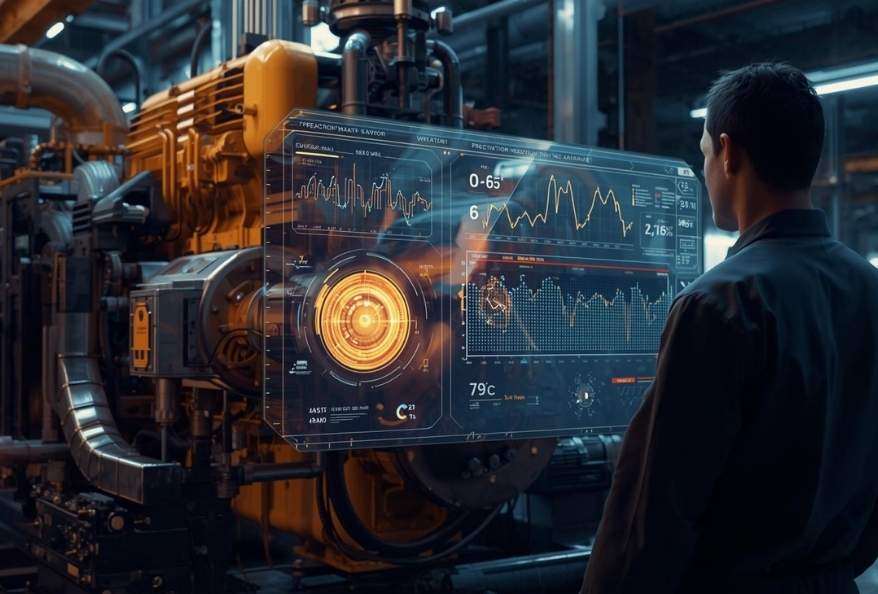
Machines power factories, transportation systems, and energy plants. However, unexpected failures can cause major production losses. As a result, industries monitor equipment health using sensors and intelligent systems. At the present time, Physics Informed AI is helping engineers identify problems earlier and more accurately. Sensors collect vibration, sound, and temperature signals from machines. Artificial intelligence analyzes this information to detect early warning signs of damage. As a result, engineers can repair equipment before serious failures occur.
However, traditional AI systems often struggle when working in different environments. Machines may operate under different speeds, loads, or temperatures. Because of these variations, AI models trained in one setting may not perform well in another. To address this challenge, researchers proposed Physics-Informed Few-Shot Learning (PI-FSL). This method combines physical knowledge with machine learning techniques so that monitoring systems remain reliable across different operating conditions.
Physics Informed AI Improves Industrial Monitoring
Industries depend on machines that operate continuously. Even small mechanical issues can stop production lines. For this reason, engineers analyze machine signals to detects unusual behavior. Vibration monitoring is widely used because damaged components often change vibration patterns. As a result, engineers can identify problems such as bearing wear or shaft misalignment.
However, many machine learning systems require large datasets to function effectively. In reality, fault data is difficult to collect because machines rarely fail during controlled tests. As a result, traditional AI models often lack enough training examples. Physics Informed AI addresses this limitation by combining physical knowledge with learning algorithms. This approach allows the system to detect faults even with limited data.
Few-Shot Learning in Physics Informed AI
Another key element of the new method is few-shot learning. Traditional machine learning models require thousands of examples. However, few-shot learning allows AI systems to learn from only a small number of samples. To put it another way, the model focuses on essential signal patterns rather than large datasets.
Physics knowledge plays an important role in this process. Mechanical systems follow predictable physical rules. Rotating machines produce specific vibration frequencies based on their structure. When faults appear, these patterns change. By integrating physical principles, Physics Informed AI recognizes these changes more effectively. As a result, the system detects faults even in unfamiliar environments.
Benefits of Physics Informed AI Monitoring
The new monitoring method offers several advantages for industries. First, it reduces the need for large training datasets. Companies do not need to wait for machines to fail in order to collect data. Second, the model adapts to new machines and operating conditions. This capability improves reliability in real industrial environments.
Another advantage is improved predictive maintenance. Predictive maintenance identifies problems before equipment stops working. As a result, industries reduce downtime and avoid expensive repairs. Physics Informed AI helps engineers detect subtle changes in machine signals so that faults can be repaired early.
Applications of Physics Informed AI
Physics Informed AI can support many industries that rely on complex machinery. Manufacturing plants use monitoring systems for motors, pumps, and conveyor systems. Power plants monitor turbines and rotating equipment. Transportation systems track engines and mechanical components.
In each case, sensors continuously collect operational data. AI systems analyze this data to identify abnormal patterns. As a result, engineers receive early alerts when equipment begins to fail. This capability improves safety and reduces maintenance costs.
Future of Physics Informed AI
Industrial systems continue to evolve with digital technologies. Sensors, cloud computing, and artificial intelligence now work together in smart factories. In light of these trends, Physics Informed AI may become an important component of future monitoring systems.
Researchers expect improvements in edge computing and sensor technologies. These advances may allow monitoring algorithms to run directly on machines. As a result, equipment could diagnose its own health in real time. Sooner or later, intelligent monitoring may become standard in factories and energy systems worldwide.
Final Thoughts on Physics Informed AI
All things considered, Physics Informed AI offers an effective solution for machine fault detection. The method combines machine learning with physical knowledge of mechanical systems. As a result, the system learns from small datasets and adapts to different environments.
This research highlights how artificial intelligence and engineering principles can work together. In conclusion, Physics Informed AI may improve industrial safety, reduce downtime, and enhance reliability across many industries.
Additionally, to stay updated with the latest developments in STEM research, visit ENTECH Online.
Reference
- Wan, J., Yar, K. P., Low, M. Y. H., Xu, C., Doan, N. C. N., Ng, H. Y., & Wang, W. (2026). PI-FSL: Physics-Informed Few-Shot Domain Adaptation for Robust Cross-Domain Condition Monitoring. Technologies, 14(3), 167. https://doi.org/10.3390/technologies14030167
- Author
- Latest Posts

Kottauppari Venkat Raghava
I am a technology-driven IT graduate with a strong passion for science and innovation. I am fascinated by how innovations like artificial intelligence, robotics, and emerging technologies are shaping our world. I specialize in analyzing complex scientific and technological research and presenting it in a clear, accessible way. My goal is to make science and technology understandable and engaging for students, tech enthusiasts, and professionals alike. By breaking down advanced concepts into simple, insightful narratives, I strive to inspire curiosity, learning, and innovation, helping readers stay informed about the breakthroughs that are shaping the future.