Imagine carrying money that cannot be forged. This idea is no longer just science fiction thanks to quantum physics.
Quantum Money Meets Optical Memory: A Major Leap in Secure Transactions
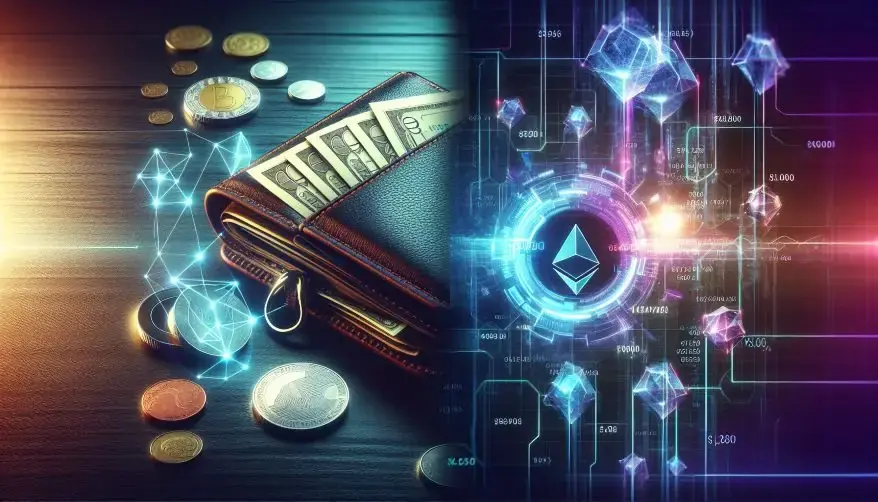
Scientists recently made a breakthrough in quantum cryptography, a field that uses the principles of quantum mechanics to create secure communication systems. Scientists use the no-cloning theorem, a rule in quantum mechanics, to develop unforgeable currency. This law makes it impossible to copy quantum information exactly, which protects quantum money from being illegally copied. Thus, this advance brings us closer to a future where quantum money – money protected by the laws of physics – becomes a reality.
In 1983, physicist Stephen Wiesner created a method called the quantum money protocol, which uses these principles. Recently, a team led by Julien Laurat at the Kastler Brossel Laboratory in France took a significant step forward by making this idea practical through a new experiment. They designed a quantum debit card that stores and protects quantum money using special atomic memory.
Storing Quantum Secrets
The challenge in creating quantum money is to securely store and transmit the quantum states that represent the money’s value. These states are incredibly fragile; any attempt to copy them destroys the original information. Quantum memories, devices that can store and retrieve quantum information, are crucial for solving this problem. A new study demonstrates a system that successfully uses a quantum memory in a quantum money protocol. This is a major step forward.
High-Efficiency Quantum Memory
The researchers used a high-efficiency cold atom-based quantum memory. This type of memory boasts near-perfect storage and retrieval efficiency, minimizing errors that could compromise security. Consequently, this minimizes the risk of counterfeiting.
Protecting Against Attacks
However, even with this advanced technology, challenges remain. Weak coherent states of light, used to encode the quantum information, are vulnerable to attacks like photon-number splitting. Therefore, a sophisticated security analysis was needed to identify the conditions under which the system is truly secure.
The Four-Step Quantum Money Protocol
- The Bank encodes a secret key into quantum bits (qubits), which encode information in light’s polarization states.
- Qubits are stored into a quantum memory, acting like storing money on a secure card held by the client.
- The client retrieves these qubits when ready to spend, passing them along for verification.
- A trusted vendor measures the qubits and sends results back to the bank, which confirms if everything matches perfectly or signals possible forgery attempts based on error rates.
The Future of Quantum Money
In essence, this research demonstrates the feasibility of incorporating quantum memories into practical quantum cryptography protocols. This work opens many new possibilities, paving the way for future advancements in this exciting area.
A Short but Important Step Forward
Currently, the storage lasts about 6 millionths of a second—still too short for real-world use. However, scientists are optimistic that this time will increase by 1,000 times or more. Such progress would enable secure transactions across cities using existing metropolitan quantum networks.
Future Applications Beyond Money
This technology could transform fields beyond finance. For example:
- Ultra-secure communication: Long-distance encrypted messaging without risk of hacking.
- Quantum computing networks: Linking multiple quantum computers for greater power and speed.
- Sophisticated sensors and data protection: Enhancing security in many industries.
The Road Ahead
While still in its early stages, this research marks a significant step toward realizing quantum money and other quantum technologies. Nevertheless, much more work is needed to further refine the technology and make it commercially viable. However, the future looks bright for the quantum realm.
Reference
- Mamann, H., Nieddu, T., Hoffet, F., Bozzio, M., De Loubresse, F. G., Kerenidis, I., Diamanti, E., Urvoy, A., & Laurat, J. (2025). Quantum cryptography integrating an optical quantum memory. Science Advances, 11(38). https://doi.org/10.1126/sciadv.adx3223
Additionally, to stay updated with the latest developments in STEM research, visit ENTECH Online. Basically, this is our digital magazine for science, technology, engineering, and mathematics. Furthermore, at ENTECH Online, you’ll find a wealth of information.
- Author
- Latest Posts

Neha Adikane holds a Master’s degree in Environmental Science from Pune University, bringing a unique blend of scientific expertise and creative writing skills to her craft. She specializes in creating engaging, insightful, and impactful content across various niches. With a passion for translating complex ideas into simple, relatable narratives, she excels at crafting blogs, articles, website content, and social media posts that captivate readers and drive engagement. Neha’s background in environmental science adds depth to her writing, allowing her to effectively cover topics related to sustainability, eco-awareness, and scientific innovations.