First, MOFs are using in devices that can "pull" water from thin air, even in extremely arid conditions like those found in Death Valley..
Breakthrough Synthesis of Metal Organic Frameworks (MOFs)
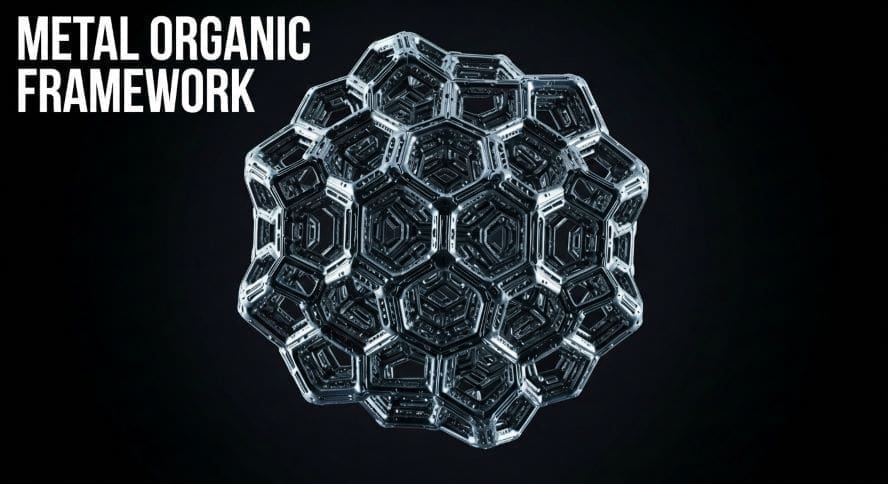
Metal Organic Frameworks (MOFs)

Involves scaling production from laboratory grams to industrial tonnes to provide solutions for carbon capture, water harvesting, and gas storage.
In essence, innovation in these fields is like building a new type of lighthouse; it is not just the discovery of a brighter light (the material), but the creation of the entire structure (the architectural paradigm), the automated system that keeps it running (autonomous AI), and the strategic placement that allows it to guide ships through previously unnavigable waters (industrial application)
Pioneer of MOF
Overall, Omar M. Yaghi is identified as a primary innovator who first synthesized MOF-5, a foundational work that led to a 2025 Nobel Prize in Chemistry. This type of innovation is characterized by the ability to link molecular building blocks into crystalline extended structures using strong bonds, an objective previously deemed impossible by the scientific community.
Atmospheric Water Harvesting
First, MOFs are using devices that can “pull” water from thin air, even in extremely arid conditions like those found in Death Valley.
HVAC and Home Comfort
As a result, in residential and commercial settings, MOF-based cartridges are getting added to existing air conditioning systems.
Also read: Most Important Functional Groups
Practical Application of MOF
Healthcare and Medicine
Researchers are developing materials for targeted drug delivery and cancer therapy.
Clean Energy and Transportation
MOFs are primary candidates for gas storage and transport, specifically for storing high-purity hydrogen for use in fuel-cell vehicles.
Electronics and Safety
The semiconductor industry uses specialized MOF cylinders to store hazardous and toxic gases sub-atmospherically.
Environmental Protection
Practical applications also include carbon capture from industrial flue gas—such as cement plants—and the reclamation of refrigerants to prevent their release into the atmosphere. They are also utilized in air and water filtration to remove pollutants.
In essence, these materials act like programmable molecular sponges; just as a kitchen sponge can be designed to selectively soak up only oil while ignoring water, these “smart” materials are being tuned to capture everything from life-saving medicines for a patient to drinking water from a desert breeze
Commercial Usage:
Innovations Already Commercialized
Gas Storage: To summarize market has already achieved early commercial success.
Industrial Carbon Capture: At the present time, Systems using the material CALF-20 (manufactured by BASF) are currently capturing approximately one tonne of CO2 daily from cement plant flue gas.
Chemical Purification: As well as, Companies like UniSieve have already demonstrated membrane technologies capable of separating industrial gases like propylene to 99.5% purity.
Innovations Transitioning to Market (2025–2035)
Water Harvesting and HVAC: Above all these applications are moving toward widespread use, with projections suggesting the industry will grow roughly 30% annually through 2035.
Manufacturing Capacity: However, Readiness is supported by existing industrial infrastructure.
Commercialization of these materials as the development of a high-speed rail network. The tracks (industrial carbon capture and gas storage) are already built and carrying passengers; the train cars (water harvesting and purification) are in the final testing phase and ready to board; while the advanced navigation systems (biomedicine and electronic films) are still perfected in the lab before they can safely manage the entire system.
Career Guide:
AI and Machine Learning for Material Discovery
Meanwhile, this area focuses on using autonomous Artificial Intelligence (AI) to accelerate the discovery of new materials. Students can work on:
Large Language Model (LLM) Integration
Developing systems like ChatMOF that act as “central planners” to independently reason, retrieve information, as well as predict material properties.
Inverse Design
Eventually, creating computational tools that allow a user to specify desires.
Collaborative Platforms
Building online platforms for sharing pre-trained machine learning weights to achieve collective scientific breakthroughs.
Biomedicine and Nanomedicine
A significant frontier exists at the biological interface, where smart materials are used for human health. Career paths include:
Targeted Drug Delivery
Designing nano-MOFs (nMOFs) to encapsulate chemotherapeutic drugs and release them only in specific environments, such as acidic tumor tissues.
Quantum Computing and Simulation
Periodic Material Simulation: Moreover, Scaling quantum algorithms to handle realistic models of carbon capture and other surface science problems.
Environmental Sustainability and Clean Energy
Overall, this sector offers careers focused on meeting global decarbonization and water mandates:
Carbon Capture and Storage (CCS)
Atmospheric Water Harvesting
Hydrogen and Gas Storage
Electronics and Nanotechnology
This area bridges material science as well as the semiconductor industry:
Conductive Thin Films
Heterostructures
Advanced Chemical Engineering and Synthesis
Industrial Scaling
Green Synthesis
Kinetic Stability Engineering: Developing solutions like palletization to ensure materials ultimately, withstand real-world humid environments without degrading.
Additionally, to stay updated with the latest developments in STEM research, visit ENTECH Online.
Reference:
Dutt, S.; Kumar, A.; Singh, S. Synthesis of Metal Organic Frameworks (MOFs) and Their Derived Materials for Energy Storage Applications. Clean Technol. 2023, 5, 140-166. https://doi.org/10.3390/cleantechnol5010009
- Author
- Latest Posts

I am an inspirational writer and emerging science blogger with a deep-rooted passion for understanding and sharing the wonders of the world around us. My journey began with a Bachelor of Science in Chemistry from AKI’s Poona College of Arts, Commerce and Science, where I developed not only a strong foundation in scientific principles but also a mindset that values curiosity, observation, and critical thinking. Studying chemistry has taught me to approach problems with logic, to look beyond the obvious, and to see patterns where others might only see complexity. These experiences have shaped the way I perceive life and influence the way I express my thoughts, both scientifically and creatively.
I have always believed that knowledge is only as powerful as the way it is shared. This belief has guided me to create content that bridges the gap between science and everyday life. I aim to simplify complex scientific ideas so they become approachable, relatable, and engaging for everyone—whether someone has a formal background in science or is simply curious about the world. Science, in my view, is not confined to textbooks and laboratories; it is a way of thinking, understanding, and connecting with the world around us. By making science accessible, I hope to inspire curiosity, ignite learning, and encourage people to see the beauty and relevance of scientific discovery in their daily lives.
Alongside my love for science, I am deeply passionate about motivational writing. I believe words carry the power to transform perspectives, encourage self-reflection, and inspire action. By combining analytical thinking with creativity, I create content that is intellectually stimulating yet emotionally resonant. Whether I am breaking down a chemical concept, exploring a scientific phenomenon, or crafting motivational narratives, my goal is to communicate ideas in a way that is clear, meaningful, and impactful.
Through my work, I strive to empower my readers—not just by helping them understand the science around them, but by inspiring them to grow, learn, and realize their full potential. Every article, post, or story I write reflects my commitment to turning knowledge into inspiration. I want to spark curiosity, encourage self-improvement, and show that learning and personal growth are deeply connected. For me, writing is not just a craft; it is a way to touch minds, connect hearts, and make ideas come alive in a way that truly resonates.