Top 10 Mathematics Discoveries in 2025





Top 10 Mathematics Discoveries in 2025
The year 2025 stands as a landmark for global mathematics. Scholars have solved puzzles that lasted for over a century. New tools now link artificial intelligence with formal logic. At the same time, experts have improved how we model the physical world. These breakthroughs impact everything from wind energy to digital privacy. To enumerate the most significant events, we look at ten major achievements.
Solving the Dudeney Puzzle After 120 Years
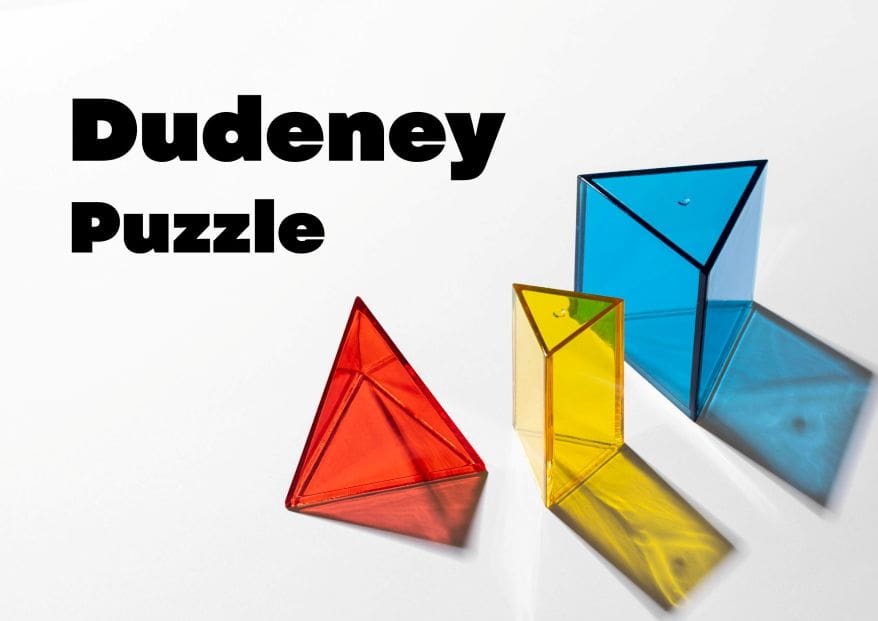
In 1907, Henry Ernest Dudeney asked a famous question about shapes. He wanted to know the fewest pieces needed to turn a triangle into a square. He showed that four pieces were enough. However, nobody could prove if three pieces might work. At last, researchers have settled this mystery. They used matching diagrams to analyze every possible cut. This proof confirms that four pieces are the absolute minimum. While it may be true that this started as a game, the result helps engineers. It allows for better material cutting and less waste in manufacturing. All things considered, this work bridges the gap between classic puzzles and modern design.
The Noperthedron: A New Geometric Wonder
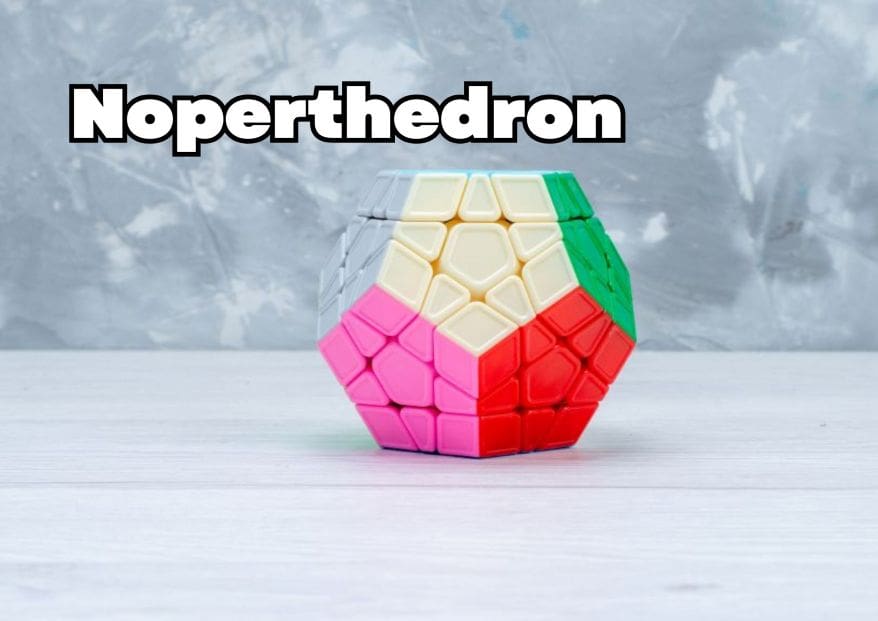
For a long time, mathematicians thought all convex shapes had the “Rupert property.” This means you can cut a hole in a shape and pass an identical copy through it. A cube has this property. After all, a large cube can slide through a smaller one if you turn it correctly. Nevertheless, the Noperthedron has changed this view. It is the first convex shape proven to lack this property. It has 90 vertices and a very complex structure. Researchers used computer models to check millions of angles. They found that this shape can never pass through itself. This discovery teaches us that even simple assumptions about shapes can be wrong.
Kakeya Sets Proven Full-Dimensional in 3D
A Kakeya set is a strange object that contains a line segment pointing in every direction. For over 100 years, experts asked how “thick” these sets must be in three dimensions. Some thought they could be very thin. This year, a major study finally solved the Kakeya set conjecture for 3D space. The proof shows these sets must have a full dimension of three. To explain, they fill space just like a solid object does. This result is a major win for harmonic analysis. It helps us understand how waves spread and interact. To put it another way, it clarifies the math behind signal processing and physics.
Lean Conjecturer: AI in Mathematical Discovery
Artificial intelligence is now helping humans find new truths. A system called Lean Conjecturer can now generate its own mathematical ideas. It connects large language models with a tool called Lean 4. Together, they create conjectures that are both new and useful. After that, the system checks if these ideas are non-trivial. In one test, it produced over 12,000 statements. This helps fill gaps in large math libraries. What’s more, it allows researchers to focus on proving deep ideas rather than finding them. All in all, this tool marks a new era of collaboration between machines and people.
Progress on Hilbert’s Sixth Problem
In 1900, David Hilbert asked if we could derive fluid laws from atom physics. This has been a massive challenge for mathematical physics. This year, researchers built a solid bridge between these two worlds. They used Boltzmann’s kinetic theory to derive standard fluid equations. This work shows that the math used for airflow and water flow is correct. It connects the tiny motion of particles to the large-scale movement of liquids. Seeing that engineers use these equations for planes and rockets, this proof is vital. It adds a new level of trust to the models we use every day.
Gödel-Inspired Zero-Knowledge Proofs
Cryptography has taken a giant leap forward thanks to the work of Kurt Gödel. New research introduces effectively zero-knowledge proofs. These allow one person to prove a fact without showing any secret data. Prior to this, most systems needed many steps or a special setup. Now, we can achieve this with just one message and no prior setup. This was once thought to be impossible. It uses deep logic to ensure that false statements are never accepted. This breakthrough will make blockchain and digital voting much safer. Summing up, it provides a stronger foundation for our digital world.
New Tools for Random Hyperbolic Geometry
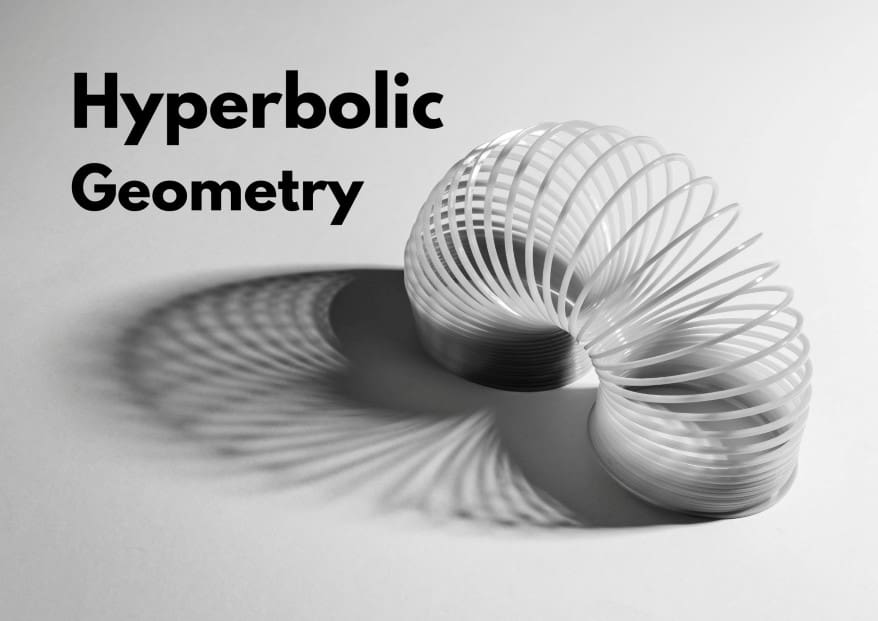
Hyperbolic surfaces look like saddles and have very complex curves. Studying them is hard because they can be very random. Researchers have now introduced Friedman-Ramanujan functions to help. These functions describe how curve lengths spread across these surfaces. They provide a master key to find order in geometric chaos. With attention to these tools, scientists can compute volumes more easily. These tools are useful in quantum physics and network design. To illustrate, they help us see how parts of a system connect at a deep level.
The Fourier Analysis Counterexample
Fourier analysis is the study of how waves combine. A famous idea called the Mizohata–Takeuchi conjecture stood for years. It tried to explain how certain wave operators behave. However, a new counterexample has proven the conjecture false. The researcher showed a “logarithmic loss” that nobody expected. This discovery forces experts to rethink their strategies. While this may be true that it closes one path, it opens many others. It reminds us that math requires constant checking. To point out, this work will refine how we process signals and images in the future.
Visualizing Prime Number Patterns via Prime Walks
Prime numbers often seem random and hard to predict. Prime walks offer a new way to see them. This method turns the digits of primes into steps on a grid. If a prime ends in 1, the walk moves down. If it ends in 3, it moves up. This creates a geometric path. Researchers have now proven that these paths grow without limit. They also found that the visits to each point follow Benford’s Law. This shows that hidden order exists within the primes. To rephrase it, prime walks turn abstract numbers into visible, endless patterns.
Modernizing Wind Turbine Theory
Mathematics also helps us solve the climate crisis. Experts have updated a century-old theory for wind turbine rotors. The original theory was too simple for modern machines. The new update uses the calculus of variations to give exact formulas. These formulas predict how much force acts on a turbine blade. This allows engineers to build lighter and stronger rotors. As a result, wind farms can produce more energy with less cost. This work shows that even old math can be improved for a better future.
Top 10 Mathematics Discoveries in 2025: Conclusion
All in all, the math discoveries of 2025 prove that the field is moving fast. These ten breakthroughs show how deep logic and new tech work together. We now have better tools for energy, privacy, and geometry. To sum up, these findings solve old puzzles while creating new paths for the future. As a result, the world of mathematics remains a powerful force for global change.