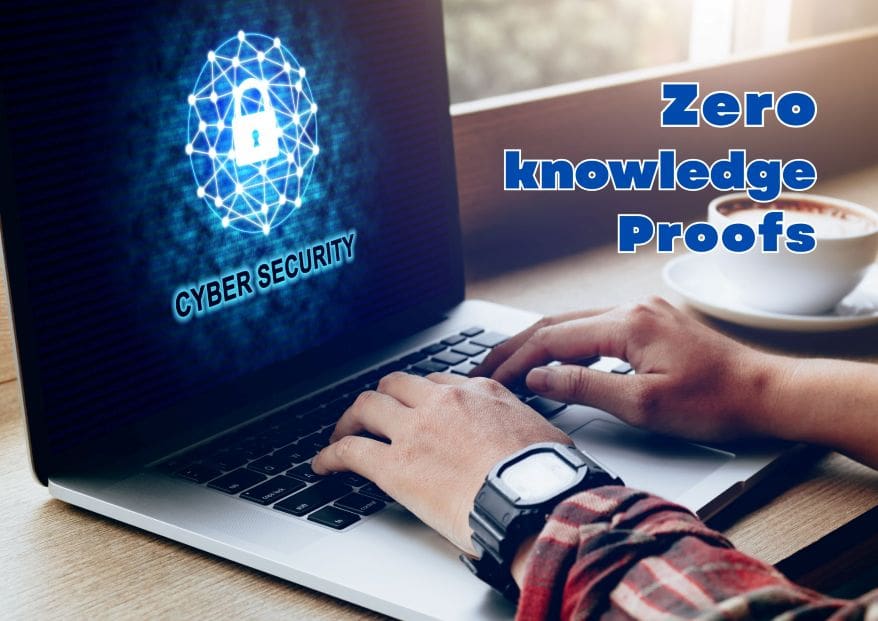
Zero-knowledge proofs allow one party, known as the prover, to convince another party, the verifier, that a statement is true without revealing why it is true.
Gödel-Inspired Zero-Knowledge Proofs: A New Era for Cryptographic Security
Estimated reading time: 4 minutes
A recent breakthrough in cryptography introduces a powerful new form of zero-knowledge proofs that could transform how secure systems verify facts without revealing extra information.
Rahul Ilango conducted this research and published it under the title “Gödel in Cryptography: Effectively Zero-Knowledge Proofs for NP with No Interaction, No Setup, and Perfect Soundness” in July 2025.
ENTECH STEM Magazine has included this research in its list of Top 10 Mathematics Discoveries of 2025.
Importantly, this research challenges long-standing assumptions in cryptography. It demonstrates that secure proofs for complex computational problems can be achieved using only a single message, without any trusted setup, and with a perfect guarantee of correctness. As a result, the work reshapes how researchers think about the fundamental limits of cryptographic systems.
Understanding Zero-Knowledge Proofs
What Are Zero-Knowledge Proofs?
Zero-knowledge proofs allow one party, known as the prover, to convince another party, the verifier, that a statement is true without revealing why it is true. For example, someone could prove that a Sudoku puzzle has a valid solution without showing the solution itself.
Because of this property, zero-knowledge proofs play a vital role in privacy and security. They allow verification while keeping sensitive data completely hidden.
Traditional Requirements in Cryptography
Historically, most zero-knowledge systems relied on two essential components:
- Interaction: Multiple rounds of communication between the prover and verifier
- Setup: A trusted initialization phase, often involving shared parameters
For decades, cryptographic theory suggested that strong security guarantees required both interaction and setup. Consequently, removing either was believed to weaken security.
The Innovation: Single-Message, Setup-Free, Perfect Soundness
This new research overturns those assumptions. Under specific theoretical conditions, it shows that zero-knowledge proofs can simultaneously achieve:
- No interaction: Only one message from prover to verifier
- No setup: No trusted initialization or shared parameters
- Perfect soundness: False statements are never accepted
Notably, this combination was long considered impossible. However, the research uses logical techniques inspired by Gödel’s incompleteness theorems, specifically ideas about unprovability, to rethink the foundations of zero-knowledge proofs from the ground up.
How the New Zero Knowledge Proofs Work (High-Level View)
Non-Interactive Proof Structure
In this framework, the prover generates a single proof message. The verifier then checks that message independently, with no back-and-forth communication required. This makes verification faster and simpler.
Eliminating the Need for Setup
Traditional cryptographic systems often rely on trusted setups, such as generating common reference strings. In contrast, this new approach removes that requirement entirely, reducing trust assumptions and potential vulnerabilities.
Achieving Perfect Soundness
Perfect soundness guarantees that no incorrect claim can ever pass verification. Unlike probabilistic systems that allow a tiny margin of error, this approach achieves absolute correctness without sacrificing privacy.
Why This Breakthrough Matters in Practice
Stronger Privacy for Authentication Systems
Zero-knowledge proofs are widely used to verify identity, age, or eligibility without exposing personal data. With non-interactive and setup-free proofs, these systems become simpler, more secure, and easier to deploy.
Improved Blockchain Privacy and Scalability
Blockchains frequently rely on zero-knowledge proofs to validate transactions privately. A setup-free, single-message proof significantly reduces complexity, making blockchain protocols more scalable and resilient.
Secure Voting and Digital Credentials
In electronic voting systems, voters can prove ballot validity without revealing their choices. Similarly, digital credentials can be verified without exposing underlying data. This new proof framework strengthens both privacy and integrity in such systems.
When Could Real-World Adoption Happen?
At present, this work remains theoretical. While it proves that such zero-knowledge proofs are possible, it does not yet offer ready-to-use tools for developers.
Nevertheless, the implications are significant. With further refinement and practical implementations, cryptographers expect these ideas to influence real-world systems within the next few years, particularly in privacy-sensitive technologies.
Student Research Areas and Career Opportunities
Students inspired by this advancement can explore several high-impact fields:
- Cryptography and Security: Designing and analyzing secure proof systems
- Theoretical Computer Science: Studying computational hardness and proof complexity
- Blockchain Engineering: Applying zero-knowledge proofs in decentralized systems
- Privacy Engineering: Building privacy-preserving digital infrastructure
A strong understanding of zero-knowledge proofs opens doors to careers in cybersecurity, blockchain development, and secure system architecture.
The Big Picture: A Stronger Future for Cryptography
The new form of zero-knowledge proofs presented in Paper 2025/1296 marks a major step forward for cryptography. By eliminating interaction and setup while maintaining perfect soundness, the research expands the theoretical and practical toolkit available to security engineers.
Ultimately, by blending deep logic with cryptographic design, this work challenges long-held assumptions and sets a new direction for building secure, private, and efficient proof systems in the digital age.
Additionally, to stay updated with the latest developments in STEM research, visit ENTECH Online. Basically, this is our digital magazine for science, technology, engineering, and mathematics. Further, at ENTECH Online, you’ll find a wealth of information.
Reference:
- Ilango, R. (2025b, July 16). Gödel in Cryptography: Effectively Zero-Knowledge Proofs for NP with No Interaction, No Setup, and Perfect Soundness. IACR Cryptology ePrint Archive. https://eprint.iacr.org/2025/1296
- Author
- Latest Posts
I’m a web developer and science writer with a Master’s degree in Computer Applications (MCA) from Pune University.
I work in tech, building websites and staying updated with the latest developments. I also love writing about physics, chemistry, technology, robotics, mathematics, and breakthrough innovations. My passion is breaking down complex scientific topics into simple, easy-to-understand stories.
My goal is to help everyone stay informed about the exciting changes happening in science and technology. I believe understanding science shouldn’t be complicated—it should be accessible to all.