Discover the significance of Heat-Producing Elements in the lower crust. Find out how they power geothermal energy sustainably.
Earth’s Deep Heat: Exploring the Secrets of Continental Crust Formation
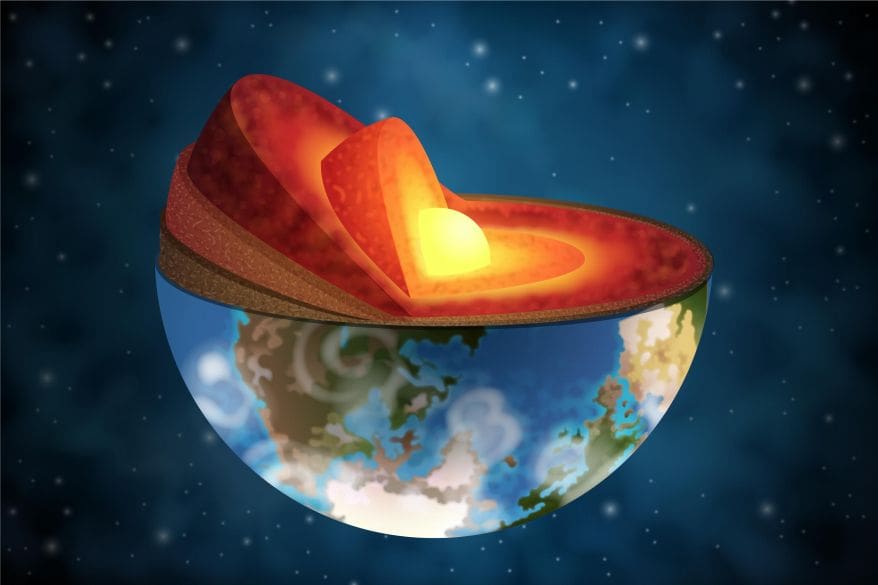
The Mystery of Continental Crust Composition
The Earth’s continental crust is the outer layer that forms our continents and supports mountains, forests, and life itself. Yet, scientists have long puzzled over its exact makeup, especially the lower part of the crust far beneath our feet. This lower crust is rich in rocks called metasedimentary and metaigneous rocks, which contain heat-producing elements like uranium (U), thorium (Th), and potassium (K). Geothermal energy harnesses this heat from the Earth’s crust, utilizing these elements to produce sustainable power. However, these elements tend to concentrate more in the upper crust than in the lower areas. How does this happen through the management of geothermal energy?
The Importance of Radiogenic Heat Elements
Radiogenic heat-producing elements generate heat by radioactive decay. This process powers geological activity inside the Earth and affects tectonic movements that shape continents. The most important elements are uranium, thorium, and potassium. Despite being present deep inside Earth’s crust initially, they move upwards through natural processes that keep continents stable over millions of years, crucial for effective geothermal energy exploitation.
The Role of Ultrahigh Temperatures
A recent study shows that extremely high temperatures – over 900 degrees Celsius – need to redistribute these key elements from the lower to upper crust. At these ultrahigh temperatures, certain minerals melt and allow radioactive elements to rise within granitic melts. Lower temperatures do not break down some minerals like monazite effectively, preventing element transfer, impacting geothermal energy flow.
The Process That Shapes Our Stable Continents
This discovery links the formation of stable continental areas called cratons with episodes of extreme heat deep inside the Earth linked to tectonic events like supercontinent cycles. It means that partial melting occurring at these ultrahigh temperatures drives differentiation – or layering – creating a heat-rich upper crust and a depleted lower one. This process underpins the mechanisms of geothermal energy production.
What This Means for Earth’s Structure
This heating and melting process not only explains why continents stay stable but also clarifies seismic data showing intermediate rock compositions in the lower crust rather than mainly mafic types previously thought dominant. The mixture of felsic (silica-rich) and metasedimentary rocks better matches measurements when high-temperature melting is considered. Consequently, the effective harnessing of geothermal energy can benefit from these insights.
Reference:
Smye, A. J., & Kelemen, P. B. (2025). Ultra-hot origins of stable continents. Nature Geoscience. https://doi.org/10.1038/s41561-025-01820-2
Additionally, to stay updated with the latest developments in STEM research, visit ENTECH Online. Basically, this is our digital magazine for science, technology, engineering, and mathematics. Further, at ENTECH Online, you’ll find a wealth of information.
- Author
- Latest Posts

I’m a web developer and science writer with a Master’s degree in Computer Applications (MCA) from Pune University.
I work in tech, building websites and staying updated with the latest developments. I also love writing about physics, chemistry, technology, robotics, mathematics, and breakthrough innovations. My passion is breaking down complex scientific topics into simple, easy-to-understand stories.
My goal is to help everyone stay informed about the exciting changes happening in science and technology. I believe understanding science shouldn’t be complicated—it should be accessible to all.