Explore how Urban Regeneration Theory shapes sustainable city development, revitalizing communities
Why Your City is Changing Faster Than Ever (And How YOU Can Take Control!)
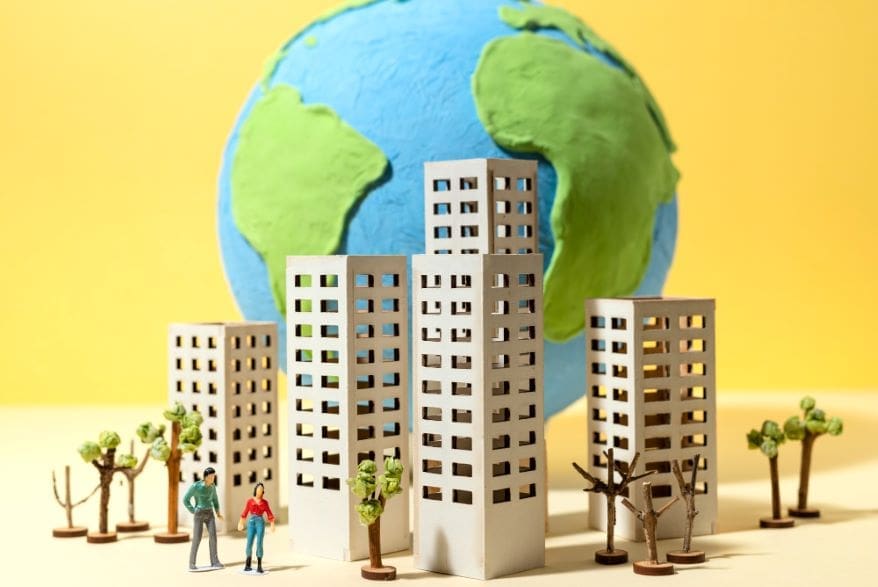
Urban regeneration theory often sparks my curiosity as I walk past forgotten places, wondering what happened to them. Over time, many urban areas suffer from economic decline and physical decay. However, cities are fighting back using this powerful tool called urban regeneration. Basically, it breathes new life into struggling communities to improve our daily lives. In fact, it replaces the old top-down approach where only politicians made the rules. I want to explore how this exciting transformation process actually works and why you matter.
Beyond Just Shiny New Buildings
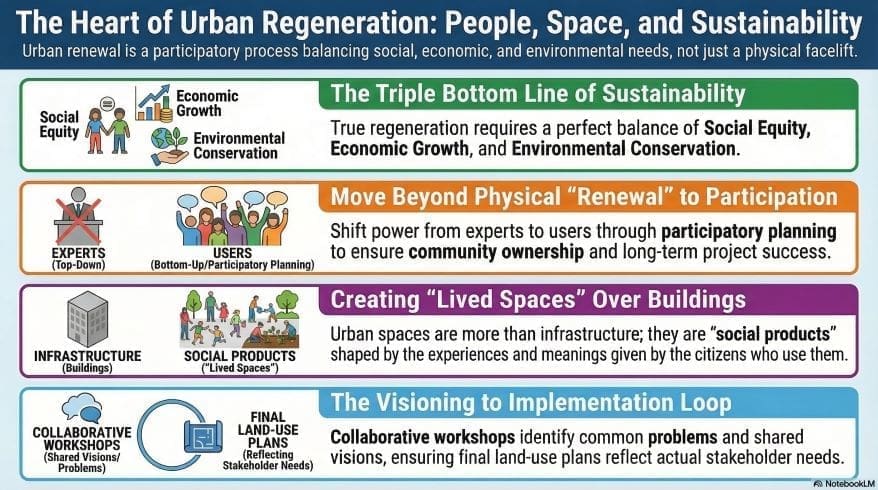
When I first heard about rebuilding cities, I pictured giant skyscrapers and expensive cafes. Yet, true regeneration goes far beyond just pouring concrete and fixing roads. According to experts, we must balance three vital elements: social equity, economic growth, and environmental conservation. If a city only cares about making money, it will eventually fail its citizens. Therefore, planners use models like a three-legged stool to show how these elements must support each other equally. Ultimately, a truly sustainable community provides affordable housing, protects nature, and creates good jobs for everyone.
Unfortunately, upgrading neighborhoods can bring a very dark side. Frequently, developers buy cheap land, build luxury apartments, and accidentally push out the original residents. Actually, researchers call this unfair displacement process gentrification. For example, wealthy investors sometimes buy out slums and evict the poor to create fancy financial centers. Consequently, our vibrant neighborhoods turn into gated communities just for the rich. I strongly believe we must fight this trend. We need strict policies and affordable housing to protect vulnerable families from losing their beloved homes.
The Power of Your Voice
You might ask how we can stop wealthy developers from ruining our towns. The best answer lies in a concept called participatory planning. In the past, experts designed cities behind closed doors without asking the locals what they wanted. Today, I see a huge shift happening. City planners now realize that everyday residents hold the most valuable knowledge about their own streets. Furthermore, bringing ordinary people to the decision-making table builds massive trust and prevents future conflicts. We must demand our right to shape our own urban spaces.
Let me share an inspiring example from a town in Finland. In the Sinimäki area, officials wanted to revive a declining business hub filled with outdated buildings. Instead of just bulldozing the place, they invited local landowners and residents to special collaborative workshops. During these creative sessions, everyone shared their personal needs and painted a shared picture of their dream city for the year 2040. Ultimately, they decided to create a mixed-use neighborhood where people can live, work, and play together. This proves that teamwork creates real solutions.
Culture is the Secret Ingredient
Finally, we cannot forget the magic ingredient that makes a city feel alive. I am talking about culture. Many successful projects use a culture-led approach to spark economic growth and bring people together. Whether it involves local art, music, or restoring historic sites, culture gives a neighborhood its unique heartbeat. Experts agree that creative industries solve social problems and help communities recover from hard times. Plus, celebrating local traditions gives everyone a strong sense of community belonging. We need cities built for human imagination, not just for machines.
In conclusion, saving our cities requires much more than just fresh paint and new businesses. We must actively participate and demand fair policies that protect our neighbors. I encourage you to attend local meetings and speak up about your neighborhood’s future. After all, everyone deserves the fundamental right to change their city to match their heart’s desire. Together, we can build a better, brighter tomorrow.
Additionally, to stay updated with the latest developments in STEM research, visit ENTECH Online.
References:
- Alpopi, C., & Manole, C. (2013). Integrated Urban Regeneration – Solution for Cities Revitalize. Procedia Economics and Finance, 6, 178–185. https://doi.org/10.1016/s2212-5671(13)00130-5
- Križnik, B. (2018). Transformation of deprived urban areas and social sustainability: A comparative study of urban regeneration and urban redevelopment in Barcelona and Seoul. Urbani Izziv, 29(1), 83–95. https://doi.org/10.5379/urbani-izziv-en-2018-29-01-003
- Author
- Latest Posts
I completed my Master of Science from the University of Allahabad in 2017 with a strong academic background in life sciences and chemistry. My specialization included Molecular Biology, Microbiology, Genetics, Plant Breeding, Phycology, Paleobotany, and Bioinformatics, along with Organic Chemistry, Inorganic Chemistry, and Physical Chemistry. This multidisciplinary training provided me with a comprehensive understanding of biological systems and analytical scientific approaches.
After completing my postgraduate studies, I gained valuable professional experience in both the education and social development sectors. I worked at A.M. Oxford Public School, where I was actively involved in guiding students toward academic excellence. In this role, I focused on creating an engaging learning environment, encouraging critical thinking, and nurturing students’ curiosity for scientific learning. My experience as an educator strengthened my communication, mentoring, and classroom management skills.
In addition to my teaching experience, I worked with Jeevan Jagriti Foundation, where I contributed to community-based initiatives aimed at improving educational access and awareness among underprivileged sections of society. Through this work, I participated in programs designed to support social development and promote the value of education in marginalized communities.
These professional experiences helped me develop strong interpersonal, leadership, and organizational skills while reinforcing my commitment to education and community service.