Architects and engineers in this field use science and creativity to make buildings that work with nature, not against it.
Designing a Greener Tomorrow: How buildings can help Heal the Planet

Estimated reading time: 8 minutes
Green Building Design: The Day I Realized Buildings Breathe Too
When I first decided to study architecture, I thought it was all about drawing beautiful buildings and designing cool spaces. But soon, I realized, buildings are alive in their own way. They breathe, they use energy and also they impact the planet just like we do.
Here is something surprising: more than 30% of the world’s carbon emissions come from construction and buildings! That’s almost one-third of all the pollution affecting our planet.
That fact completely changed how I looked at architecture. I wanted to design buildings that don’t harm the planet, but help heal it. Today as a Green Building Consultant, I get to do exactly that, help people create homes and offices that are not only smart, comfortable but also kind to the earth.
What Is a Green Building Design?
Let’s imagine your home for a second. It needs electricity, water, and materials to keep it standing, right? Now imagine every building in the world doing that every single day. That is a lot of energy!
But what if our buildings were super smart? What if they could save electricity, recycle water, and stay cool without needing an AC? That’s what green buildings do!
Architects and engineers in this field use science and creativity to make buildings that work with nature, not against it.
For example, I have worked with materials like mud and bamboo, yes, mud! They are strong, eco-friendly and look beautiful when used in modern designs. Combine that with technology like energy stimulation software, and you get buildings that are smart stylish and sustainable. This is what green building design stands for.
It’s a bit like being part scientist, part artist and part problem solver. And also, its one of the most exciting careers out there!
Green Building: Where Science and Design Meet
You might think green architecture is just about drawing, but actually, it is a mix of art, science, and a little bit of magic.
Behind every building or even a small structure that is made, there is a set of calculations, climate studies, and engineering principles.
- Physics Helps us understand how buildings handle forces like wind and gravity.
- Environmental science explains how to manage waste, air quality and water use.
- Mathematics guides design precision and measurements.
- Technology allows us to test ideas virtually even before a single brick is laid.
Using advanced design software, we can certainly predict how much sunlight a building gets or how it will stay cool on a hot day.
When I first learned this, it felt like being a detective, every small change in design could make the building greener and more efficient.
It’s like solving a puzzle where your solution makes the world a little better every time.
Also Read: Architecture Career Myths Busted
Green Architecture: How Can You Get Started?
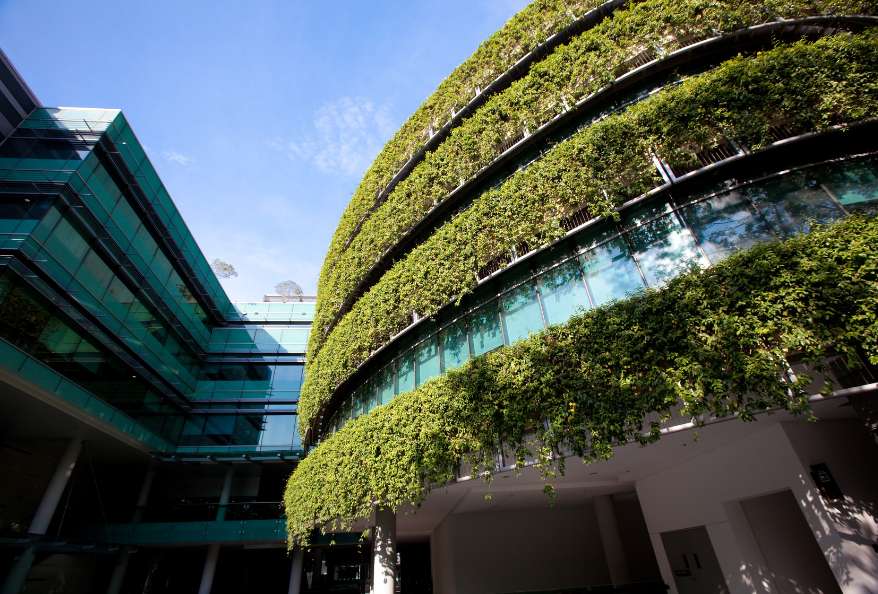
If you love drawing, solving problems and asking “why” about how things work, you already think like an architect.
Here are some skills and observations that you can do in order to get into this field.
During School and junior college
- Focus on subjects like: Physics, Mathematics, Computer science and environmental science. These subjects teach the basics of architecture.
- Observe the small things around you, like Why does your classroom get hot on the afternoon? Why does one side of your house get more breeze? These observations might seem small now but they help later when you actually use these to give design inputs.
At Class 11th-12th
This is a crucial stage if you’re serious about pursuing education in this field.
To build a career in green architecture, you can opt for a Bachelor of Architecture (B.Arch.) or choose from several engineering programs that focus on sustainability and environmental design.
Here are some of the courses you can explore after Class 12.
- Bachelor of Architecture (B.Arch.):
The main professional degree in architecture. Includes design, structures, building technology, and environmental design. - Bachelor of Design (B. Des):
The main professional degree in architecture. Includes design, structures, building technology, and environmental design. - B.Tech. /B.E in Civil Engineering:
Focus on structural design, construction materials, and environmental impact. - B.Tech. /B. E in Environmental Engineering:
Covers waste management, water treatment, and pollution control—important for sustainable infrastructure. - B. Tech in Energy Engineering or Renewable Energy:
Ideal for those interested in energy-efficient building systems and solar or wind integration. - Bachelor of Planning (B. Plan):
Focuses on sustainable city and regional planning, transport systems, and green infrastructure.
There are different entrances exams that help you enter these courses.
- JEE Mains (B.Arch. / B. Planning. / Engineering)
- NATA (National Aptitude Test in Architecture)
- CET (Common Entrance Test)
- UCEED (Undergraduate Common Entrance Exam for Design)
- Some colleges also have their own entrance exams that you need to pass in order to get there.
You can find choose an appropriate college based on the parameters that you wish to specialize into.
According to the Ministry of Education You can find the list of ranked college for architecture and planning here.
Green Architecture: Software and Technical Skills Required
- Begin with sketching: Freehand Drawing is a fundamental skill- start by drawing small sketches of the buildings around you. Then you can start practicing drawing in perspective and get more advanced in that.
- Some softwares that are crucial to learn are.
- AutoCAD
- SketchUp
- Revit
- Design Builder
- Energy Plus
- Lumion
It is not necessary that you need to learn these software before starting the course, you can learn these eventually even after entering in the course.
Some other important soft skills in this field are communication, leadership, and teamwork.
Don’t worry if you feel you’re not naturally strong in these; the beauty of studying architecture or sustainability is that the course itself helps you develop them. Every group project, site visit, and presentation will gently push you beyond your comfort zone, helping you grow these skills along the way.
Green Building Design: Career Paths
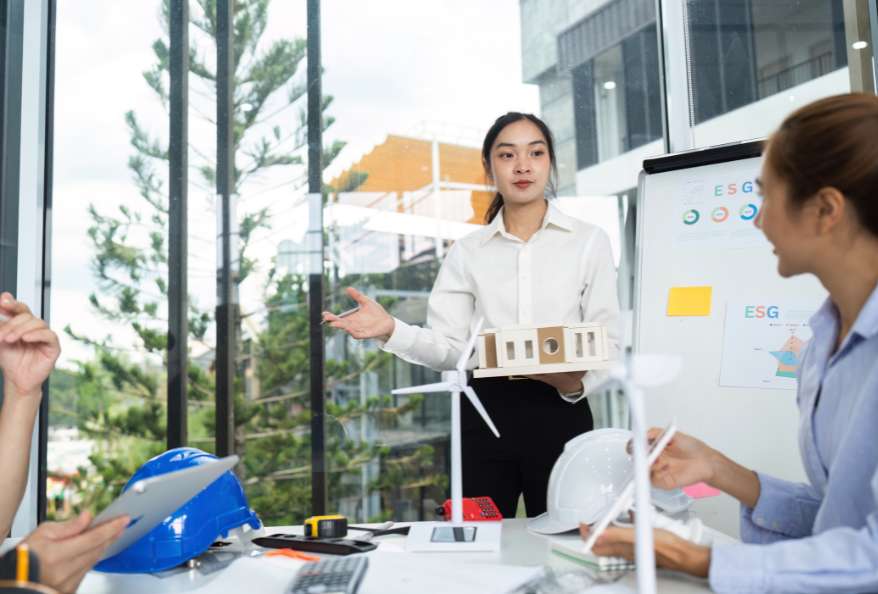
Once you graduate, a whole world of possibilities opens up.
You can become
- A sustainability consultant
- An energy analyst
- A Green architect
- An environmental planner.
And more possibilities that you yourself will discover on this journey.
You can your work with organizations like the Indian Green Building Council (IGBC) or US Green Building Council (USGBC) or companies that focus on renewable energy and sustainable building and planning.
And the best part? As the world becomes more aware of climate change, the demand for green architecture is booming. You are not just building walls; rather you are building the sustainable future.
Also Read: Green Chemistry: Emerging Sustainable Technologies
My Journey into Sustainable Architecture and Green Building Design

Learning Phase
My interest in green buildings grew gradually, shaped by both personal and educational experiences. As a child I spent the summers in my village where I spent time playing in the mud, visiting the farm with my grandfather and living close to nature. These experiences surely taught me how the natural environment shapes our lives.
Later during my internship, I got to work with mud and bamboo on different projects which lead me to discover more about this filed.
My thesis, ‘Training Centre for Construction in Mud and Bamboo’, explores how natural materials can be used in construction to reduce environmental impact, while also providing a platform to share knowledge about these materials with aspiring architects.
Over time, I realized that sustainability isn’t just about using natural materials; t’s also about designing for energy efficiency, water conservation, and human comfort. This certainly aligns with how the United Nations defines sustainability: “meeting the needs of the present without compromising the ability of future generations to meet their own needs”.
Professional Journey
Now, working as a Green Building Analyst at RUA Ecospaces, I get to see first-hand the factors that affect a building’s performance.
Here’s an overview of the work we do:
Clients approach us with the goal of making their building sustainable and obtaining a green building certification. We begin by gathering basic information about the building, such as its area, number of floors, and other key parameters. Then, we analyse the building’s performance; looking at water usage, energy consumption of appliances, total energy use, shading, indoor air quality, and other critical factors. Based on this analysis, we advise clients on how to improve these aspects and guide them through the certification process. These efforts not only help the client obtain the desired green building certification, with its associated benefits, but also ensure that the building is sustainable in terms of resource use, materials, and occupant well-being.
Through this work, I have the opportunity to turn the principles of sustainability into real, tangible results; helping create buildings that are not only efficient, environmentally responsible, but also truly supportive of the people who live and work in them.
It’s a role that challenges me, inspires me, and also reinforces my belief that thoughtful design can make a meaningful difference in our world.
Green Architecture: Conclusion
Architecture isn’t just about making buildings; it’s about making a difference.
It’s where art meets purpose and also where imagination meets responsibility. If you like exploring, experimenting and dreaming nig, this might just be your calling.
Start Small:
Firstly, notice how sunlight enters your classroom
Secondly, watch how rainwater flows on your terrace.
Also, study how ants build their anthills; nature is the greatest architect of all!
Big Dreams start from small observations.
So, keep exploring, keep asking “why” and never stop imagining a greener tomorrow.
Because the planet needs more dreamers like you; who build not just for the people, but for the planet too.
Additionally, to stay updated with the latest developments in STEM research, visit ENTECH Online. Basically, this is our digital magazine for science, technology, engineering, and mathematics. Further, at ENTECH Online, you’ll find a wealth of information.
References:
- Indian Green Building Council (IGBC). (n.d.). Green Building Movement in India. https://igbc.in
- U.S. Green Building Council. (2024). LEED Rating System. https://www.usgbc.org/leed
- United Nations. (n.d.). Sustainability. United Nations. https://www.un.org/en/academic-impact/sustainability
- United Nations. (n.d.). The 17 Goals. Retrieved October 11, 2025, from https://sdgs.un.org/goals
- Author
- Latest Posts
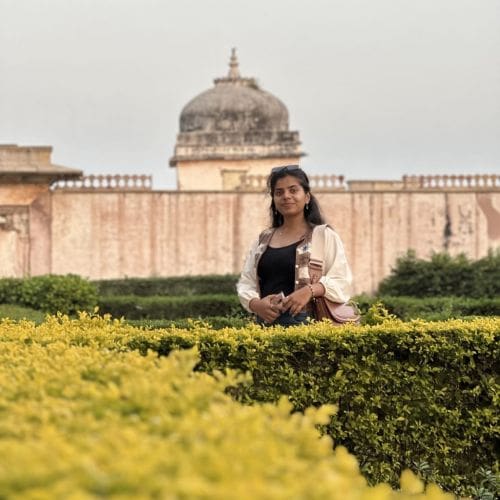
I am an architect and Junior Green Building Analyst with a Bachelor’s Degree in Architecture and a strong passion for sustainable design. My interest in green buildings began long before I realised it — during childhood summers spent in my village, playing outdoors and exploring nature with my grandfather. Those early experiences sparked a quiet connection with the environment that later grew into my professional path.
During my studies, I discovered how architecture could work hand in hand with nature. My internship with alternative building materials and my thesis on sustainable design deepened that interest, showing me that true sustainability goes beyond materials — it’s about energy efficiency, water conservation, comfort, and well-being.
Today, at RUA Ecospaces, Mumbai, I’m gaining hands-on experience with real projects — from certification reviews to energy analyses — and learning how thoughtful design can make buildings both eco-friendly and people-friendly.
Each day strengthens my curiosity and commitment to this field. I believe that the spaces we design can do more than just serve us — they can help heal the planet, one building at a time.