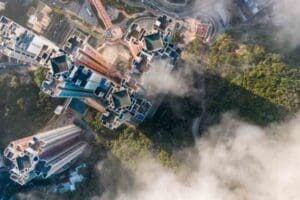
Scientists applied social network analysis to map pollution flows across these cities, viewing them like a vast spider web of connections. What is CO2 emission? It's the release of carbon dioxide—a major greenhouse gas
Spatial CO₂ Emission Network Structure and Influencing Factors
Estimated reading time: 4 minutes
What is co2 emission: I was looking into climate change recently. I found a brand new study published in April 2026. It really surprised me. It also made me ask, what is CO₂ emission? CO₂ emissions are gases released into the air when we burn fuels like coal, oil, and gas. It turns out that pollution isn’t just an isolated problem in single locations. Instead, researchers discovered a massive spatial network linking 334 different Chinese cities together. This means that the carbon dioxide released in one area actually affects and connects with other regions. As a high school student, I thought cities only polluted their own air. But this research shows something different. Emissions travel far. They spread across regions. Cities are connected. Pollution forms an invisible web across the whole country.
The Hidden Web of Carbon Emissions and What Is co2 Emission
Scientists applied social network analysis to map pollution flows across these cities, viewing them like a vast spider web of connections. What is CO2 emission? It’s the release of carbon dioxide—a major greenhouse gas produced mainly from burning fossil fuels in vehicles, factories, and power plants—driving climate change and global warming. Their analysis revealed a highly resilient network overall, but one with very low density, making the connections tough to sever. These strong links stem from everyday commercial activities and are reinforced by larger economic forces. Ultimately, cities are bound by money and trade, not collaborative efforts to cut CO2 emissions.
Also Read: Carbon Catalysts: Turning CO2 Emissions Into Green Energy Solutions
Core and Periphery Cities and How They Control What is co2 Emission
Over the years, the system changed a lot. At first, it depended on how close cities were. Later, it became driven by money and economic growth. It almost feels like the flow of money controls the flow of CO₂ emission.
You might be wondering what exactly a “core” and “periphery” means in this context. Well, imagine a school cafeteria where the most popular kids sit right in the center, while everyone else is scattered around the edges. In this pollution network, the “popular kids” are the core cities that control the bulk of the economic and environmental activity. Over time, this core zone has firmly settled in the wealthy, highly developed eastern parts of China.
Also Read: Scientists Discovered How CO2 Turns Into Fuel
Who Are the Major Players and What Is CO₂ Emission?
So, which cities are pulling the strings in this large network? The study highlights a few key hubs. These include cities like Shanghai, Shenzhen, Hangzhou, and Suzhou.
The researchers also explain what is co2 emission is. It is the release of carbon dioxide gas into the air. What CO₂ emission? It mainly comes from burning fuels like coal, oil, and gas. These emissions trap heat and affect the climate.
The Role of Major Hubs, City Clusters, and What Is CO₂ Emission
I think it is important to realize that these major hubs do not act alone. They have distinct roles that separate them from the smaller, less powerful towns. The researchers noticed strong spatial clustering, meaning that cities with similar pollution patterns tend to clump together on the map. If we want to clean up the air, we cannot just look at one isolated town; we have to focus on these node roles and how these clustered hubs interact with everyone else. can gain information on what is co2 emission.
What Is CO₂ Emission and What Stops and Starts the Pollution Connections?
As I read further, I wanted to know what is co2 emission in these cities to link up or stay apart. The study revealed some really interesting barriers. For instance, massive geographical distance and huge differences in population sizes actually stop cities from connecting their carbon networks. Also, if two cities have vastly different levels of wealth, it creates an inhibiting effect on what is co2 emission, meaning they are much less likely to share a strong pollution link.
Also Read: Why Your City is Changing Faster Than Ever (And How YOU Can Take Control!)
Summary
Ultimately, learning about what is co2 emission gives me a lot of hope for the future. By putting together this comprehensive urban sample, scientists have given leaders a clear map of how carbon dioxide travels and connects across the country. If we want to stop global warming, we have to use this empirical evidence to force cities to work together instead of just worrying about their own backyards. I hope more students take the time to learn about these networks on what is co2 emission, because understanding the problem is the first step to fixing it.
Additionally, to stay updated with the latest developments in STEM research, visit ENTECH Online.
Reference:
- Yang, F., Zhang, X., Wang, N. et al. Topological structure and influencing factors of the spatial CO₂ emission network in Chinese cities. Sci Rep (2026). https://doi.org/10.1038/s41598-026-45785-7
- Author
- Latest Posts

I completed my Master of Science from the University of Allahabad in 2017 with a strong academic background in life sciences and chemistry. My specialization included Molecular Biology, Microbiology, Genetics, Plant Breeding, Phycology, Paleobotany, and Bioinformatics, along with Organic Chemistry, Inorganic Chemistry, and Physical Chemistry. This multidisciplinary training provided me with a comprehensive understanding of biological systems and analytical scientific approaches.
After completing my postgraduate studies, I gained valuable professional experience in both the education and social development sectors. I worked at A.M. Oxford Public School, where I was actively involved in guiding students toward academic excellence. In this role, I focused on creating an engaging learning environment, encouraging critical thinking, and nurturing students’ curiosity for scientific learning. My experience as an educator strengthened my communication, mentoring, and classroom management skills.
In addition to my teaching experience, I worked with Jeevan Jagriti Foundation, where I contributed to community-based initiatives aimed at improving educational access and awareness among underprivileged sections of society. Through this work, I participated in programs designed to support social development and promote the value of education in marginalized communities.
These professional experiences helped me develop strong interpersonal, leadership, and organizational skills while reinforcing my commitment to education and community service.