SpaceX’s Starship rocket is the largest and most powerful spacecraft ever built. This space exploration system is designed to revolutionize spaceflight by being fully and rapidly reusable. Elon Musk and his team at SpaceX have ambitious plans for this behemoth of…
SpaceX’s Starship rocket is the largest and most powerful spacecraft ever built. This space exploration system is designed to revolutionize spaceflight by being fully and rapidly reusable. Elon Musk and his team at SpaceX have ambitious plans for this behemoth of a rocket.
The recent fifth test flight of Starship on 13 October was a significant milestone. For the first time, SpaceX successfully maneuvered the Super Heavy booster back to the launch pad. It hovered there before being captured midair by the launch tower’s giant mechanical arms. This showcases the company’s progress towards their goal of rapid reusability in the realm of space explorationfor starship.
What’s unique with Starship
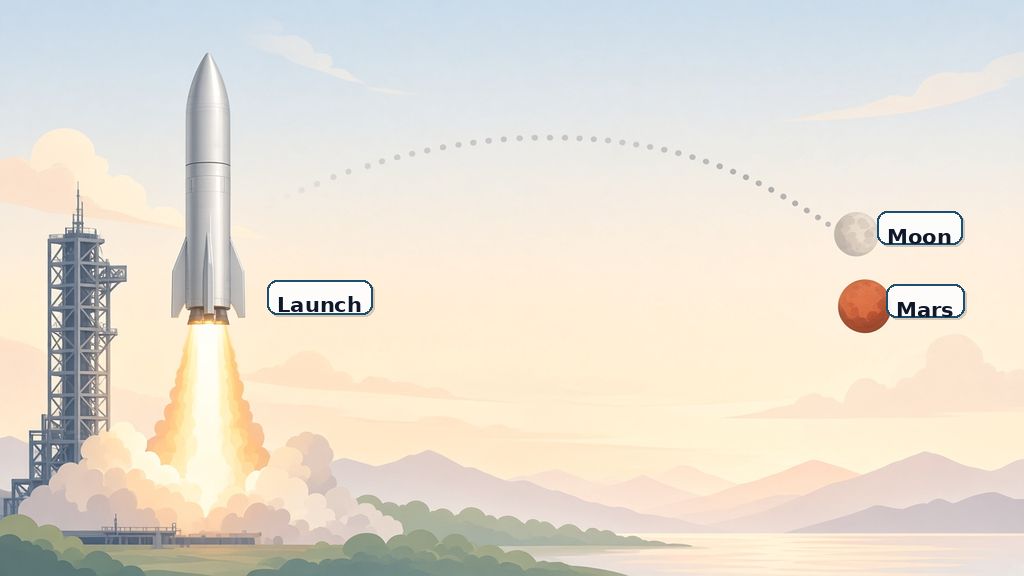
While none of Starship’s missions so far have been crewed, Musk has grand designs for the rocket system to one day take humanity to Mars. The Starship is an impressive feat of engineering, standing over 120 meters tall and boasting 33 engines. It could produce around 74 meganewtons of thrust: nearly 700 times the power of a typical passenger jet.
The vehicle’s unique landing approach involves a belly-flop maneuver. Specifically, this is used to increase drag and slow it down. The intention is to accomplish this before firing its engines to flip into a vertical position for a controlled descent. Notably, previous flights have successfully demonstrated this technique; however, the Ship has only landed in the sea so far.
Deploying Starship for space exploration
Starship’s potential applications extend beyond just crewed missions to Mars. For instance, it could be used to rapidly deploy Starlink satellites, launch space telescopes, and even build infrastructure for a human presence on the Moon as part of NASA’s Artemis program.
Nevertheless, the developers can’t overlook the environmental impact of Starship’s colossal size and power. In fact, a single launch could emit as much greenhouse gas as 846 cars in a year. Moreover, with Musk’s plans to potentially increase the number of launches to hundreds per year, this has become a significant concern that must be addressed.
Overall, the Starship project represents an exciting and ambitious step forward in space exploration and technology. Furthermore, SpaceX continues to push the boundaries of what’s possible. Ultimately, it will be fascinating to see how this revolutionary rocket system develops and the impact it has on the future of space travel.
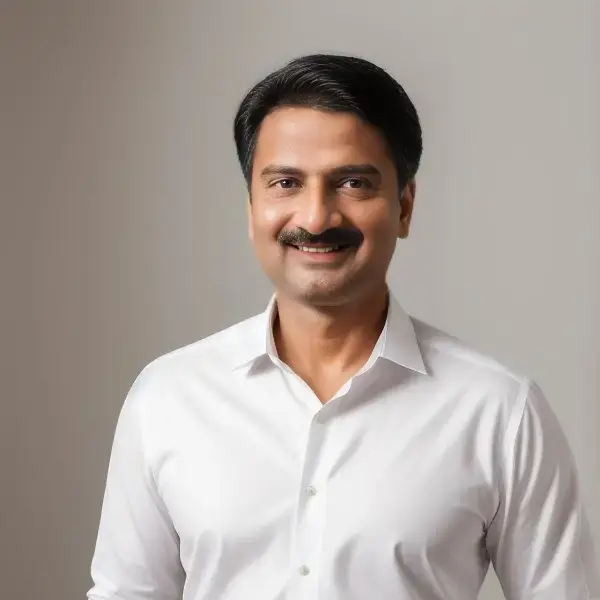
Charudatta Pathak was a student at St. Aloysius High School in Bhusawal, established in 1874, making it one of India's oldest convent institutions. He earned his bachelor's degree in mechanical engineering from SSVPS College of Engineering, Dhule in 1995, demonstrating exceptional academic achievement. Thereafter, he launched his career as a CNC programmer in a toolroom. He has utilized FANUC, Deckel, Maho, and Mikron controllers to operate 2-axis and 3-axis machines for the fabrication of jigs, fixtures, dies, and molds. He commenced his career as an academic in 1996, when he assumed the role of lecturer at SSVPS College of Engineering, Dhule. Additionally, he earned his post-graduate degree in CAD/CAM from L. D. College of Engineering, Ahmedabad, in 2000, and then acquired a Ph.D. from COEP in 2011 while concurrently engaged in teaching. Until 2023, he occupied many academic roles, including lecturer, assistant professor, professor, dean, principal, director, and vice chancellor at both public and private universities throughout India. From 2008 to 2010, he served as the project lead in the CAE department of a European multinational firm. During his 28-year professional tenure, he identified a need for dependable books targeted at students in grades 8 to 12, particularly for nascent career planning. He founded ENTECH Digital Magazine, a free monthly publication available on entechonline.com and magzter.com. Teens with a strong interest in Science, Technology, Engineering, and Mathematics (STEM) who aspire to pursue careers in these fields may find ENTECH Digital Magazine beneficial.
Charudatta Pathak was a student at St. Aloysius High School in Bhusawal, established in 1874, making it one of India’s oldest convent institutions. He earned his bachelor’s degree in mechanical engineering from SSVPS College of Engineering, Dhule in 1995, demonstrating exceptional academic achievement. Thereafter, he launched his career as a CNC programmer in a toolroom. He has utilized FANUC, Deckel, Maho, and Mikron controllers to operate 2-axis and 3-axis machines for the fabrication of jigs, fixtures, dies, and molds. He commenced his career as an academic in 1996, when he assumed the role of lecturer at SSVPS College of Engineering, Dhule. Additionally, he earned his post-graduate degree in CAD/CAM from L. D. College of Engineering, Ahmedabad, in 2000, and then acquired a Ph.D. from COEP in 2011 while concurrently engaged in teaching. Until 2023, he occupied many academic roles, including lecturer, assistant professor, professor, dean, principal, director, and vice chancellor at both public and private universities throughout India. From 2008 to 2010, he served as the project lead in the CAE department of a European multinational firm. During his 28-year professional tenure, he identified a need for dependable books targeted at students in grades 8 to 12, particularly for nascent career planning. He founded ENTECH Digital Magazine, a free monthly publication available on entechonline.com and magzter.com. Teens with a strong interest in Science, Technology, Engineering, and Mathematics (STEM) who aspire to pursue careers in these fields may find ENTECH Digital Magazine beneficial.