Discover how Y Chromosome Loss increases cancer, heart disease, and aging risks, and why it may shorten lifespan in men.
Y Chromosome Loss and Lifespan: How It Impacts Men’s Health
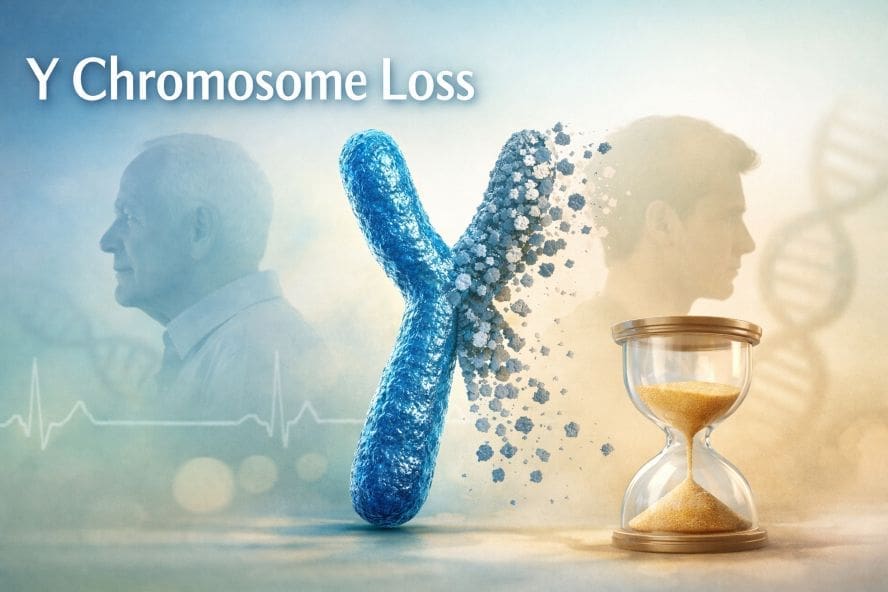
Chromosomes are key to life. Humans have 23 pairs. One pair determines sex. Males carry XY chromosomes. Females carry XX chromosomes. The Y chromosome drives male development. However, scientists now focus on Y Chromosome Loss. This process affects aging men. It influences long-term health. Moreover, it raises serious lifespan concerns.
The Y chromosome was once larger. It lost many genes over time. Scientists call this degradation. Compared to the X chromosome, it is small. It holds fewer protective genes. Therefore, it becomes vulnerable. It cannot recombine like other chromosomes. Recombination repairs damage. The Y chromosome lacks this defense. As a result, errors accumulate faster.
An Evolutionary Journey
The Y chromosome started as a regular autosome. Later, it evolved into a sex chromosome. This shift happened millions of years ago. A gene called SRY appeared. This gene triggered male development. Over time, other genes clustered around it. Recombination stopped in that region. At first, this preserved male traits. However, this isolation increased the risk of loss of the Y Chromosome.
Loss of Genetic Material and Y Chromosome Loss
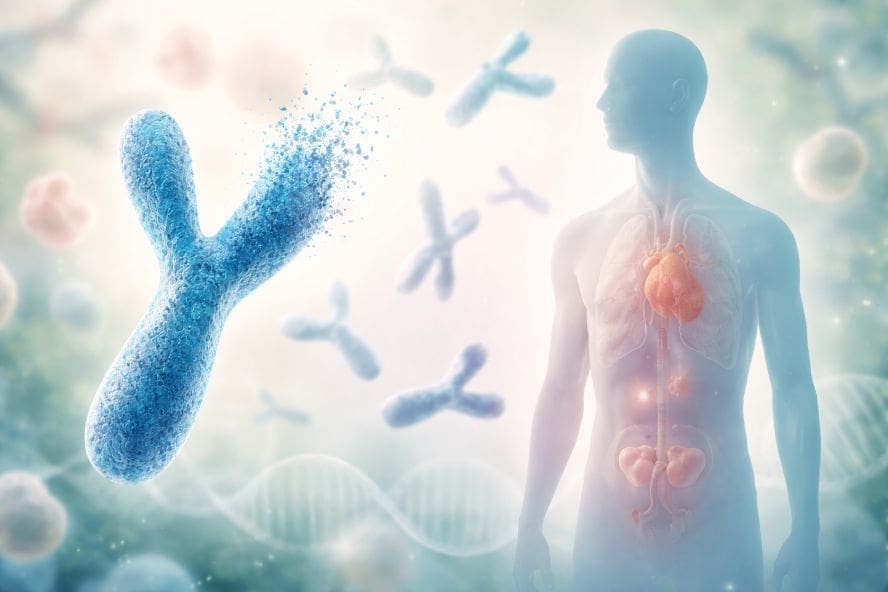
This isolation came at a cost. Mutations built up over time. The chromosome could not repair itself efficiently. Genes slowly disappeared. Scientists still observe this decline today. Moreover, some animals already lost their Y chromosome. Certain vole species show this change. Therefore, biology proves that loss can occur naturally.
In light of exploring the implications of genetic factors on human lifespan, ‘Discover How Genetic Traits Impacts Heredity and Variation’ offers a fascinating scientific perspective. Consequently, those interested in the field can gain a much broader understanding.
For further insight, click here to read: Discover How Genetic Traits Impacts Heredity and Variation.
Y Chromosome Loss in Somatic Cells
Besides shrinking, complete disappearance occurs in body cells. Scientists call this somatic loss of Y Chromosome. This change occurs in non-reproductive cells; furthermore, its prevalence increases with age. In fact, data suggests that older men show it significantly more often. The chromosome disappears from blood cells first. However, researchers now detect it in other tissues. As a result, concern continues to grow.
A Common Phenomenon
This condition appears surprisingly common. Around 10% of men show it by age 70. The number rises with age. By 90, nearly half of men may show decline of Y Chromosome. However, not every cell loses it. Some cells retain the chromosome. Others lose it completely. Therefore, this creates a mosaic pattern.
Detection Methods
Scientists use advanced tools to detect it. One method is FISH. Another method is PCR testing. These tools identify missing Y-specific DNA. Moreover, modern sequencing increases accuracy. Doctors can now measure levels precisely. Early detection improves monitoring. Therefore, testing plays a key role.
Health Implications
The health impact goes beyond aging. Researchers link Y Chromosome decline to serious diseases. It affects immune strength. It alters cell regulation. In addition, it increases disease risk. Evidence continues to grow. Therefore, scientists treat it as a major risk factor.
Increased Cancer Risk
Studies link decline of Y Chromosome to cancer. Men with this condition show higher cancer rates. These include prostate, bladder, and kidney cancer. Blood cancers also appear more frequently. Moreover, leukemia risk increases. Scientists believe immune failure contributes. Cancer cells escape detection more easily. As a result, tumors grow faster.
Immune System Dysfunction
The Y chromosome carries immune-related genes. These genes regulate defense responses. When Y Chromosome Loss occurs, those genes vanish. Immune cells weaken. They fail to recognize threats quickly. Therefore, infections and cancer risks increase. Moreover, inflammation becomes harder to control.
Impaired Cell Regulation
The chromosome also controls cell division. It guides growth signals. When genes disappear, regulation fails. Cells divide without control. This triggers tumor development. In addition, repair systems weaken. As a result, abnormal cells survive longer.
Cardiovascular Disease
Research links Y Chromosome decline to heart disease. Men with it show higher heart attack rates. Stroke risk also rises. The Y chromosome influences inflammation control. It also supports blood vessel health. However, loss disrupts these pathways. Therefore, cardiovascular risk increases significantly.
Inflammation Pathways
The Y chromosome regulates inflammation genes; however, its loss disrupts this delicate balance. Consequently, chronic inflammation develops, which in turn damages the arteries. As a result, plaques form much more easily. Consequently, arteries narrow. Heart attacks become more likely.
Vascular Function
Healthy vessels remain flexible. The Y chromosome supports elasticity. However, Y Chromosome decline stiffens vessels. Blood pressure rises. The heart works harder. As a result, long-term damage develops.
Other Health Conditions
The effects extend beyond cancer and heart disease. Y Chromosome decline influences many systems. It affects the brain. It impacts metabolism. Moreover, it reduces resilience during aging.
Neurological Disorders
Some studies link Y Chromosome Loss to brain decline. Men with it show higher dementia risk. Alzheimer’s disease appears more frequently. Parkinson’s disease risk may also increase. The chromosome likely protects neurons. Its absence removes protection. Therefore, degeneration accelerates.
Reduced Lifespan
All these risks combine to impact health. For instance, cancer significantly increases mortality, while heart disease further shortens life. Additionally, brain disorders reduce survival rates. Overall, men with a decline in the Y chromosome often live fewer years than those without it. Studies confirm this trend. Therefore, researchers treat it seriously.
Mechanisms of Y Chromosome Loss
Scientists continue to investigate causes. They explore genetic damage. They examine environmental triggers. However, aging remains the strongest factor. Several biological mechanisms contribute.
Age-Related DNA Damage
DNA accumulates damage over time. Free radicals harm genetic material. Smoking and toxins worsen injury. The Y chromosome remains fragile. Its structure contains repeats. These repeats break easily. Consequently, Y Chromosome decline occurs more often in older men.
Replication Errors
Cells divide constantly. Each division copies DNA. Errors sometimes occur. The Y chromosome proves difficult to copy. Its repetitive design increases mistakes. Therefore, some cells lose it entirely.
Epigenetic Factors
Epigenetics controls gene activity. Diet influences methylation patterns. Stress alters gene expression. These changes destabilize chromosomes. In addition, environmental exposure worsens instability. Therefore, lifestyle matters greatly.
Potential Interventions and Future Research on Y Chromosome Loss
Researchers search for solutions. They aim to slow Y Chromosome decline. They also want to reduce its health impact. Moreover, early intervention could improve survival.
Lifestyle Modifications
Healthy habits protect DNA. Exercise reduces oxidative stress. A balanced diet supports repair systems. Avoiding smoking lowers mutation rates. Limiting alcohol also helps. Therefore, lifestyle choices influence chromosome stability.
Therapeutic Approaches
Scientists explore new medical strategies. They study genome protection drugs. They analyze immune-targeted therapies. However, no direct cure exists yet. Research continues actively.
Gene Therapy
Gene therapy offers future hope. Scientists may replace missing genes. They may stabilize vulnerable regions. However, this technology remains experimental. Many challenges remain. Still, innovation continues.
Drug Development
Researchers test compounds that protect DNA. These drugs aim to reduce instability. They may lower Y Chromosome Loss rates. Moreover, they could reduce inflammation. Therefore, drug development remains critical.
Early Detection
Early screening improves outcomes. Doctors can monitor high-risk men. Preventative care becomes possible. Therefore, better testing tools matter.
Biomarkers
Scientists search for reliable biomarkers. These markers detect early Y Chromosome decline. Blood tests may reveal risk. Early signals allow faster intervention. However, further validation remains necessary.
In exploring the implications of genetic factors on health, technology and engineering also contribute. Advances in biomedical engineering support genetic diagnostics. This connection highlights innovation across disciplines.
Additionally, to stay updated with the latest developments in STEM research, visit ENTECH Online.
FAQs
What is Y chromosome loss?
Y chromosome decline refers to the gradual disappearance or deletion of the Y chromosome in some cells, particularly in men as they age. This phenomenon is also known as mosaic loss of the Y chromosome (LOY).
How common is Y chromosome loss in men?
Y chromosome loss is relatively common in aging men. In fact, studies show that a significant percentage of men over the age of 70 exhibit some degree of Y chromosome decline in their blood cells.
How does Y chromosome loss affect lifespan?
Research indicates that Y chromosome loss is associated with an increased risk of age-related diseases, such as cancer and cardiovascular conditions, which can negatively impact lifespan. Men with higher levels of Y chromosome decline tend to have shorter lifespans compared to those without.
What causes the Y chromosome to disappear?
The exact causes are not fully understood, but factors such as aging, environmental stressors, smoking, and genetic instability contribute to the loss of the Y chromosome in cells.
Can Y chromosome loss be detected and monitored?
Yes, Y chromosome decline can be detected through genetic testing methods such as fluorescence in situ hybridization (FISH) or sequencing techniques that analyze blood or tissue samples to identify cells lacking the Y chromosome.
References:
- Büscheck, F., Fraune, C., Garmestani, S., Simon, R., Kluth, M., Hube-Magg, C., Ketterer, K., Eichelberg, C., Höflmayer, D., Jacobsen, F., Wittmer, C., Wilczak, W., Sauter, G., Fisch, M., Eichenauer, T., & Rink, M. (2021). Y-chromosome loss is frequent in male renal tumors. Annals of Translational Medicine, 9(3), 209. https://doi.org/10.21037/atm-20-3061
- Gutiérrez-Hurtado, I. A., Sánchez-Méndez, A. D., Becerra-Loaiza, D. S., Rangel-Villalobos, H., Torres-Carrillo, N., Gallegos-Arreola, M. P., & Aguilar-Velázquez, J. A. (2024). Loss of the Y chromosome: A review of molecular mechanisms, age inference, and implications for men’s health. International Journal of Molecular Sciences, 25(8), 4230. https://doi.org/10.3390/ijms25084230
- Danielsson, M., Halvardson, J., Davies, H., Torabi Moghadam, B., Mattisson, J., Rychlicka-Buniowska, E., Jaszczyński, J., Heintz, J., Lannfelt, L., Giedraitis, V., Ingelsson, M., Dumanski, J. P., & Forsberg, L. A. (2019). Longitudinal changes in the frequency of mosaic chromosome Y loss in peripheral blood cells of aging men varies profoundly between individuals. European Journal of Human Genetics, 28(3), 349–357. https://doi.org/10.1038/s41431-019-0533-z
Disclaimer: The information provided in this article about the loss of Y Chromosome is for educational and informational purposes only. It does not constitute medical advice, diagnosis, or treatment. Always consult a qualified healthcare professional regarding any medical concerns or health conditions. Do not rely solely on this content to make medical decisions. The author and publisher are not responsible for any actions taken based on this information.
- Author
- Latest Posts

A Master’s-qualified Zoologist with a focus on Limnology, I combine hands-on laboratory experience with a sophisticated background in science communication. My career is defined by an interdisciplinary approach to the life sciences, merging technical research skills with a proven ability to teach and engage diverse audiences. I am committed to lifelong learning and the creative dissemination of medical and biological research, ensuring scientific literacy and inspiration remain at the forefront of the field.