Through the utilization of specialized "nanoflowers" to enhance stem cells, the team of the Department of Biomedical Engineering, was able to generate additional mitochondria and distribute them directly to cells that were experiencing difficulties, so…
This New Discovery Lets Scientists Power Old Cells
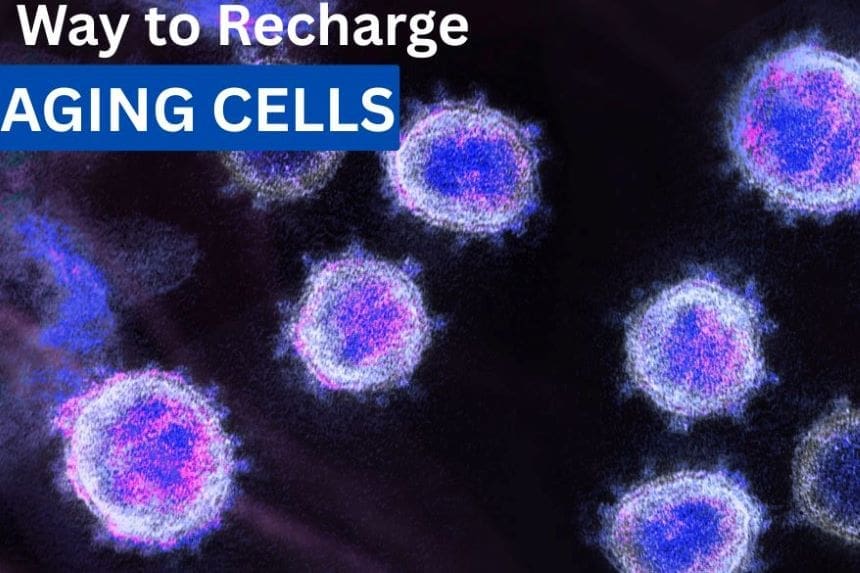
Through the utilization of specialized “nanoflowers” to enhance stem cells, the team of the Department of Biomedical Engineering, was able to generate nanomaterial-induced additional mitochondria and distribute them directly to cells that were experiencing difficulties, so restoring their energy and resilience and thus power old cells.
In collaboration with their colleagues in the Department of Biomedical Engineering, Dr. Akhilesh K. Gaharwar and John Soukar have discovered a method that may deliver new mitochondria to cells that have been injured. This method restores the cell’s energy output to previous levels, which significantly improves the cell’s overall health and power old cells.
One of the most significant benefits of this approach is its adaptability. Although researchers are still developing the method, they may use it in the future to restore function in a wide variety of tissues.
J. Soukar, K.A. Singh, A. Aviles, S. Hargett, H. Kaur, S. Foster, S. Roy, F. Zhao, V.M. Gohil, I. Singh, & A.K. Gaharwar, conducted the study and published it under the title “Nanomaterial-induced mitochondrial biogenesis enhances intercellular mitochondrial transfer efficiency.” in October 2025.
ENTECH STEM Magazine has included this research in its list of the Top 10 Biology Discoveries of 2025.
Potential Practical Usages of the Discovery of Nanomaterial Induced Mitochondria to Recharge Old Cells
The innovation of using “nanoflowers” to boost stem cells and deliver new mitochondria to damaged cells thereby power old cells has several potential practical usage areas:
Regenerative Medicine and Tissue Repair
- The ability to power old cells by restoring their energy as well as the resilience through the delivery of new mitochondria could have significant implications for regenerative medicine and tissue repair.
- Researchers could use this technique to enhance the healing and regeneration of various tissues, including muscle, nerve, and organ tissues, that have been damaged by injury, disease, or age-related decline.
Treatment of Mitochondrial Disorders
- Many genetic and acquired diseases are associated with mitochondrial dysfunction, such as Parkinson’s disease, Alzheimer’s disease, and certain types of cancer.
- The nanoflower-based approach to delivering new mitochondria could serve as a potential therapeutic strategy for these mitochondrial disorders, therefore, potentially restoring normal cellular energy production and function.
Aging and Age-Related Diseases
- As cells age, their mitochondrial function can decline, leading to not only the reduced energy output but also increased vulnerability to various health problems.
- The ability to boost mitochondrial function and deliver new mitochondria in order to power old cells could help delay or mitigate the onset of age-related diseases, potentially improving overall health and quality of life for the older people.
Chronic Conditions and Fatigue Management
- Certain chronic conditions, such as chronic fatigue syndrome, fibromyalgia, and some metabolic disorders, are associated with mitochondrial dysfunction and reduced cellular energy.
- Researchers could explore the nanoflower-based approach as a potential intervention. It may help manage the symptoms of these chronic conditions. It could also improve the overall well-being of affected individuals.
Educational and Career Opportunities
Regenerative Medicine and Tissue Engineering
- Exploring the use of this nanoflower-based technology to enhance the regenerative capacity of different tissues, such as muscle, nerve, or organ tissues
- Investigating the mechanisms by which the delivered mitochondria can improve cellular function as well as tissue repair
- Developing advanced delivery systems and also optimization strategies for mitochondrial transfer
Mitochondrial Biology and Bioenergetics
- Studying the structure, function, as well as the regulation of mitochondria in health and disease
- Examining the signaling pathways and also the cellular processes involved in mitochondrial dynamics and energy production
- Exploring novel approaches to manipulate and enhance mitochondrial function
Stem Cell Biology and Engineering
- Investigating the role of mitochondrial function in stem cell fate and differentiation
- Developing strategies to harness the potential of stem cells in combination with mitochondrial transfer for tissue regeneration
- Optimizing the integration of nanoflower-mediated mitochondrial delivery with stem cell-based therapies
Nanomedicine and Nanotechnology
- Designing and engineering advanced nanoparticle-based platforms, such as the “nanoflowers,” for targeted drug/organelle delivery
- Exploring the biocompatibility, biodistribution, as well as the safety of these nanoparticle systems
Reference
J. Soukar, K. A. Singh, A. Aviles, S. Hargett, H. Kaur, S. Foster, S. Roy, F. Zhao, V.M. Gohil, I. Singh, & A. K. Gaharwar, Nanomaterial-induced mitochondrial biogenesis enhances intercellular mitochondrial transfer efficiency, Proc. Natl. Acad. Sci. U.S.A. 122 (43) e2505237122,
https://doi.org/10.1073/pnas.2505237122
Additionally, to stay updated with the latest developments in STEM research, visit ENTECH Online. Basically, this is our digital magazine for science, technology, engineering, and mathematics. Also, at ENTECH Online, you’ll find a wealth of information.
- Author
- Latest Posts

I am a Master’s qualified in Science with focus on Zoology and Entomology and am a passionate, curiosity-driven science enthusiast aiming to transform complex scientific ideas in a manner that are easy to understand hence, educate, and inspire.
I have an experience of working on the projects in the field of Entomology which has provided me hands-on experience with various research techniques. Besides, I have also gained experience of lab work as well as developed communication skills during the course of my bachelors and masters.
With a strong foundation in life sciences and a growing interest in Medical and Biological research, I have cultivated a writing style that merges scientific facts with creativity.
My experience in teaching has also taught me to develop an understanding of what are the interests of people and how to communicate them effectively.
I am committed to lifelong learning, actively engaging in Interdisciplinary learning, so as to broaden my perspective.