RUS-PAT 3D Scan represents a landmark leap in medical imaging, bridging the gap between the structural detail of ultrasound...
RUS-PAT 3D Scans in 10 Seconds-New Innovation
Estimated reading time: 4 minutes
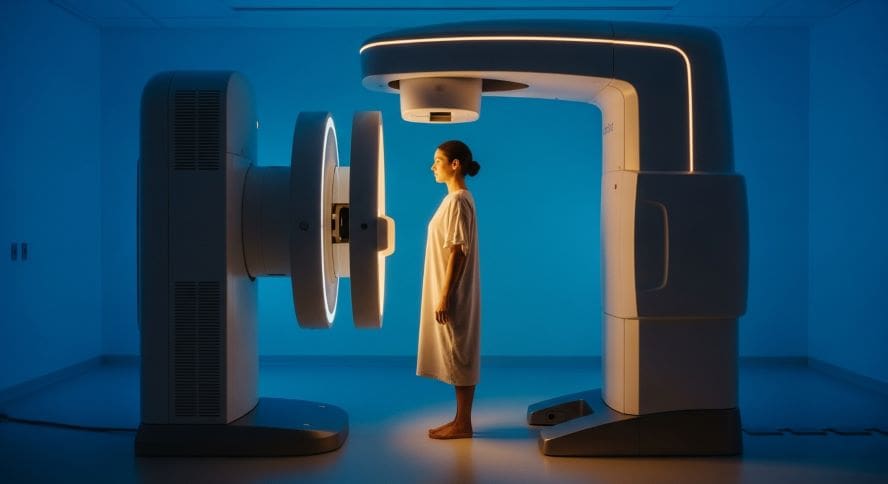
The development of Rotational Ultrasound and Photoacoustic Tomography (RUS-PAT) 3D Scan represents a landmark leap in medical imaging. It bridges the gap between the structural detail of ultrasound and the functional precision of laser-based angiography. Moreover, by utilizing a high-speed rotational scanning mechanism, this radiation-free platform captures high-resolution 3D volumes of soft tissue and complex vascular networks in as little as ten seconds. This feat was previously hindered by the limitations of traditional handheld devices. Its clinical debut ranges from real-time monitoring of traumatic brain injuries to non-invasive breast cancer screening and diabetic vascular mapping. This offers a glimpse into a future where diagnostic imaging is not only safer and more affordable than CT or MRI but also significantly more accessible.
Zhang, Yang, Shuai Na, Jonathan J. Russin, Karteekeya Sastry, Li Lin, Junfu Zheng, Yilin Luo, Xin Tong, Yujin An, Peng Hu, Konstantin Maslov, Tze-Woei Tan, Charles Y. L., Lihong V. W. published their research under the title, “Rotational ultrasound and photoacoustic tomography of the human body” in January 2026.
ENTECH STEM Magazine has included this research in its list of Top 10 STEM Discoveries and Innovations of January 2026.
Potential Benefits-RUS-PAT 3D scan
Rapid “Walk-in” Diagnostics
Currently, getting a RUS-PAT 3D scan often requires scheduling weeks in advance for an MRI or CT. However, because RUS-PAT is faster (capturing a 3D volume in ~10 seconds) and doesn’t require a specialized lead-lined room or massive magnets, it could be available in local clinics or even pharmacies. You could get a high-resolution 3D map of an injury or a lump during a routine check-up. This is much more convenient than waiting for a specialist appointment.
Safer, Frequent Monitoring
Because the technology of RUS-PAT 3D scan uses harmless laser light and sound waves—rather than ionizing radiation (X-rays/CT)—it can be used repeatedly without health risks.
- For chronic conditions: Patients with diabetes could have their foot health and blood flow monitored weekly to prevent ulcers or amputations.
- For pregnancy/pediatrics: It offers a safer way to get highly detailed 3D views of developing tissues without any radiation concerns.
Immediate Results for Sports & Soft-Tissue Injuries
If you twist an ankle or tear a muscle, a standard 2D ultrasound can be “user-dependent” (the quality depends on how the technician holds the probe). RUS-PAT’s automated 3D rotation removes human error. As a result, a physical therapist could use it daily to see exactly how a tendon is healing or how blood flow is returning to a damaged muscle. This allows them to adjust your recovery plan in real-time.
Earlier (and More Comfortable) Cancer Screening
In breast cancer screening, RUS-PAT 3D scan provides a 3D “angiogram” (mapping the blood vessels that feed tumors).
- Day-to-day benefit: This could eventually replace or supplement painful mammograms (which require compression) with a quick, painless scan that identifies the abnormal blood vessel growth associated with early-stage tumors.
“At-the-Bedside” Brain Monitoring
For patients recovering from head injuries or strokes, moving them to a basement MRI suite is dangerous and slow. Instead, RUS-PAT 3D scan is portable enough to be brought to the bedside. So that, in a hospital setting, nurses could perform a 10-second scan multiple times a day to check for brain swelling or internal bleeding. This might help catch complications hours before symptoms appear.
Education and Career Opportunities: RUS-PAT 3D scan
1. Research & Development (R&D)
- Imaging Scientist: Designing the next generation of sensors that can “see” through thicker tissue or bone (like the human skull).
- Optical/Laser Engineer: Developing the specialized pulsed lasers that trigger the photoacoustic effect without damaging tissue.
2. Clinical & Operational Roles
- Clinical Applications Specialist: Acting as the bridge between the lab and the hospital. You would train doctors and nurses on how to use RUS-PAT systems and help troubleshoot scans in real-time.
- Diagnostic Sonographer (Advanced): As a matter of fact, traditional ultrasound technicians will need to upskill to handle 3D rotational data and interpret photoacoustic “vascular maps.”
3. Artificial Intelligence & Data
- Medical AI Engineer: Writing algorithms that automatically identify tumors or vascular blockages in the 10-second scans, speeding up the diagnostic process for doctors.
- Bioinformatics Analyst: Managing the massive amounts of 3D data generated by these high-speed scans.
4. Regulatory & Business
- Regulatory Affairs Specialist: Ensuring new hybrid devices meet strict safety standards (like FDA or CE marking) before they reach the public.
- MedTech Product Manager: Overseeing the transition of RUS-PAT from a “Nature article” to a commercial product sold to hospitals worldwide.
Additionally, to stay updated with the latest developments in STEM research, visit ENTECH Online. Basically, this is our digital magazine for science, technology, engineering, and mathematics. Also, at ENTECH Online, you’ll find a wealth of information.
References
- Zhang, Y., Na, S., Russin, J.J. et al. Rotational ultrasound and photoacoustic tomography of the human body. Nat. Biomed. Eng (2026). https://doi.org/10.1038/s41551-025-01603-5
- Beard P. (2011). Biomedical photoacoustic imaging. Interface focus, 1(4), 602–631. https://doi.org/10.1098/rsfs.2011.0028
- Author
- Latest Posts

I am a Master’s qualified in Science with focus on Zoology and Entomology and am a passionate, curiosity-driven science enthusiast aiming to transform complex scientific ideas in a manner that are easy to understand hence, educate, and inspire.
I have an experience of working on the projects in the field of Entomology which has provided me hands-on experience with various research techniques. Besides, I have also gained experience of lab work as well as developed communication skills during the course of my bachelors and masters.
With a strong foundation in life sciences and a growing interest in Medical and Biological research, I have cultivated a writing style that merges scientific facts with creativity.
My experience in teaching has also taught me to develop an understanding of what are the interests of people and how to communicate them effectively.
I am committed to lifelong learning, actively engaging in Interdisciplinary learning, so as to broaden my perspective.