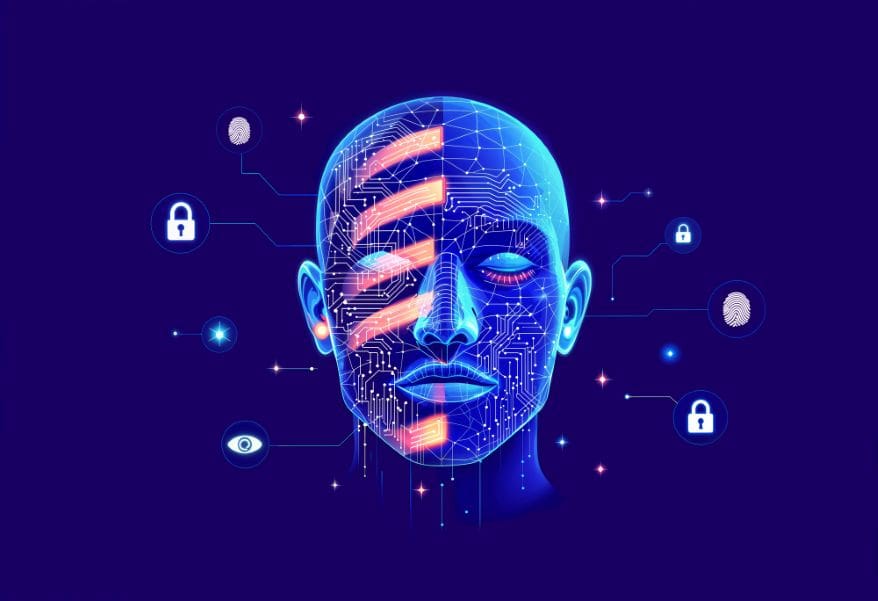
Digital immortality raises profound questions. Can technology capture the essence of what makes us human?
Is Digital Immortality Really You? The Big Question
Estimated reading time: 4 minutes
Imagine a machine scanning every neuron in your biological brain. It maps your memories, your fears, and your joys. After that, a digital avatar boots up on a supercomputer screen. The avatar speaks in your exact voice. It tells your childhood jokes. It feels like you in every single way. This fascinating leap brings us to The Big Question. Is this virtual avatar truly a continuation of your conscious self? Or is it merely a software duplicate while your real awareness ends? At the present time, the concept of digital immortality inspires deep scientific curiosity.
The Pattern Identity Case: Mind as Information
At first, consider how your physical body constantly changes over time. Your cells divide and replace themselves every few years. Prior to this moment, you had completely different atoms in your skin and bones. Yet, you still feel like the same human being. To point out, your identity lives in the information pattern of your brain. Your neural network holds your unique essence.
To illustrate, think about computer code running on different devices. The same software works on a laptop or a tablet. In similar fashion, your mind might operate on silicon chips. As a matter of fact, proponents argue that consciousness is purely computational. If a computer executes the exact algorithms of your brain, it produces the same conscious experience. To list, digital immortality could help humanity overcome aging, disease, and physical death. With this purpose in mind, uploading your mind preserves human wisdom for centuries.
Also Read: Can We Truly Know if AI is Conscious? A Philosopher’s Insight
Why Digital Immortality Preserves the Human Spirit
In reality, transferring our mental patterns expands human horizons. We can explore space without worrying about biological limits. To rephrase it, our thoughts can travel across the stars as data. What’s more, future generations can learn directly from historical thinkers. Seeing that our knowledge stays alive, society grows smarter over time. In short, this technology turns our temporary lives into an everlasting legacy.
The Copy Problem: The Illusion of Continuity
In contrast, many thinkers warn us about a critical flaw in this logic. They call this the copy problem. To explain, building a duplicate is not the same as transferring your live awareness. Take the case of an experiment where you stay awake during the brain scan. Now two versions of you exist at once. One version is organic, while the other version is digital.
If the organic version pinches its arm, the digital avatar feels nothing. When your biological body dies, your personal subjective experience ends completely. To put it another way, the computer twin keeps talking, but your individual light goes out. In light of this, digital immortality might just construct an advanced software clone.
Also Read: Are we living in a Matrix or Reality?
Another key point involves our physical biology. Human thought is deeply connected to our physical senses, hormones, and bodily chemistry. A server box lacks a beating heart and sensory feedback. While this may be true, a machine can simulate behavior without feeling genuine subjective experience. Balanced against real life, a code script might only fake emotions.
Physical Limits vis a vis Digital Immortality
All in all, our emotions depend heavily on our physical organs. To illustrate, stress triggers adrenaline in your blood. Happiness releases endorphins. Without these chemical signals, a digital brain operates differently. At any rate, removing the body alters the mind.
The Legal and Ethical Grey Zone
At this point, we enter a tricky area regarding legal rights. Suppose your uploaded mind lives on a cloud server. Who actually owns that personal data? If a user stops paying monthly server fees, can a corporation delete the profile? In effect, would shutting down the server count as murder?
With this in mind, consider legal responsibilities too. If your digital twin executes a business deal, who holds accountability? As can be seen, our current laws struggle to define a digital personhood. Summing up, we must build clear ethical rules before we launch these systems.
Gradual Bridge: Synthetic Consciousness
Then again, is there a smoother path toward digital immortality? To that end, scientist suggest a gradual transition. Imagine replacing one aging neuron with a microscopic silicon chip. You perform this tiny upgrade slowly over many years.
Because your awareness remains uninterrupted during the process, your continuity stays intact. Step by step, your biological brain becomes fully synthetic. You transition into a digital state without ever creating a separate copy. To sum up, you preserve your continuous stream of self-awareness.
The Final Choice
The brain is a machine, but it is a machine made of meat, and that makes all the difference.
In conclusion, the path toward preserving our minds opens stunning possibilities. Will uploading our thoughts create a endless future for human wisdom? Or will it simply leave behind a clever digital reflection? All things considered, young scientists must explore these questions with bold critical thinking. The choices we make today will shape the future of human consciousness tomorrow.
References:
- Cebo, D. (2021). Scientific relevance and future of digital immortality and virtual humans. arXiv (Cornell University). https://doi.org/10.48550/arxiv.2101.06105
- Author
- Latest Posts
I am a Master’s qualified in Science with focus on Zoology and Entomology and am a passionate, curiosity-driven science enthusiast aiming to transform complex scientific ideas in a manner that are easy to understand hence, educate, and inspire.
I have an experience of working on the projects in the field of Entomology which has provided me hands-on experience with various research techniques. Besides, I have also gained experience of lab work as well as developed communication skills during the course of my bachelors and masters.
With a strong foundation in life sciences and a growing interest in Medical and Biological research, I have cultivated a writing style that merges scientific facts with creativity.
My experience in teaching has also taught me to develop an understanding of what are the interests of people and how to communicate them effectively.
I am committed to lifelong learning, actively engaging in Interdisciplinary learning, so as to broaden my perspective.


