Explore the critical issue of digital twin data ownership and understand how it impacts your privacy and decision-making.
Ownership of Self: Who Really Controls Your Digital Twin? The Big Question
Estimated reading time: 5 minutes
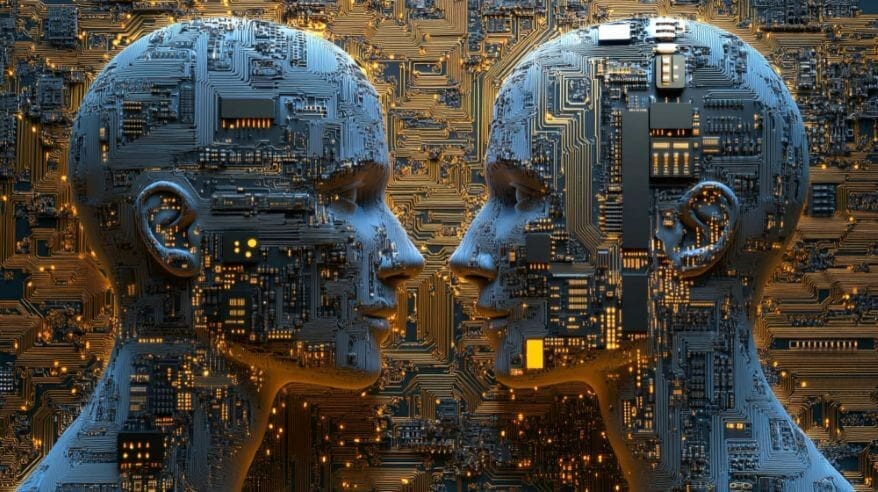
A digital twin of you exists right now. You have never met it, yet it makes decisions about your life constantly. This twin predicts what you will buy next month. It knows which diseases you might develop. It can even estimate how you will vote in the next election. Above all, this twin lives on a server you do not own, controlled by a someone you may not fully trust. A digital twin can be understood simply as a mirror image of you, that lives in a remote computer somewhere out there. It is not just a profile picture, rather it is a predictive model. To explain, Digital twin data ownership is now a major issue.
The digital twin concept has moved beyond science fiction. As a matter of fact, major corporations and healthcare providers already build detailed predictive models from your data. These models analyze your behavior, preferences, and patterns with startling accuracy. The digital twin emerges from your digital footprint—your searches, purchases, location history, and social interactions.
Yet here lies The Big Question: Who actually owns this digital self? Is it you, or the company that hosts the code?
The Rise of Mirror Image: Digital Twins
The present time brings us closer to our virtual doubles. To illustrate, every click and every heartbeat feeds this model. Companies use this info to create a high-fidelity replica. After that, they can run simulations on your life. They can test how a new medicine affects you. They can also see which ads make you click, which you don’t like. While all this may be true, the identity in the age of digital twins is getting messy. The data comes from you, your body and mind. What’s more, the processing happens in a private lab. As a matter of fact, we are seeing the uprising of digital twins in every industry. Companies use these mirror images to optimize their services, target their marketing, and mitigate their risks. The question becomes urgent as these digital twins grow more accurate, more influential, and more valuable.
1. Case for Individual Sovereignty: Your Digital DNA
Many experts argue for individual sovereignty. They say that your data represents an extension of yourself, in short your digital DNA. This is a matter of human rights. Without ownership of digital self, we lose our autonomy. As has been noted, international frameworks like the GDPR recognize data as a personal right. You should control what gets collected about you and how it gets used.
The risks of corporate ownership prove substantial. Data breaches expose millions of people annually. Hackers gain access to intimate details about your health, finances, as well as relationships. What’s more, companies can use your digital twin against you – selling your behavioral patterns to insurers who charge you higher premiums, or to employers who avoid hiring you based on predictive assessments. In short, your personal data should stay under your control. Balanced against corporate power.
2. Case for Corporate Utility: Data and Infrastructure
Nevertheless, opposing argument deserves serious consideration too. This is the data as infrastructure argument.
To start with, raw data is often useless. It becomes valuable only when someone processes it for sophisticated analysis and pattern finding. Corporates are the ones investing billions into this, building supercomputers, maintaining data centers and making AI research for better technology. For example, think about personalized medication; you can better care because some firm built the technology which made it possible. Without these investments and the accompanying risk, breakthrough innovations simply would not happen.
In essence, there is a tradeoff here. We get comfortable lives and medical cures. In contrast, we give up some control. You provide the raw material. They provide the refined product. The Terms of Service function as a legal contract which you agree to voluntarily. As it benefits both parties, why should ownership default to individuals alone? Companies take all the risks, and so they believe to they own the intellectual property.
Ethical Grey Zone of Predictive Models
Yet as this may be true, a dangerous middle ground exists. Your digital twin can predict actions you have never taken. It can estimate whether you might commit a crime before you even consider it. It can flag you as high-risk for expensive illnesses years before symptoms appear. This creates profound ethical questions.
It challenges the idea of innocent until proven guilty. In similar fashion, it threatens our future freedom. As has been noted, the twin is a guess. It is a very good guess, but it is not you. While this may be true, society might treat the prediction as a fact. Summing up, this is where Digital twin data ownership becomes a debate.
Digital twin, Data ownership: Finding the Middle Ground
Is there a middle ground for this conflict? Seeing that both arguments hold merit, creative middle positions are emerging.
Data Unions
Data Unions represent one possibility. In this model, individuals collectively rent their aggregated data to companies rather than surrendering it permanently. This arrangement preserves some individual agency while still enabling corporate innovation.
This gives power back to the collective.
Decentralized Storage
Decentralized storage technologies offer another path. You could keep your digital twin on a private data vault and secure it with blockchain or other tools. So your twin remains under your control. Companies access it only when you grant permission.
To sum up this approach: you own the twin, but you can license its use.
Digital Personhood
At length, forward-thinking legislation might establish the concept of Digital Personhood. Just as law protects physical persons, future versions of legislature could protect your digital self as an inalienable right. You could own your digital twin in perpetuity while regulating how others use it.
Digital twin, Data ownership : The Final Choice
“Data is the pollution problem of the information age, and protecting privacy is the environmental challenge.”
~ Bruce Schneier
In conclusion, the future of identity is at stake. Your digital twin might live longer than your physical body. At any rate, you must decide what it is. Is it a public good like the air we breathe? Is it a private asset owned by a giant firm? Or is it an inalienable right that stays with you?
All things considered, your your answer matters more than you realize. The world is changing fast. So long as we stay silent, others will choose for us.
Like what you read? Check our more of “The Big Question – ENTECH Magazine” here.
Reference:
- Fuller, A., Fan, Z., Day, C., & Barlow, C. (2020). Digital Twin: enabling technologies, challenges and open research. IEEE Access, 8, 108952–108971. https://doi.org/10.1109/access.2020.2998358
- Author
- Latest Posts

I am a Master’s qualified in Science with focus on Zoology and Entomology and am a passionate, curiosity-driven science enthusiast aiming to transform complex scientific ideas in a manner that are easy to understand hence, educate, and inspire.
I have an experience of working on the projects in the field of Entomology which has provided me hands-on experience with various research techniques. Besides, I have also gained experience of lab work as well as developed communication skills during the course of my bachelors and masters.
With a strong foundation in life sciences and a growing interest in Medical and Biological research, I have cultivated a writing style that merges scientific facts with creativity.
My experience in teaching has also taught me to develop an understanding of what are the interests of people and how to communicate them effectively.
I am committed to lifelong learning, actively engaging in Interdisciplinary learning, so as to broaden my perspective.


