Habits are learned behaviors that become automatic and unconscious over time owing to the habit buttons in our brain. They are formed through the repeated association of a particular cue or trigger with a specific…
Your Brain Has a Hidden “Habit Button”, And Scientists Finally Discovered It
Estimated reading time: 5 minutes
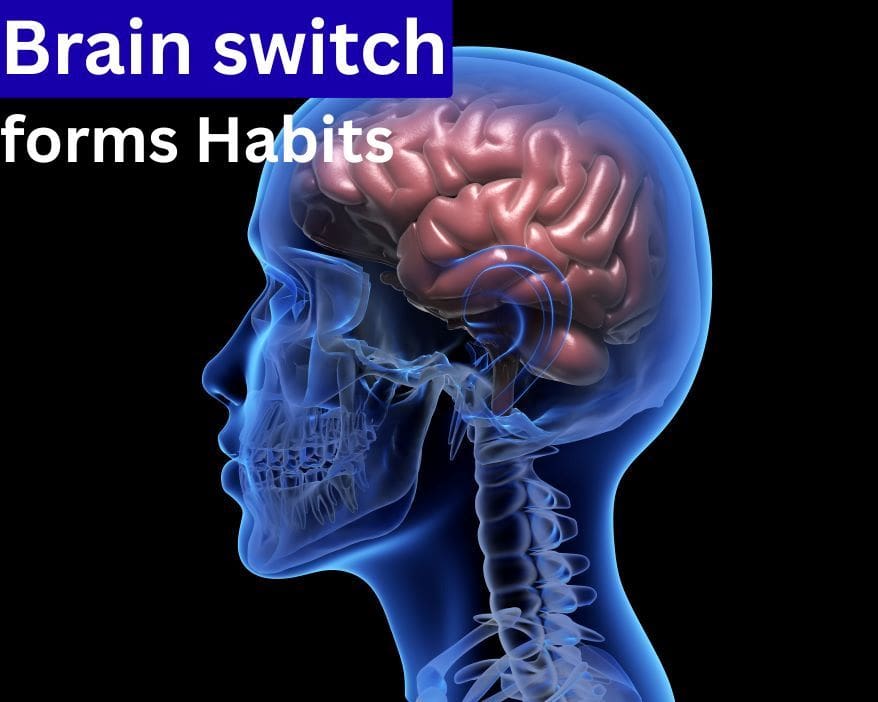
Habits are learned behaviors that become automatic and unconscious over time owing to the habit buttons in our brain. They are formed through the repeated association of a particular cue or trigger with a specific behavior or response. These are believed to be encoded in the brain’s basal ganglia, a group of structures involved in the formation as well as the execution of habits and routines. When a habit is formed, the brain creates neural pathways and connections that become strengthened through repetition. This, therefore, makes the habit more efficient and less cognitively demanding to execute.
According to the latest research, changing the levels of the KCC2 protein can have a significant impact on the brain. It can alter how the brain develops reward connections. A group of researchers made these findings. This process helps us decide when to respond to cues that produce positive results. It also helps us know when to ignore cues that reinforce harmful behaviors. These harmful behaviors include those linked to smoking addiction. Therefore, it acts as our habit button which controls our habits.
Joyce W., Ajay U., Daniel J. R., Irene C., Aelon K. S., Helena de C. S., Caroline C. S., Alexey O. conducted the study and published it under the title “Dynamic changes in chloride homeostasis coordinate midbrain inhibitory network activity during reward learning” in December 2025.
ENTECH STEM Magazine has included this research in its list of the Top 10 Biology Discoveries of 2025.
Practical Usages of the Discovery of the Habit Button in Brain
The discovery that altering levels of the KCC2 protein can dramatically change how the brain forms reward associations have several practical usage areas:
Addiction Treatment and Management
- By understanding how the KCC2 protein regulates the brain’s reward pathways, this research of the discovery of habit button could lead to new approaches for treating and managing addiction, including smoking addiction and other substance abuse disorders.
- Targeted interventions aimed at modulating KCC2 levels or its associated signaling pathways could help individuals overcome harmful behavioral patterns and reinforce healthier coping mechanisms.
Behavioral Modification and Decision-Making through Habit Button
- The insights into how the brain forms reward associations and determines when to respond to beneficial or harmful cues owing to the discovery of this habit button can inform the development of techniques and therapies to help individuals improve their decision-making and behavioral patterns.
- Researchers or practitioners could apply this knowledge in areas such as habit formation, impulse control, and the development of adaptive coping strategies.
Mental Health and Neuropsychiatric Disorders
- The researchers suggest that the disruption of normal communication between neurons, mediated by the KCC2 protein, can contribute to various brain disorders.
- Understanding the role of KCC2 in regulating neuronal communication could lead to new treatment strategies for a range of neuropsychiatric conditions, such as depression, anxiety, and certain cognitive impairments.
Neurorehabilitation and Neuroplasticity
- The insights into how the brain’s reward associations are formed and regulated by KCC2, the new habit button, could inform the development of neurorehabilitation approaches aimed at promoting neuroplasticity and functional recovery in individuals with neurological injuries or disorders.
- By targeting the KCC2-mediated pathways, it may be possible to enhance the brain’s ability to adapt and form new connections, potentially aiding in the recovery process.
Educational and Cognitive Enhancement through Habit Button in Brain
- Educators could apply the understanding of how the brain’s reward associations influence decision-making and behavior. This knowledge can help students develop more effective learning strategies and improve their cognitive performance.
- Strategies that leverage the KCC2-mediated pathways could potentially enhance motivation, attention, and overall academic or professional success.
Educational and Career Opportunities: Habit button in Brain
Neuroscience and Neurophysiology
- Studying the role of the KCC2 protein in acting as a habit button by regulating the neuronal communication and synaptic function
- Investigating the mechanisms by which KCC2 modulates the brain’s reward pathways and decision-making processes
- Exploring the impact of KCC2 on neuronal excitability and plasticity
Addiction and Reward-Based Behaviors
- Examining the specific contributions of KCC2 in the development and maintenance of addictive behaviors, such as substance abuse
- Developing novel therapeutic approaches targeting the KCC2-mediated pathways to help individuals overcome addiction and reinforce healthier coping mechanisms
- Investigating the potential applications of KCC2 modulation in the treatment of other compulsive or impulsive disorders
Neuropsychiatry and Mental Health
- Studying the link between KCC2 dysregulation and the pathophysiology of various neuropsychiatric disorders, such as depression, anxiety, and cognitive impairments
- Designing and evaluating therapeutic interventions that target the KCC2-mediated pathways to address these mental health conditions
- Exploring the potential of KCC2-based biomarkers for the early detection and personalized treatment of neuropsychiatric disorders
Neurorehabilitation and Neuroplasticity
- Investigating the role of KCC2 in the brain’s ability to adapt and form new connections, particularly in the context of neurological injuries or disorders
- Developing strategies that leverage KCC2-mediated pathways to enhance neuroplasticity and promote functional recovery during the rehabilitation process
- Exploring the potential of KCC2 modulation in combination with other neurorehabilitative approaches
Computational Neuroscience and Modeling
- Developing computational models and simulations to understand the complex interplay between KCC2, neuronal communication, and reward-based behaviors
- Utilizing machine learning and data-driven approaches to identify patterns and predict the effects of KCC2 alterations on cognitive and behavioral outcomes
- Integrating KCC2-related data with other neurobiological factors to gain a more holistic understanding of brain function and dysfunction
Reference
Woo, J., Uprety, A., Reid, D.J. et al. Dynamic changes in chloride homeostasis coordinate midbrain inhibitory network activity during reward learning. Nat Commun 16, 10903 (2025). https://doi.org/10.1038/s41467-025-66838-x
Additionally, to stay updated with the latest developments in STEM research, visit ENTECH Online. Basically, this is our digital magazine for science, technology, engineering, and mathematics. Also, at ENTECH Online, you’ll find a wealth of information.
- Author
- Latest Posts

I am a Master’s qualified in Science with focus on Zoology and Entomology and am a passionate, curiosity-driven science enthusiast aiming to transform complex scientific ideas in a manner that are easy to understand hence, educate, and inspire.
I have an experience of working on the projects in the field of Entomology which has provided me hands-on experience with various research techniques. Besides, I have also gained experience of lab work as well as developed communication skills during the course of my bachelors and masters.
With a strong foundation in life sciences and a growing interest in Medical and Biological research, I have cultivated a writing style that merges scientific facts with creativity.
My experience in teaching has also taught me to develop an understanding of what are the interests of people and how to communicate them effectively.
I am committed to lifelong learning, actively engaging in Interdisciplinary learning, so as to broaden my perspective.