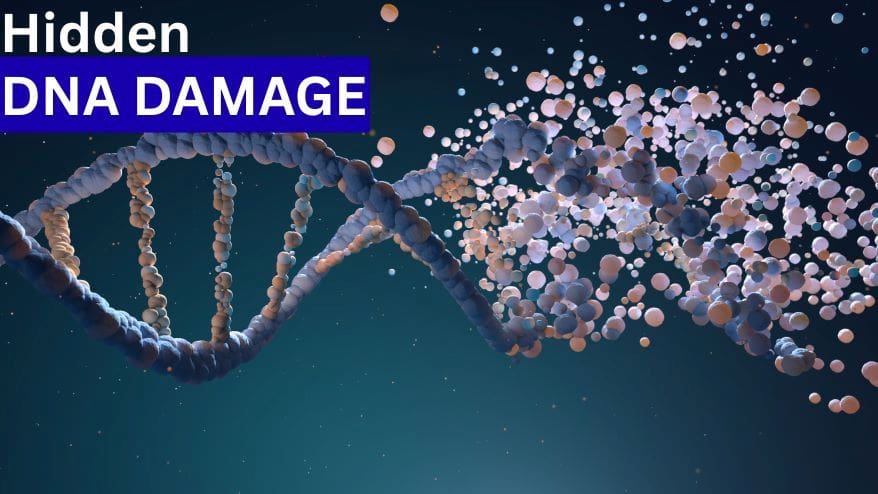
Mitochondria are a major source of reactive oxygen species (ROS). These ROS can cause DNA damage. This damage leads to oxidative stress...
This DNA Damage Was Unknown Until Now
Estimated reading time: 5 minutes
Mitochondria play an essential role in the cells of most eukaryotic organisms, including humans. They play a crucial role in cellular energy production and overall cellular function. Scientists often call mitochondria the “powerhouses” of the cell. They give this name because mitochondria generate most of the cell’s supply of adenosine triphosphate (ATP). ATP serves as the primary energy currency used by cells. Mitochondria are a major source of reactive oxygen species (ROS). These ROS can cause DNA damage. This damage leads to oxidative stress and further mitochondrial dysfunction. When mitochondria are damaged, the electron transport chain and oxidative phosphorylation are disrupted. As a result, ATP production decreases, and the cell’s energy supply becomes compromised.
Recently, previously unknown forms of mitochondrial DNA damage have been uncovered by researchers in the field of science. A significant amount of the “sticky” DNA tags concentrate in mitochondrial DNA as opposed to nuclear DNA. This causes a change in the production of energy and activates cellular defense mechanisms. It is possible that the discoveries will have significant repercussions for disorders that are associated with mitochondrial malfunction.
Y.H. Chen, M. Esparza Sanchez, T.I. Hung, J. Tang, W. Xu, J. Yin, Y. Wang, C.A. Chang, H. Zhang, J. Chen, & L. Zhao conducted the study and published under the title “Glutathionylated DNA adducts accumulate in mitochondrial DNA and are regulated by AP endonuclease 1 and tyrosyl-DNA phosphodiesterase 1” in November 2025.
ENTECH STEM Magazine has included this research in its list of the Top 10 Biology Discoveries of 2025.
Potential Benefits: Discovery of DNA Damage
The discovery of a previously unknown form of mitochondrial DNA damage, referred to as “sticky” DNA tags, has several practical usage areas:
Mitochondrial Diseases and Disorders
- The accumulation of these “sticky” DNA tags in mitochondrial DNA, rather than nuclear DNA, can contribute to mitochondrial dysfunction, which is a hallmark of various mitochondrial diseases and disorders.
- Understanding this new form of mitochondrial DNA damage can lead to the development of diagnostic tools and targeted therapies for conditions such as Parkinson’s disease, Alzheimer’s disease, and certain types of cancer, where mitochondrial dysfunction plays a key role.
Aging and Age-Related Diseases
- As individuals age, the accumulation of mitochondrial DNA damage, including the “sticky” tags, can contribute to the decline in mitochondrial function and the development of age-related diseases.
- This knowledge can inform the development of interventions, such as dietary supplements or pharmacological treatments, aimed at preserving mitochondrial integrity and delaying the onset of age-related health problems.
Personalized and Precision Medicine
- The identification of this unique form of mitochondrial DNA damage can contribute to the development of more accurate diagnostic tools and personalized treatment approaches for individuals with mitochondrial-related health conditions.
- By understanding the specific patterns and levels of these “sticky” DNA tags, healthcare providers can tailor interventions to address the underlying mitochondrial dysfunction in a more targeted and effective manner.
Environmental and Occupational Health
- Certain environmental exposures, such as toxins or radiation, may contribute to the formation of these “sticky” DNA tags in mitochondria, potentially leading to cellular stress and health consequences.
- Identifying the factors that influence the accumulation of these DNA tags can inform occupational safety guidelines and environmental regulations to protect individuals from exposure to mitochondrial-damaging agents.
Educational and Research Opportunities: Discovery of DNA Damage
Mitochondrial Biology and Genetics
- Investigating the mechanisms by which these “sticky” DNA tags accumulate specifically in mitochondrial DNA, rather than nuclear DNA
- Studying the impact of these DNA tags on mitochondrial function, including energy production and cellulr signaling pathways
- Exploring the genetic and epigenetic factors that contribute to the formation and accumulation of these mitochondrial DNA alterations
Mitochondrial Dysfunction and Disease
- Examining the links between the “sticky” DNA tags and the development of various mitochondrial-related diseases, such as Parkinson’s, Alzheimer’s, and certain types of cancer
- Developing diagnostic tools and biomarkers to detect and quantify the presence of these DNA tags in clinical settings
- Designing therapeutic interventions, such as small molecules or gene therapies, to prevent or reverse the accumulation of the “sticky” DNA tags
Aging and Longevity Due to DNA Damage
- Investigating the role of mitochondrial DNA damage, including the “sticky” tags, in the aging process and age-related decline in cellular function
- Exploring strategies to mitigate the accumulation of these DNA tags and maintain mitochondrial integrity during the aging process
- Studying the potential links between the “sticky” DNA tags and the development of age-related diseases
Environmental and Occupational Health Causing DNA Damage
- Identifying the environmental factors, such as toxins or radiation, that may contribute to the formation of the “sticky” DNA tags in mitochondria
- Developing methods to assess and monitor the levels of these DNA tags in response to various environmental and occupational exposures
- Designing protective measures and interventions to minimize the impact of mitochondrial-damaging agents on human health
Reference
Y. H. Chen, M. Esparza Sanchez, T. I. Hung, J. Tang, W. Xu, J. Yin, Y. Wang, C. A. Chang, H. Zhang, J. Chen, & L. Zhao, Glutathionylated DNA adducts accumulate in mitochondrial DNA and are regulated by AP endonuclease 1 and tyrosyl-DNA phosphodiesterase 1, Proc. Natl. Acad. Sci. U.S.A. 122 (47) e2509312122,
https://doi.org/10.1073/pnas.2509312122
Additionally, to stay updated with the latest developments in STEM research, visit ENTECH Online. Basically, this is our digital magazine for science, technology, engineering, and mathematics. Also, at ENTECH Online, you’ll find a wealth of information.
- Author
- Latest Posts

I am a Master’s qualified in Science with focus on Zoology and Entomology and am a passionate, curiosity-driven science enthusiast aiming to transform complex scientific ideas in a manner that are easy to understand hence, educate, and inspire.
I have an experience of working on the projects in the field of Entomology which has provided me hands-on experience with various research techniques. Besides, I have also gained experience of lab work as well as developed communication skills during the course of my bachelors and masters.
With a strong foundation in life sciences and a growing interest in Medical and Biological research, I have cultivated a writing style that merges scientific facts with creativity.
My experience in teaching has also taught me to develop an understanding of what are the interests of people and how to communicate them effectively.
I am committed to lifelong learning, actively engaging in Interdisciplinary learning, so as to broaden my perspective.