A new AI-based waste management system is helping to predict solid waste volumes and manage garbage more efficiently.
Smart AI Systems for Better City Waste Management
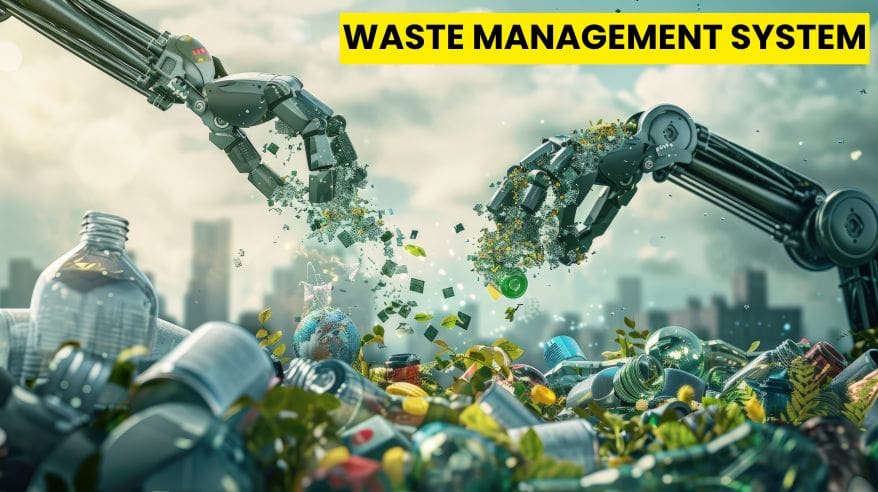
Cities are growing fast, and so is their waste. A new AI-based waste management system is helping cities plan better. Therefore, it uses machine learning to predict solid waste volumes and manage garbage more efficiently.
The New AI-based waste management
This system uses Support Vector Machine (SVM) models. It studies five years of real data to predict future waste output. The model runs with 96% accuracy, which is very high. It also checks population density and socio-economic factors. As a result, it can estimate greenhouse gas emissions and find ways to reduce them. It identifies organic waste, tracks plastic levels, and builds a data-driven plan for each city. Because of this, city authorities can create sustainable waste policies. It also predicts the carbon footprint of dump yards and helps reduce climate impact.
A global research team developed this system. Dr. E. B. Priyanka led the project with S. Vijayshanthy and S. Thangavel from Kongu Engineering College. R. Anand and G. B. Bhavana from Amrita School joined them.
ENTECH STEM Magazine has included this research in the Top 10 Environmental Sciences Discoveries and Innovations in 2025.
For example, Erode city in Tamil Nadu produces 250 metric tons of waste daily. With 25.21 lakh residents, this AI model uses both SVM and Random Forest algorithms to manage data efficiently.
They collaborated with Baseem Khan from Ethiopia and other experts from China and Azerbaijan. K. Jeyanthi and A. Ambikapathy also contributed. This team combined knowledge from multiple disciplines. Their work focused on Erode City and was published in Scientific Reports. R. Anand and Baseem Khan serve as corresponding authors.
Everyday Benefits of Smart AI-based Waste Management Systems
This AI system improves daily waste collection in cities. It spots trash hotspots and helps plan better routes for garbage trucks. As a result, trucks use less fuel, and air pollution drops.
It also prevents groundwater contamination, keeping drinking water safe. The model tracks source segregation practices and manages organic waste efficiently. By doing so, it reduces methane emissions and illegal dumping.
Because of this, urban areas become cleaner. Residents face fewer pest problems. Since open burning decreases, air quality improves. People can also get incentives for recycling or subscribe to pickup services.
Real-World Application of AI-based waste management
The system is ready for use today. It runs smoothly on an Intel i5 computer with just 8 GB RAM. It works in real time, processing data in 0.67 seconds.
Smart bins and IoT-enabled sensors are already being tested. Companies can now try automated sorting and efficient material recovery. This supports a circular economy and improves resource allocation using proximity ranking.
Because of its 96% accuracy, the model fits well into commercial solutions. It uses an 80:20 data split for training and testing, ensuring consistent reliability.
Careers for the Next Generation
New innovations create diverse career opportunities.
- Students can study machine learning and deep learning for smart cities.
- Environmental modeling, data science, and sustainable planning offer strong career growth.
- AI methods like SVM and Random Forest improve waste management systems.
- Green technology supports zero-waste cities and smarter environmental solutions.
Additionally, to stay updated with the latest developments in STEM research, visit ENTECH Online. Basically, this is our digital magazine for science, technology, engineering, and mathematics. Also, at ENTECH Online, you’ll find a wealth of information.
Reference:
- Reference Priyanka, E. B., Vijayshanthy, S., Thangavel, S., Anand, R., Bhavana, G. B., Khan, B., Jeyanthi, K., & Ambikapathy, A. (2025). Prediction of waste generation forecast and emission potential on the Erode City solid waste dump yards based on machine learning approach. Scientific Reports, 15(1), 37021. https://doi.org/10.1038/s41598-025-19288-w
- Author
- Latest Posts

Ashwini Kshirsagar holds a graduate degree in Chemistry and a postgraduate degree in Environmental Science from Shivaji University, Kolhapur. With a strong foundation in scientific principles and a creative flair, she blends her expertise in environmental science with skills in technical writing, graphic design, and video editing. Proficient in Adobe software, Ashwini excels at transforming complex scientific concepts into clear, engaging, and visually compelling content. Her unique ability to merge science and storytelling allows her to create impactful communication materials that are both informative and accessible to a wide audience.