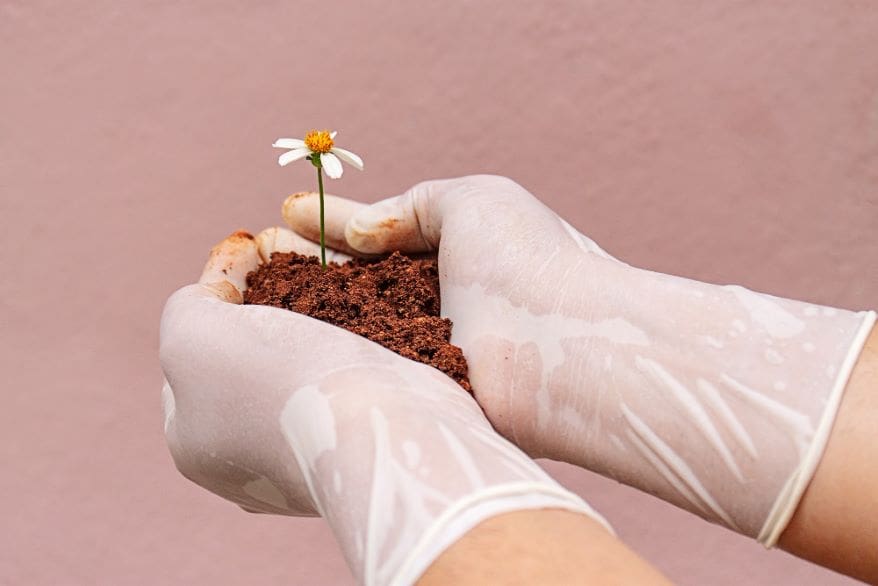
These tiny soil microbiome break down dead plants, recycle essential nutrients, and even fight off nasty plant diseases.
Soil microbiome drives soil health across agroecosystems
Estimated reading time: 4 minutes
What is the soil microbiome? It’s the vast community of microorganisms living in the soil beneath our feet. I used to think soil was just lifeless brown stuff holding plants up, but it turns out that every single teaspoon is packed with hundreds of millions of living organisms. This bustling microbial world works around the clock to keep our planet alive. Today, I want to share some fascinating facts about soil and the innovative farming techniques that are helping protect our food supply.
Sadly, our soils are in serious trouble right now. It is the community of microorganisms that lives within the soil- has been severely damaged over time. For over a century, traditional farming methods like heavy plowing and tilling have disrupted soil microbiome and destroyed the natural structure of our land. In the Pacific Northwest, these intense practices have wiped out more than half of the organic matter that supports what is the soil microbiome. On top of that, leaving fields bare during fallow periods deprives the microbiome of soil for essential nutrients. As a result, the soil microbiome weakens, and the earth loses its ability to hold water and resist erosion.
Meet the Invisible Heroes: What Is Soil Microbiome
The real stars of agriculture are the microscopic bugs like bacteria and fungi. These tiny soil microbiome break down dead plants, recycle essential nutrients, and even fight off nasty plant diseases. Certain fungi form a massive underground network that attaches to plant roots, helping crops absorb desperately needed water and phosphorus. Without these organisms, our crops would simply starve. Therefore, keeping these microorganisms happy and healthy is absolutely crucial for our future survival.
Unfortunately, modern fertilizers are making the ground too acidic, which harms microbiome of soil—the community of microorganisms living in the soil. When soil pH drops too low, it creates a toxic environment that disrupts what is soil microbiome and stops beneficial bacteria from doing their jobs. For example, helpful bacteria called rhizobia usually pull nitrogen from the air to nourish plants, but when acidity rises, soil microbiome becomes imbalanced and these bacteria stop functioning. As a result, plants struggle to grow, showing how important it is to protect microbiome of soil by fixing this chemical imbalance.
Also Read: Microbiology for Beginners- Learn the Key Concepts
Smart Farming: Protecting What Is Soil Microbiome
Luckily, scientists and farmers are teaming up to restore the soil’s living community of microorganisms. One powerful strategy is no-till farming, where seeds are planted without disturbing the ground, helping protect these vital soil organisms. This gentle method leaves crop residues on the surface, shielding the soil from wind and rain while supporting microbial life. By keeping the soil undisturbed, the microorganisms can recover and rebuild, improving overall soil health. In addition, this approach helps store large amounts of carbon safely underground, showing how restoring soil life benefits both farming and the environment.
These combined crops also act like a natural shield against pests. Because the field has a diverse mix of plants, it breaks the typical life cycles of hungry bugs and destructive weeds. Canola even releases special chemicals into the ground that actively defend against diseases. Consequently, farmers do not have to spray as much toxic pesticide on our food. It is a massive win for both the environment and our personal health.
Also Read: Metabolites and rhizobiome functions: Enhances drought stress tolerance
Looking Toward A Greener Future
I’m excited to see entire states taking this seriously. Protecting what is soil microbiome—the tiny organisms that keep soil healthy—is becoming a priority. Washington recently launched a big Soil Health Initiative. It helps farmers support what is soil microbiome with better techniques. They set up testing sites and give farmers tools to monitor what is soil microbiome. This helps track progress and see what works.By actively observing what is soil microbiome, they can determine exactly which farming practices are truly making a positive difference.
Summary: What is soil microbiome
At the end of the day, treating our dirt with respect is the only way forward. We must continue to support agricultural practices that rebuild our ecosystems instead of tearing them apart. If we protect the microbes, they will continue to protect us. I hope you now realize that the dirty soil beneath your feet is actually a beautiful treasure worth saving.
Additionally, to stay updated with the latest developments in STEM research, visit ENTECH Online.
Reference:
- Abanikannda, K. L., & Sullivan, T. S. (2026). Soil Microbiome Response Is Key to Improving Soil Health Across Multiple Agroecosystems in Inland Pacific Northwest. Sustainability, 18(7), 3518. https://www.mdpi.com/2071-1050/18/7/3518
- Author
- Latest Posts

I completed my Master of Science from the University of Allahabad in 2017 with a strong academic background in life sciences and chemistry. My specialization included Molecular Biology, Microbiology, Genetics, Plant Breeding, Phycology, Paleobotany, and Bioinformatics, along with Organic Chemistry, Inorganic Chemistry, and Physical Chemistry. This multidisciplinary training provided me with a comprehensive understanding of biological systems and analytical scientific approaches.
After completing my postgraduate studies, I gained valuable professional experience in both the education and social development sectors. I worked at A.M. Oxford Public School, where I was actively involved in guiding students toward academic excellence. In this role, I focused on creating an engaging learning environment, encouraging critical thinking, and nurturing students’ curiosity for scientific learning. My experience as an educator strengthened my communication, mentoring, and classroom management skills.
In addition to my teaching experience, I worked with Jeevan Jagriti Foundation, where I contributed to community-based initiatives aimed at improving educational access and awareness among underprivileged sections of society. Through this work, I participated in programs designed to support social development and promote the value of education in marginalized communities.
These professional experiences helped me develop strong interpersonal, leadership, and organizational skills while reinforcing my commitment to education and community service.